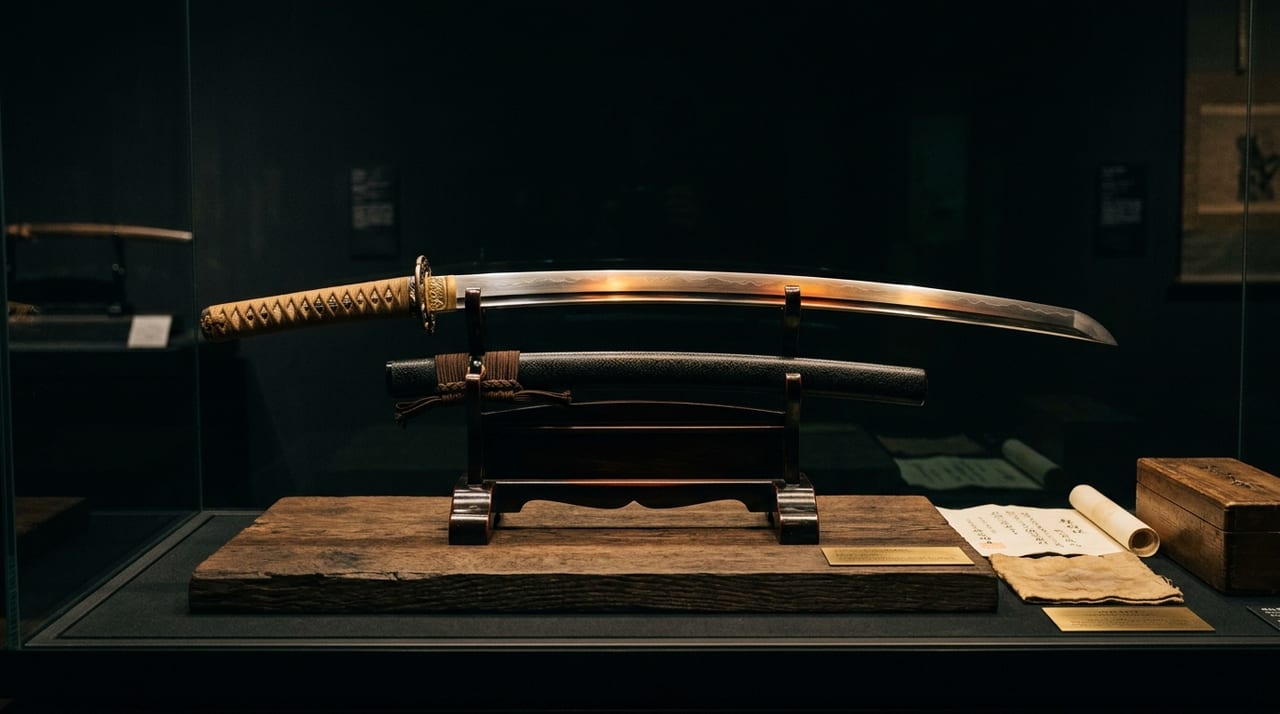
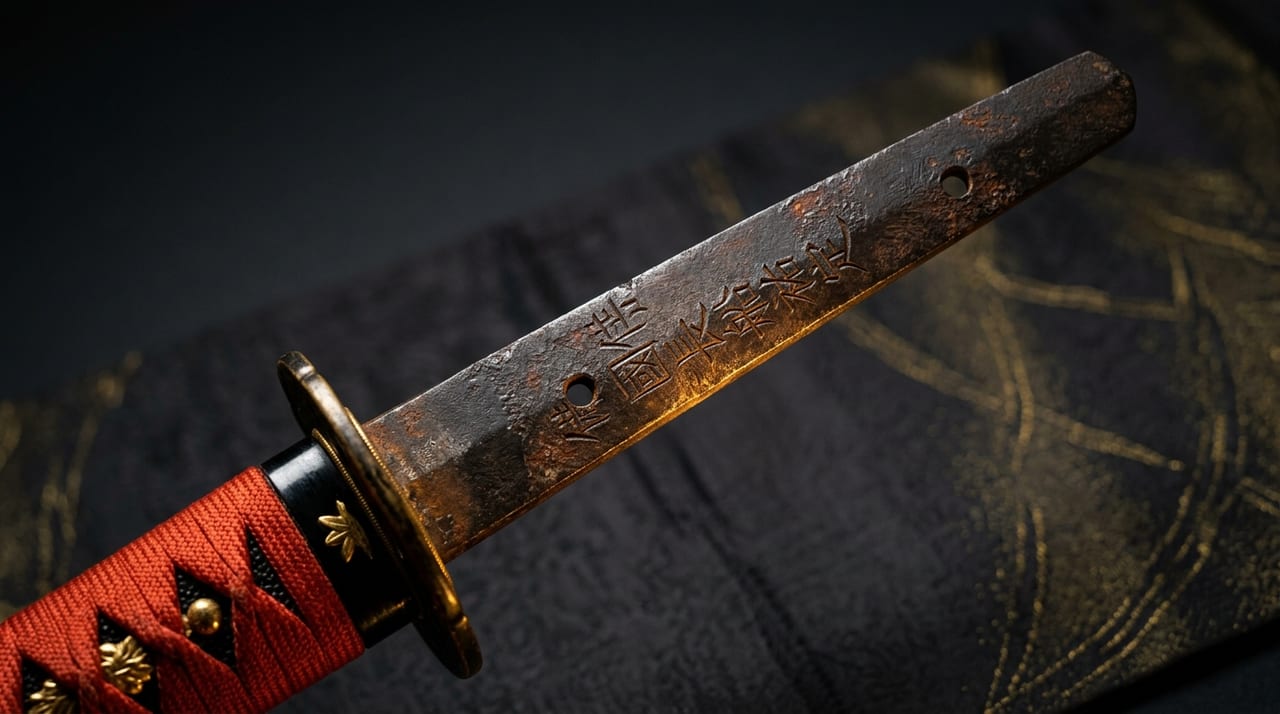
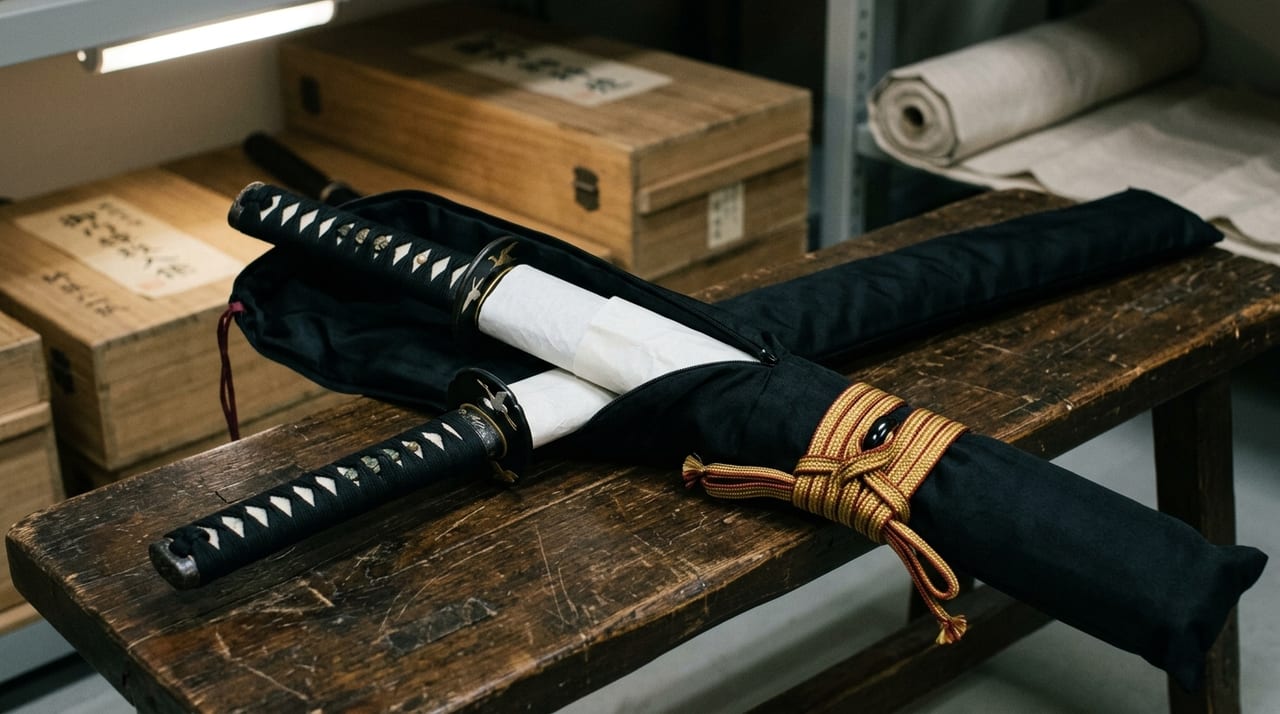
History of Japanese Sword Dealer Associations — The Trade Guilds of Sword Merchants from the Edo Period and the Reality of Industry Self-Regulation
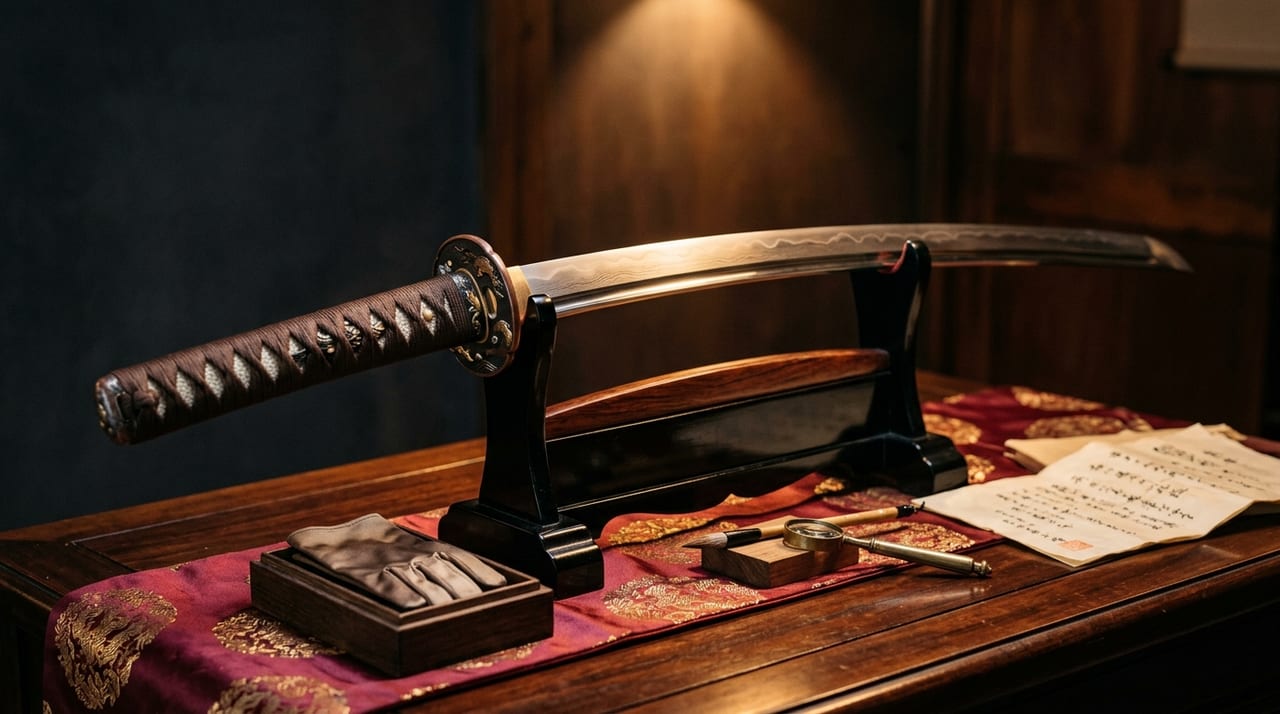 * Image is for illustrative purposes only.
Table of Contents
The Sword Merchants of the Edo Period and the Origins of the Trade
The buying and selling of nihontō has been practiced since ancient times, but it was during the Edo period that specialist merchants known as "katanaya" (sword dealers) became firmly established as a recognized profession in society. In an age of prolonged peace, swords were no longer purely weapons of war but had come to hold multifaceted value as markers of samurai status, instruments of etiquette, works of art, and investment objects. This diversification of demand encouraged the emergence of the katanaya as a distinct specialized trade.
Sword dealers of the Edo period could broadly be divided into two types. The first were "goyō katanaya," who procured swords as officially appointed suppliers to the shogunate and daimyo houses within specific patron-client relationships. The second were "machi katanaya," who served urban samurai and wealthy merchants as their customers. Edo, Osaka, and Kyoto each had large numbers of sword dealers operating side by side, and distinct sword-dealer districts formed around Nihonbashi in Edo and along Sakaisuji in Osaka.
The sword dealer's business extended well beyond simple buying and selling; dealers also served as comprehensive service points handling the arrangement of polishing and koshirae (mounting), saya (scabbard) repair, and trade-ins. For samurai and wealthy merchant customers, establishing an ongoing trading relationship with a trusted sword dealer was of great importance — it reduced the risk of being sold a forgery and provided the reassurance of being able to sell or exchange a sword when the need arose.
The Formation of Trade Guilds — The Kabunakama System
One of the important institutions in the economic policy of the Edo shogunate was the kabunakama. The kabunakama were trade guilds formed by members of the same profession under official shogunate recognition; members paid a fixed myōgakin (tax) to the shogunate in exchange for being granted a monopoly on operating in a given trade.
Sword dealers were also subject to this kabunakama system, and the sword dealers of Edo organized a "tōken-shō kabunakama" (sword dealers' guild). The principal functions of the kabunakama were as follows.
- Price control: Setting floor and ceiling prices for purchasing and selling swords, to prevent excessive price collapses or profiteering
- Quality control: Mutual oversight and an obligation to report to wholesalers in order to prevent the circulation of swords with false mei (signatures) or outright forgeries
- Restriction on new entrants: Excluding unlicensed dealers from operating, to protect the interests of existing members
- Dispute resolution: Settling disputes between dealers internally, to reduce the number of suits brought before the magistrate's office
These functions of the kabunakama served not merely to protect the vested interests of existing dealers, but also as a mechanism to prevent buyers from being unjustly harmed in a trade dealing in goods — nihontō — whose authenticity was difficult to determine. Guild membership was also a mark of creditworthiness among fellow dealers, and it is thought that member dealers were better able to earn the trust of customers than unaffiliated ones.
The Hon'ami Family and the Sword Trade
The greatest authority in the sword trade was the Hon'ami family, who reigned as the hereditary house of sword appraisers and polishers. The Hon'ami family had been granted by the shogunal house the authority to issue kanteisho (origami, appraisal certificates), and wielded enormous influence in the authentication and valuation of swords.
The kabunakama of sword dealers placed great importance on their relationship with the Hon'ami family, and it became customary practice to always attach a Hon'ami origami (appraisal certificate) to the sale of any important sword. The presence or absence of an origami (appraisal certificate) had a major bearing on a sword's price, and it was not uncommon for a sword with an origami to fetch more than double the price of one without. This practice became the prototype for the modern system of NBTHK (Society for the Preservation of Japanese Art Swords) appraisal certificates.
Hon'ami appraisals were based on experience and transmitted knowledge passed down through successive generations, and represented the most authoritative standard of evaluation of their time. For sword dealers, maintaining a good relationship with the Hon'ami family was an indispensable element in demonstrating the reliability of the swords they handled to their customers; this structure, in which third-party expert evaluation was interposed in transactions to guarantee reliability, shares a common philosophy with the modern kanteisho (appraisal certificate) system.
The Tenpō Reforms and the Dissolution and Reorganization of the Kabunakama
In the late Edo period, during the Tenpō Reforms (1841–1843), Senior Councilor Mizuno Tadakuni singled out the kabunakama as the cause of rising prices and issued an edict dissolving them. The sword dealers' kabunakama was likewise forced to dissolve temporarily, but the result of free competition did not necessarily bring lower prices; on the contrary, it led to market confusion and the proliferation of forgeries and low-quality swords.
In 1851 (Kaei 4), the shogunate permitted the revival of the kabunakama, and sword dealers re-formed their guild. This sequence of events was a significant episode that established even in the shogunate's own thinking the recognition that industry self-regulation through trade guilds was indispensable for quality control and maintaining market order.
This sequence of events demonstrates that for goods such as nihontō — whose authenticity and value are difficult to judge without specialist knowledge — voluntary agreements and mutual oversight among dealers played a meaningful role in protecting the interests of both buyers and sellers. The lesson that simply introducing free competition could actually make it easier for inferior goods and fraudulent transactions to spread is thought to have influenced the form that later industry associations would take.
The Evolution of Industry Associations since the Meiji Era
The Meiji Restoration (1868) and the Sword Abolishment Edict (Haitōrei) (1876) dealt a devastating blow to the sword trade. Demand plummeted and many sword dealers went out of business. However, demand for swords as works of art and antiques remained, and those dealers who survived sought a fresh start as dealers in fine-art swords.
From the late Meiji period through the Taishō era, sword dealers across the country began re-forming trade guilds as voluntary associations. During the Shōwa era, the organizational precursors to the All-Japan Sword Dealers Cooperative Association were put in place, and guild activities grew more active alongside the postwar revival of interest in swords.
The present-day All-Japan Sword Dealers Cooperative Association (Zentōshō) carries out the following activities as the representative body of the industry.
- Guidance and public education regarding the proper circulation of registration certificates
- Organizing and sponsoring sword markets and exhibitions
- Formulating guidelines for handling purchases by foreign buyers
- Countermeasures against forgeries and smuggling in cooperation with the Agency for Cultural Affairs and the National Police Agency
What these activities share in common is the commitment to supporting, through an industry-wide framework, challenges that cannot be fully addressed by the efforts of individual sword dealers alone — authentication, compliance with relevant laws, communication with overseas customers, and so on. Sword dealers who belong to the association are, through this shared infrastructure, in a position to access information and training opportunities that would be difficult to obtain on their own.
The Contemporary Significance of Industry Self-Regulation
The contemporary challenge that has emerged as particularly important for sword-industry self-regulation is the management of online distribution. The buying and selling of unregistered swords through flea-market apps and auction sites, inappropriate sales to foreign buyers, and the circulation of swords bearing false mei (signatures) and forged kanteisho (appraisal certificates) have become problems, and there is an urgent need to strengthen the association's capacity to respond.
As of 2026, online sales of nihontō to overseas buyers are on the rise due to the expansion of cross-border e-commerce. The role of industry associations in supporting online sword transactions that follow proper procedures will become increasingly important going forward.
The function of "maintaining market order" that the Edo-period kabunakama fulfilled remains, even in the modern era, the most important role that industry associations must play. For the buying and selling of nihontō — a special category of cultural property — to be conducted appropriately, both legal regulation and industry self-regulation are indispensable.
Points to Check When Purchasing a Sword
Because nihontō require specialist knowledge, prospective buyers will find it reassuring to verify what kind of credentials the person they are dealing with holds.
- Industry association membership: Whether the sword dealer belongs to an industry association such as the All-Japan Sword Dealers Cooperative Association provides one useful benchmark
- Presence of a kanteisho (appraisal certificate): Check whether a kanteisho issued by an examining body such as NBTHK (Society for the Preservation of Japanese Art Swords) is included
- Checking the registration certificate: It is standard for nihontō to come with a registration certificate; check that the details on the registration certificate match the actual sword
- Explanation and consultation arrangements: Check whether the dealer can provide specific explanations of the sword's provenance and condition, and whether there is a consultation point of contact available after purchase
These verification steps could also be described as replacing the role of "guaranteeing reliable transactions" that the Edo-period kabunakama fulfilled with an equivalent process that today's consumers carry out themselves proactively. Self-regulation and information dissemination by industry associations aim to contribute to providing such grounds for judgment.