Copyright and Intellectual Property Protection in the Sword Industry — Legal Protection of Sword-Making Drawings, Hamon Patterns, and Mei, and the Current State of the Counterfeit Sword Problem
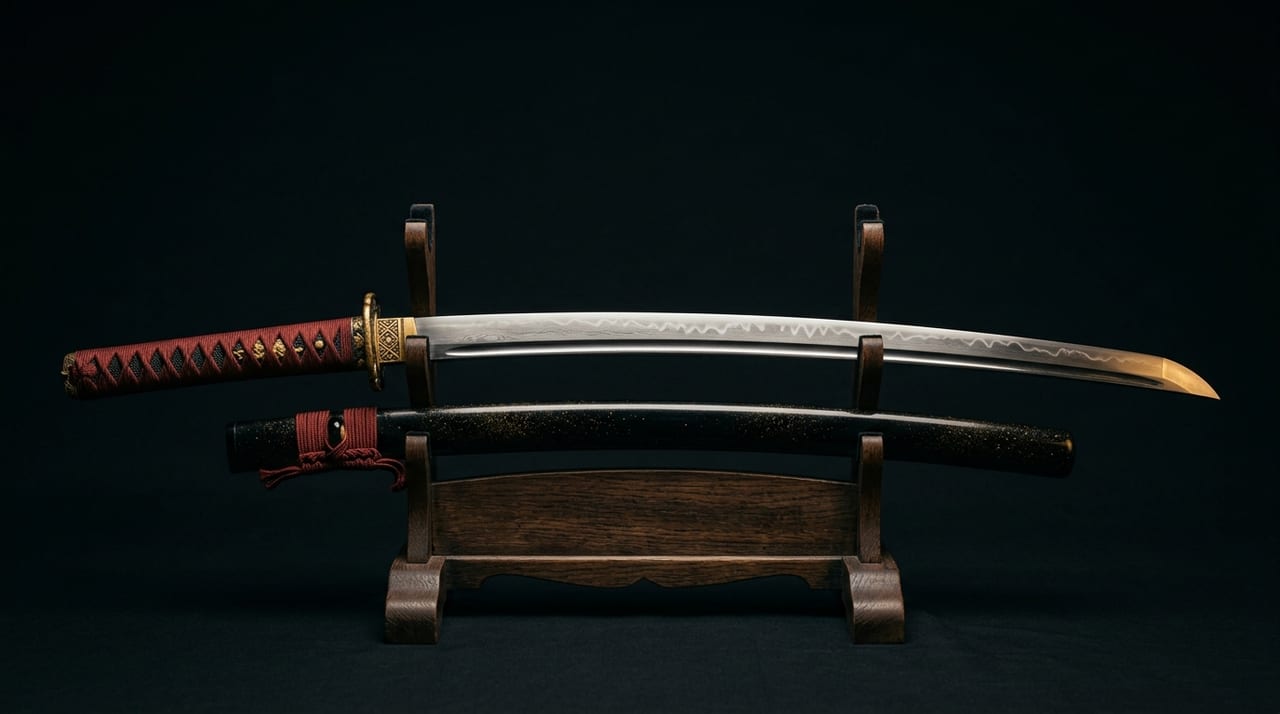 * Image is for illustrative purposes only.
Table of Contents
The Intersection of Nihontō and Intellectual Property Rights
The nihontō is a traditional craft object, yet it also has an aspect as a "work of authorship" to which modern intellectual property law applies. In the process of a tōshō crafting a single sword, creative works with distinctive originality are produced — including design drawings of the hamon, construction specifications, and design drawings for the koshirae. However, the framework of legal protection in this field is not fully understood even among those in the industry.
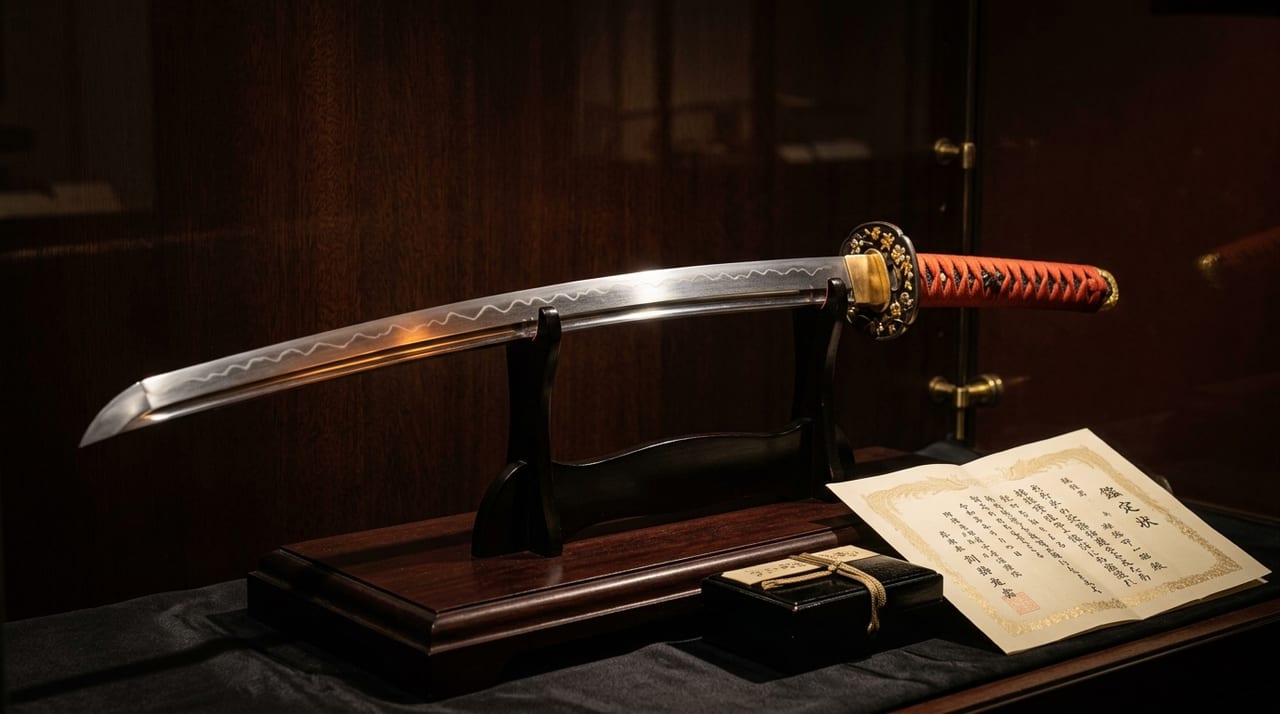
From the perspective of copyright law, design drawings and diagrams created by a tōshō may be protected as "artistic works of figures." Photographs and videos of original hamon patterns published in exhibitions or catalogs are also subject to copyright. On the other hand, the application of copyright to swords themselves (as practical objects) is limited, and the boundary between "applied art" and "pure art" remains a point of contention.
The Reality of Legal Protection for Hamon Patterns
Can a specific hamon pattern independently developed by a tōshō — such as an original compound irregular pattern or a special chōji variation — be protected by copyright? At present, there is no clear answer.
Under copyright law, the protected subject matter is "a creative expression of thoughts or feelings," but since hamon patterns emerge from the physicochemical reaction between heated metal and tsuchioki, whether they can be recognized as pure "expression" is the point in dispute. Furthermore, traditional types such as suguha, chōji, and gunome are interpreted as falling within the realm of "ideas" freely available to anyone, so there is little room for copyright protection in the first place.
In practice, the "product configuration imitation" provision (Article 2, Paragraph 1, Item 3) of the Unfair Competition Prevention Act is more readily applicable than copyright. Where a distinctive hamon of a tōshō is imitated and commercially sold, there is a possibility of protection as "a product imitating the configuration of another person's product." However, this provision has a time limit of "three years from the date of first sale," which limits its application to classical sword types.
Protection of Mei and the Problem of Counterfeit Mei
The mei of a tōshō has a trademark-like character within intellectual property rights. When an active tōshō has their distinctive mei imitated by others, criminal application of "violation of the Unfair Competition Prevention Act" or "fraud" is considered. Civilly, claims for "trademark infringement" or "damages based on tort" are also theoretically possible.
However, the issues surrounding mei in the sword industry are even more complex. In the natori succession system of historical tōkō, inheriting the mei of a predecessor is recognized as a legitimate practice. When a second or third generation uses the name of their predecessor's mei, this is not a counterfeit mei but a legitimate succession, and appropriate labeling is required to prevent consumer confusion.
On the other hand, the modern problem of counterfeit mei has become increasingly serious primarily in overseas markets. Cases of imitation swords manufactured in China and Southeast Asia circulating with the mei of famous tōshō engraved on them have not ceased as of 2026, and instances of such swords flowing back into the domestic market together with forged registration certificates have also been reported. These counterfeits are a serious problem that undermines the credibility of the nihontō industry as a whole.
Management of Sword-Making Drawings and Design Assets
The "sword-making drawings" accumulated by a tōshō are not merely design documents but intellectual assets in which the craftsman's creative thought is concentrated. The design drawings of the sword's shape drawn for each individual sword, plans for the arrangement of the hamon, and structural notes on the jigane are also a form of "densho (transmitted writings)" passed down from master to apprentice.
With the progress of digitization, cases of preserving these design materials as electronic data are increasing. Sword-making drawings do not constitute "program works" under copyright law, but a degree of protection can be expected as "artistic works of figures." Storing them on cloud storage or external servers carries a risk of information leakage, so careful handling is also necessary from a security management perspective.
The same issues arise with regard to the designs of tōsōgu — such as pattern drawings for tsuba and sculpting sketches for menuki. In particular, whether the intricate inlay patterns and engraving patterns independently developed by metalworkers (kinkōshi) can receive copyright protection as variations of traditional patterns is a matter of debate. In general, it is considered that when a distinctive variation is added to a traditional pattern, there is a possibility of protection as a "derivative work."
Counterfeit Swords and Industry Countermeasures
The imitation problems that the modern sword industry faces can be broadly classified into three categories.
- Appearance imitation: Cases where a form intentionally resembling the work of a famous tōkō is finished and sold at a high price
- Mei imitation: Cases centered on the counterfeit mei problem described above
- Registration certificate imitation: The circulation of swords accompanied by forged registration certificates
The industry organization Zen Nihon Tōken Shōgyō Kyōdō Kumiai (the All-Japan Sword Dealers' Cooperative Association; abbreviated Zentōshō) continuously conducts awareness activities against counterfeit and forged items. The kanteisho system of NBTHK plays an important role in certifying authentic pieces, and activities to raise awareness of the risks of purchasing high-priced swords without a kanteisho are also being carried out.
As legal measures, filing a complaint with the National Police Agency for violations of the Firearms and Swords Control Act (Jūtōhō) (forged registration certificates) and filing injunction and damages claims under the Unfair Competition Prevention Act are effective tools. However, due to the special nature of sword transactions — high prices, opacity of distribution channels, and the large volume of overseas transactions — cases that actually proceed to legal action remain limited.
Future Challenges and the Industry's Direction
Intellectual property protection for nihontō faces complex challenges at the intersection of traditional cultural heritage and the modern legal system. Establishing a framework that properly values the creative labor of tōshō while maintaining a balance between the protection of traditional techniques and the public disclosure and sharing of knowledge is an urgent priority for the industry as a whole.
As of 2026, the precise replication of swords using 3D scan data is becoming technically feasible. We have entered a stage where system design that incorporates not only physical counterfeiting but also the issue of digital copies is required. The construction of an intellectual property strategy that makes combined use of copyright, trademark rights, and the Unfair Competition Prevention Act can be said to be indispensable for the nihontō industry to maintain its cultural and economic sustainability.