How to Read Chikei and Its Types — The Beauty of Forging Activity in the Jigane of Nihontō and Standards of Appraisal
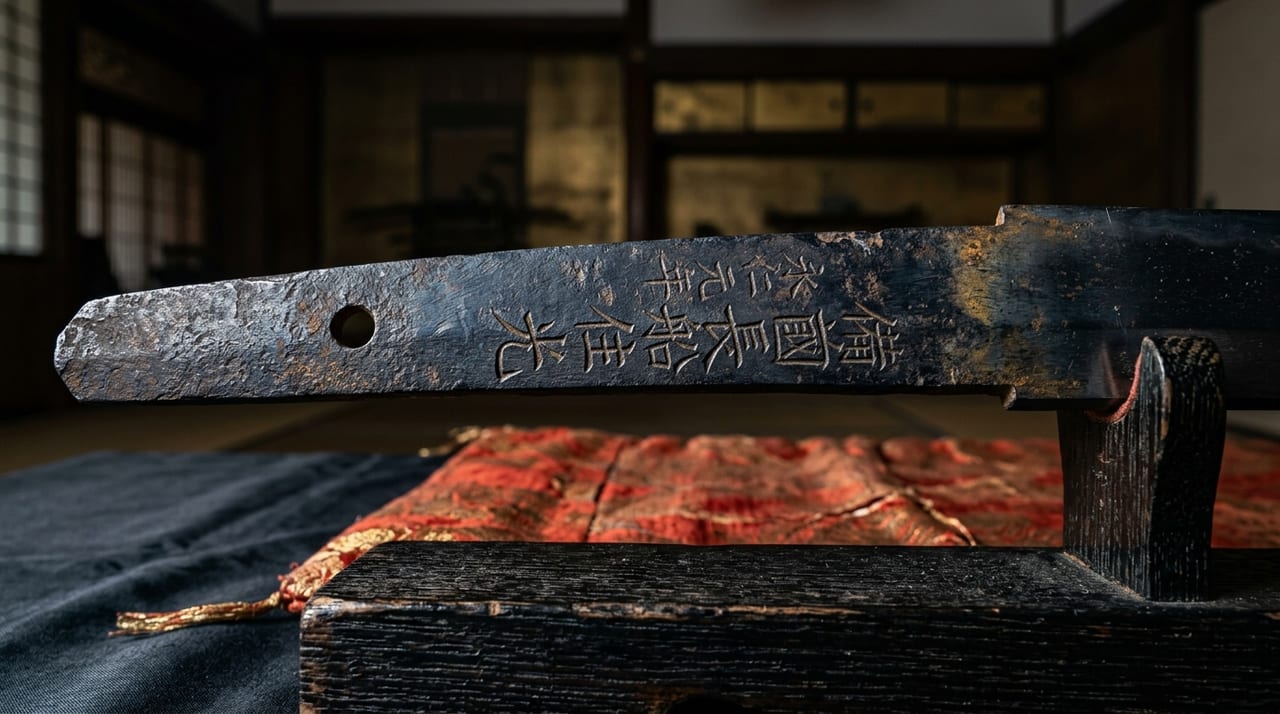 * Image is for illustrative purposes only.
Table of Contents
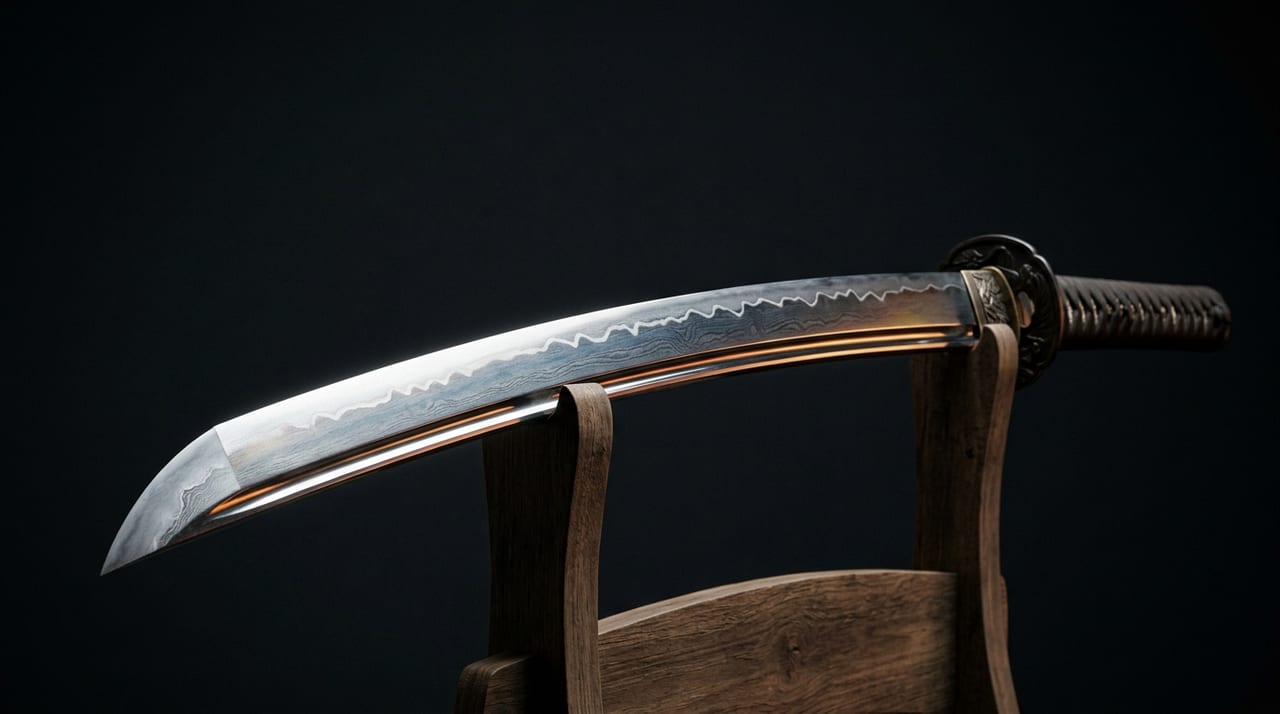
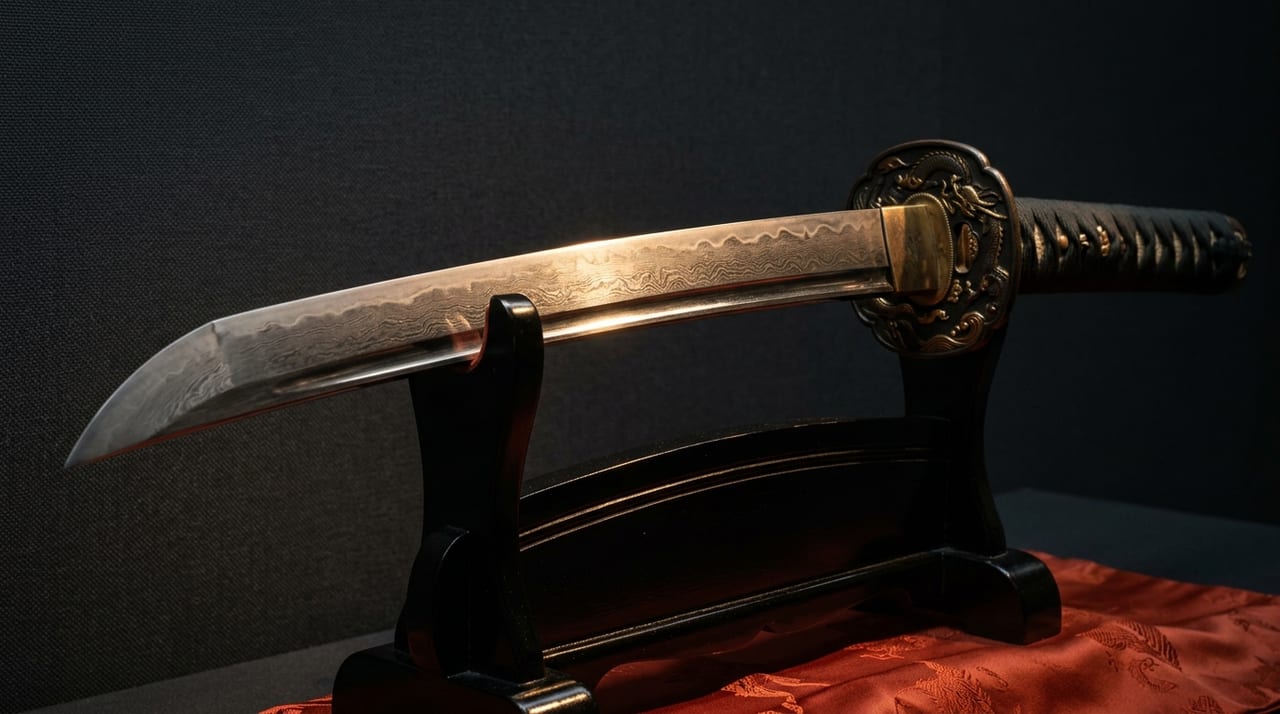
When observing the jigane (steel of the blade surface) of a nihontō, fine linear patterns may sometimes be visible to the naked eye amid the silver-white brilliance. This is the phenomenon known as chikei. Chikei is one of the key observation points in nihontō appreciation, serving as an appraisal indicator for decoding the tōkō's skill, school, and place of origin. This article provides a systematic explanation of the definition, types, formation mechanisms, and appraisal applications of chikei.
What Is Chikei — Definition and Visual Characteristics
Chikei refers to "dark-colored (black, subdued light) linear activity (hataraki) that appears in the jigane." It is observed as dark, sunken fine streak-like patterns on the surface of a sword's jigane (the steel of the flat portion of the blade). Note that bright, white, shining linear activity is kinsuji and inazuma (activity within the hamon), which are distinct from chikei.
Chikei is one of the important phenomena of the jigane alongside utsuri and ji-nie, forming a core element of jigane evaluation in nihontō appraisal.
Visually, chikei appears as fine lines with a subdued, black-to-dark-gray luster, and its direction, length, distribution, and density determine its quality. Chikei only becomes clearly visible when a togishi (polisher) employs appropriate whetstones and togi (polishing) techniques, so the quality of polishing greatly affects the visibility of chikei.
The Formation Mechanism of Chikei — The Relationship Between Metal Structure and Light
Chikei is the visual expression — brought out through polishing — of metallurgical characteristics formed during the sword-forging process.
The jigane of nihontō develops a layered structure through orikaeshi tanren (folding). The boundary surfaces of this layered structure, lines of accumulated impurities (primarily carbide and slag particles), or structural anisotropy generated by thermal stress during yaki-ire (quenching) appear as differences in light reflection after polishing. This is what is perceived as chikei.
The following mechanisms are specifically involved.
- Reflective differences from structural variation in tanren layers. The layer boundaries formed by orikaeshi tanren may have slightly different carbon concentrations and particle densities from adjacent structures. This difference appears as minute variations in light reflectance, forming chikei.
- Structure following the "flow" of kitae-hada. The direction of chikei tends in many cases to align with the direction of the iron's "flow (tanren-nagashi)" during forging. Chikei flowing along the longitudinal or diagonal axis of the blade indicates the directionality of forging.
- The relationship between chikei and nie and nioi. Chikei can appear on its own, but often appears in combination with ji-nie. Whereas ji-nie is "point-like brilliance," chikei is "linear brilliance," and when both coexist the appearance of the jigane becomes richer.
Types of Chikei and Shape Classification
Chikei can be classified into multiple types according to differences in shape, direction, and distribution.
- Straight chikei (chokusen-jō chikei): Chikei that appears in a straight line along the longitudinal axis of the blade or the flow of the tanren. It tends to be seen frequently in swords of the Sōshū-den and indicates traces of vigorous forging.
- Curved chikei (wankyoku chikei): Chikei that appears with a slight arc. In swords of the Bizen-den, chikei that curves along the wood-grain flow of itame (itame-hada) often appears.
- Branching chikei (bunki chikei): Chikei of complex shape that forks into two or three branches along its course. It tends to appear in swords in which a complex layered structure has been formed through advanced orikaeshi tanren, and may be regarded as evidence of elaborate forging skill.
- Mesh-like chikei (amime-jō chikei): A phenomenon in which multiple chikei cross each other and appear mesh-like. Chikei combined with the mokume (mokume-hada) of the Yamato-den is close to this shape.
Characteristics of Chikei by Gokaden Tradition
The way chikei appears shows tendencies that differ according to the five major production centers of nihontō (Gokaden).
- Bizen-den: In the jigane of the Bizen-den, which is based on itame, fine straight chikei tends to appear in the masame portions. Many chikei run parallel to the direction of the hamon, giving an overall orderly impression. The moistness (uruoi) of the jigane and the fineness of the chikei are important indicators in Bizen-den evaluation.
- Sōshū-den: Swords of the Sōshū-den tend to display coarser chikei. In jigane described as "filled with nie," as seen in works by Masamune and Sadamune, chikei can also appear powerfully and on a large scale. The chikei of the Sōshū-den is described as "rich in activity."
- Yamashiro-den: In the Yamashiro-den, where small itame is beautifully tight-grained, chikei tends to appear relatively fine and uniform. The chikei in the jigane of the Awataguchi lineage is considered refined and dignified, and is highly regarded in appraisal.
- Yamato-den: In swords of the Yamato-den, which is based on masame (masame-hada), long straight chikei running along the direction of the tanren flow tends to appear. The chikei seen in swords of the Tegai School and the Senjuin School gives a bold and rugged impression.
- Mino-den: In the Mino-den, where itame and masame are mixed, the appearance of chikei tends to be more irregular than in other traditions. While the Mino Tradition is sometimes described as "coarse in workmanship," there are also celebrated blades in which the boldness of the chikei is considered part of their charm.
The Togishi's Skill and Bringing Out Chikei
Chikei is something that already "exists" in the sword, but it is the togishi's skill that makes it clearly visible. Depending on the choice of whetstone, the angle of togi, and the finishing method, the appearance of chikei can vary greatly even in the same sword.
One technique used by the togishi to bring out chikei is the process known as hadatate. This is a technique in which a special polishing operation is added after the finishing whetstone in order to make the jihada (grain pattern of the steel) of the jigane (itame, masame, etc.) and the chikei stand out clearly.
If one tries to bring out chikei excessively through togi, there is a risk of the blade becoming too thin. The togishi is required to exercise a high level of judgment to maximize the beauty of the chikei while maintaining the balance that preserves the blade's original thickness and shape.
Evaluation of Chikei in Appraisal
In nihontō appraisal, chikei is used as evidence for the following determinations.
- Identification of school and place of origin. Since the shape, density, and directionality of chikei show tendencies by school, combining it with other observation points (hamon, jihada, nakago) provides clues for narrowing down the sword's place of origin and school.
- Evaluation of tanren quality. Uniform and regular chikei indicates skilled orikaeshi tanren technique. Conversely, disordered or uneven chikei may indicate coarseness in the forging or problems with the material. However, since "coarse chikei" may be a characteristic feature in certain schools, it must be interpreted within the context of the school.
- Assistance in authenticity determination. Even in sophisticated forgeries, the chikei structurally differs from chikei formed by genuine orikaeshi tanren, so it can serve as supplementary evidence for authenticity determination when combined with X-ray examination and high-magnification microscopic observation.
Conclusion — The Story of Sword Forging That Chikei Tells
Chikei is a "memory of forging" inscribed on the surface of a sword. Dozens of repetitions of orikaeshi tanren, the management of furnace temperature, the feel of the craftsman's hands — all of this is recorded in the metal structure and appears as patterns of light through the togishi's skill. The skill of reading chikei deepens appreciation from the stage of enjoying a sword's beauty as a mere visual impression to the stage of "reading" the process by which that sword was born. In nihontō appreciation, attention to chikei is an important step toward approaching the very essence of sword culture.