Japanese Sword Collection Culture in Europe: Sword Enthusiast Organizations in Germany, France, and the United Kingdom, and the Reality of Local Appraisal
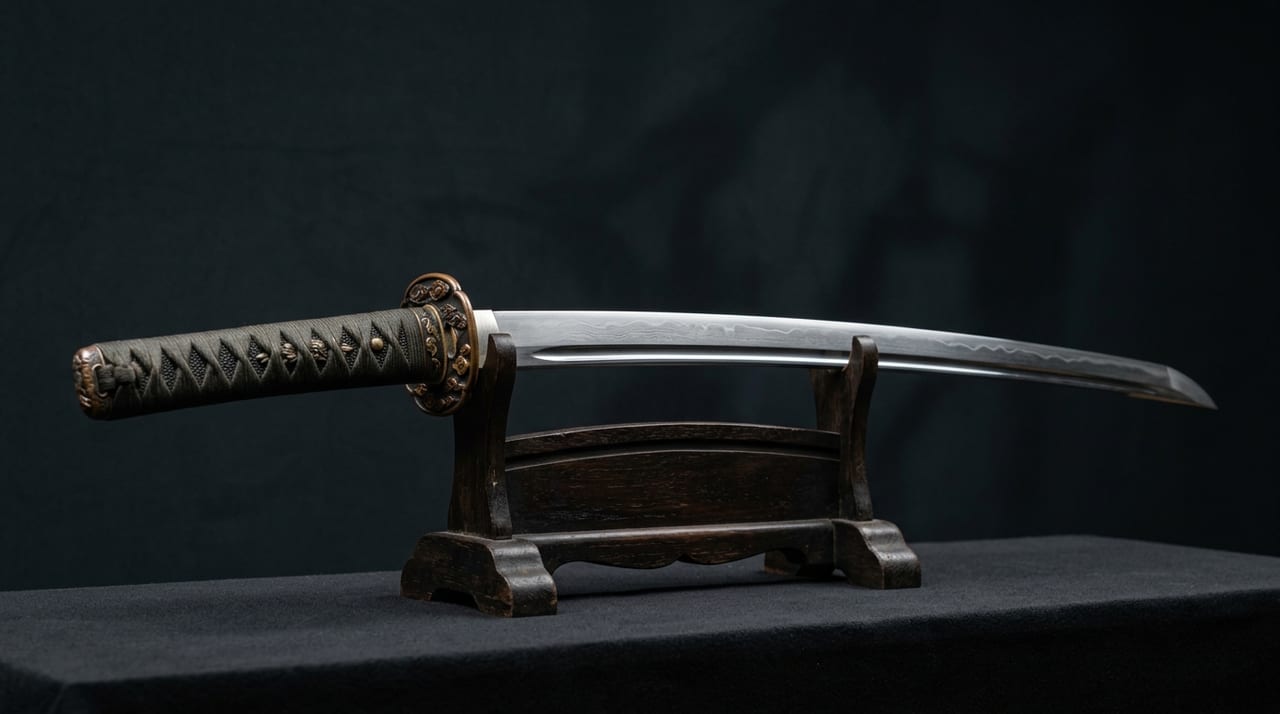 * Image is for illustrative purposes only.
Table of Contents
The Background of the Japanese Sword Boom in Europe
When one thinks of overseas collectors of Japanese swords, many people may picture wealthy individuals in the United States or Southeast Asia. However, in Europe — particularly in Germany, France, and the United Kingdom — Japanese sword enthusiast communities with long histories exist, and they have cultivated their own distinctive collection and appraisal cultures.
This history traces back to the Japonisme movement of the latter half of the 19th century. Japanese swords and tōsōgu began to flow into Europe alongside ukiyo-e and ceramics, and collectors who took an interest in swords as works of art began to emerge. Entering the 20th century, large numbers of Japanese swords remained in Europe following the First and Second World Wars, becoming the seeds of the postwar collector market. From the 1970s onward, enthusiast associations were established one after another in each country and have continued to engage in active activities to this day. The principal enthusiast organizations and their activities in Germany, France, and the United Kingdom are as follows.
| Country | Principal Enthusiast Organization | Activities |
|---|---|---|
| Germany | German Japanese Sword Society (Deutsche Gesellschaft für Nihon-to) | Hosting regular study meetings, appraisal sessions, and mini-auctions |
| France | French Association for the Study of Japanese Martial Arts and Weapons (Association Française d'Études des Arts et Armes Japonais) | Hands-on study of tōsōgu at regular study meetings |
| United Kingdom | Token Society of Great Britain | Publication of the journal Token Society Journal |
Germany: A Pioneer in Organized Japanese Sword Research
Germany is the country with the most organized Japanese sword enthusiast activities in Europe. The German Japanese Sword Society (Deutsche Gesellschaft für Nihon-to) operates as a formal membership organization that collects annual dues, hosting regular study meetings, appraisal sessions, and mini-auctions. Its membership includes university researchers of East Asian art and individuals proficient in Japanese, and a style of studying Japanese swords with an academic approach has taken root.
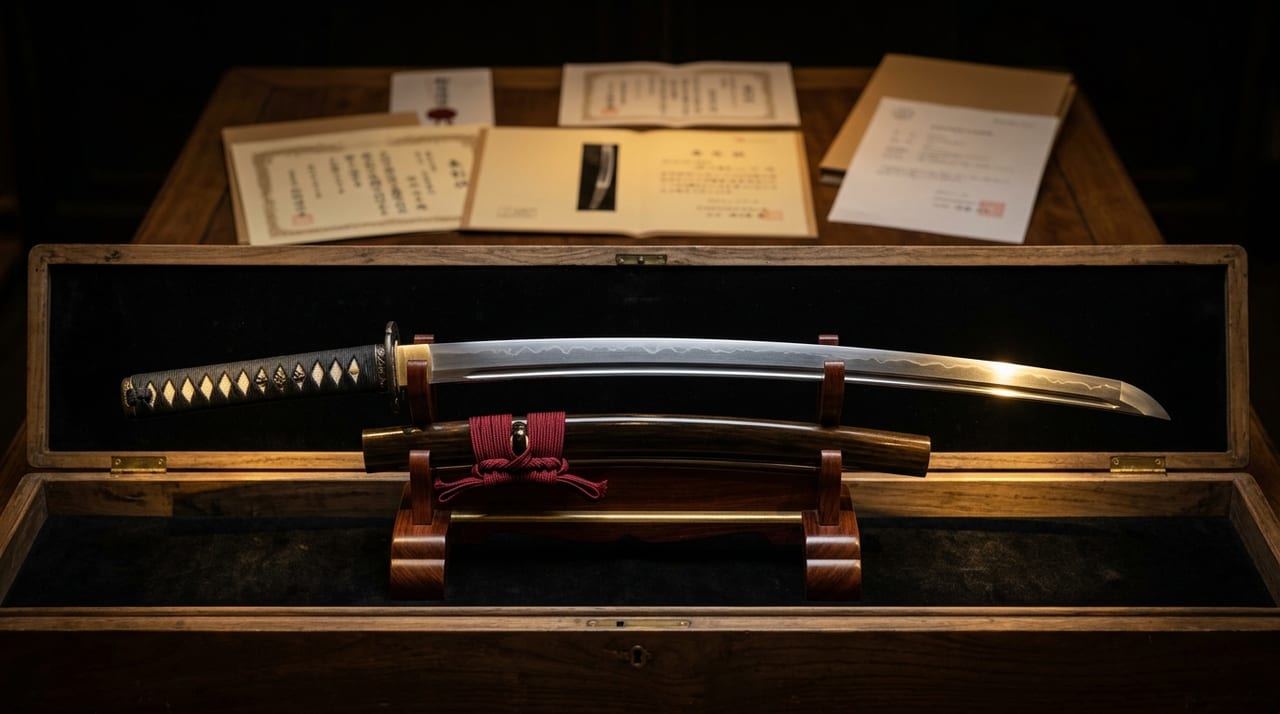
A characteristic of German collectors is their emphasis on kanteisho. They place the highest value on kanteisho issued by Japan's NBTHK (Society for the Preservation of Japanese Art Swords), and tend to seek pieces ranked at Jūyō Tōken or higher when possible. There are also many collectors who attempt to read Japanese-language specialist literature themselves, and there are examples of original appraisal papers mixing both Japanese and German being distributed in the manner of self-published journals.
Within Germany, antique dealers and auction houses in major cities such as Munich, Hamburg, and Berlin regularly offer Japanese swords for sale. Appraisal is generally referred to specialists in Japan, though German collectors with many years of experience may also carry out informal assessments.
France: An Evaluative Framework Based on Artistic Value and a Culture of Preservation
A notable characteristic of Japanese sword collecting in France is the prominence of an evaluative framework based on fine art and craft. French-speaking collectors tend to take a strong interest in the koshirae — the tōsōgu such as the saya, tsuka, tsuba, and menuki — rather than the shape of the blade or the beauty of the hamon. This aligns with the context of the French art market, which places great importance on the decorative arts (Arts Décoratifs).
Paris auction houses (Christie's Paris, Sotheby's Paris) frequently offer individual tōsōgu for sale. The openwork carving, nunome-zōgan, and metalwork craftsmanship of tsuba are highly regarded by European buyers, and it is not uncommon for a single tsuba to sell for a higher price than the blade itself.
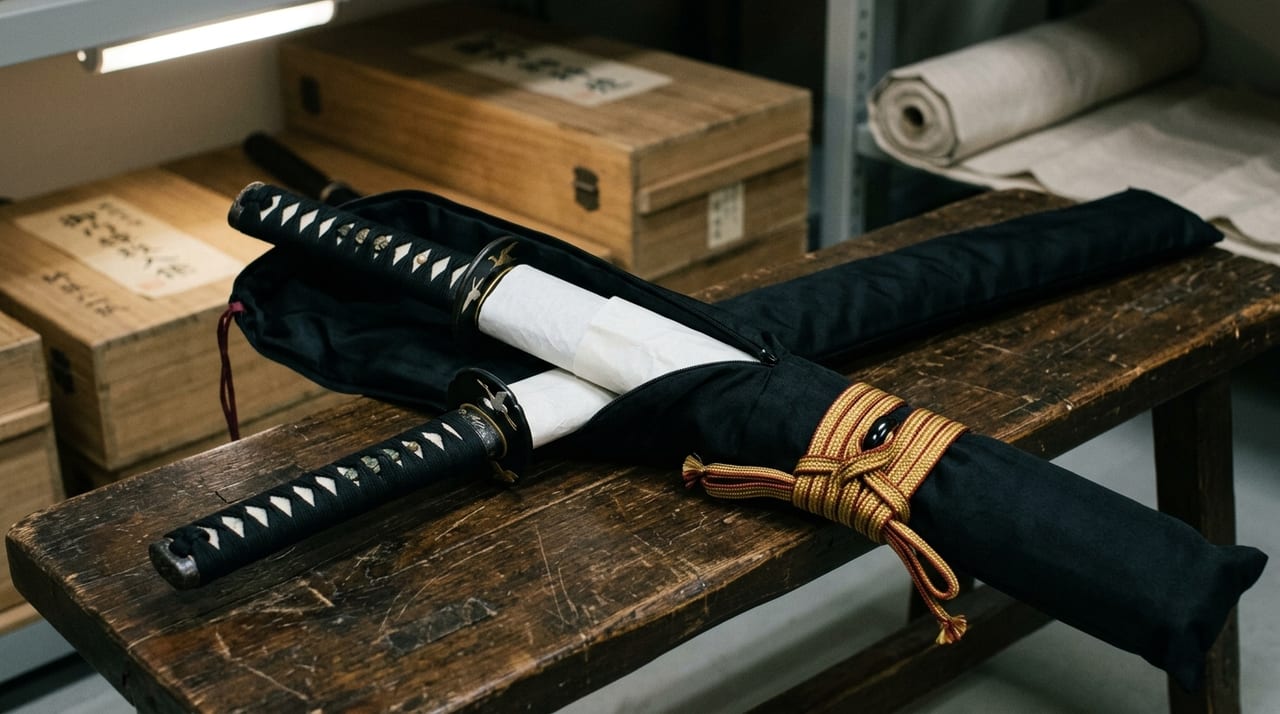
Among French Japanese sword collector organizations is the long-active Association Française d'Études des Arts et Armes Japonais (French Association for the Study of Japanese Martial Arts and Weapons), where hands-on study of tōsōgu is conducted at regular study meetings. Preservation awareness is high, and there are many collectors who apply their own ingenuity to the production and restoration of storage boxes (sword boxes).
The United Kingdom: The Reality of the Auction Market and Sword Legislation
Japanese sword collection culture in the United Kingdom is affected by distinctive legal restrictions. The principal restrictions under British sword law (Criminal Justice Act 1988 Section 139, and subsequent regulations) are as follows.
- All bladed and sharply pointed articles, with the exception of folding pocket knives, are prohibited from being carried in public places (the 3-inch blade length requirement applies only to folding knives)
- Japanese swords are prohibited from being carried in public places regardless of blade length
- Possession itself as an antique or work of art is permitted, but collectors must exercise a certain degree of care in storage and display
The United Kingdom's major auction houses (Bonhams, Christie's London) regularly include Japanese swords in their sales, with Bonhams in particular continuously offering swords under the category "Japanese and Korean Works of Art." Hammer prices have shown an upward trend in recent years, and cases of Middle Eastern and Asian buyers participating in addition to Japanese collectors resident in Europe are increasing.
Among United Kingdom Japanese sword enthusiast communities, the Token Society of Great Britain has been active for many years, publishing the journal Token Society Journal. Collection articles, appraisal records, and overseas assessment trip reports are published in English, and it functions as an information infrastructure for Japanese swords in the English-speaking world.
A Challenge Common to All of Europe: The Accuracy of Appraisal and Connections with Japan
A challenge common to all of Europe is that high-accuracy appraisal locally is difficult. Swords accompanied by a kanteisho obtained through examination by Japan's NBTHK or the Nihontō Bunka Shinkō Kyōkai (NTHK-NPO) have stable valuations, but pieces without a kanteisho must necessarily rely on the empirical judgment of local collectors.
In response to this challenge, enthusiast organizations in Germany, France, and the United Kingdom have addressed it by strengthening exchanges with Japanese organizations. Routes for obtaining kanteisho locally by participating in European appraisal events held by the NBTHK and NTHK-NPO (traveling examination sessions hosted by their European branches) have been established. There are also many collectors who obtain reliable pieces through personal connections with Japanese sword dealers and tōkō.
European Japanese sword collection culture has evaluated, preserved, and researched swords from a perspective unique from that of Japan — a combination of artistic, cultural property, and historical approaches. This accumulated body of work forms an important part of global Japanese sword culture.