Hizen Tadayoshi: Founder of the Hizen School and Three Centuries of Sword-Making Legacy
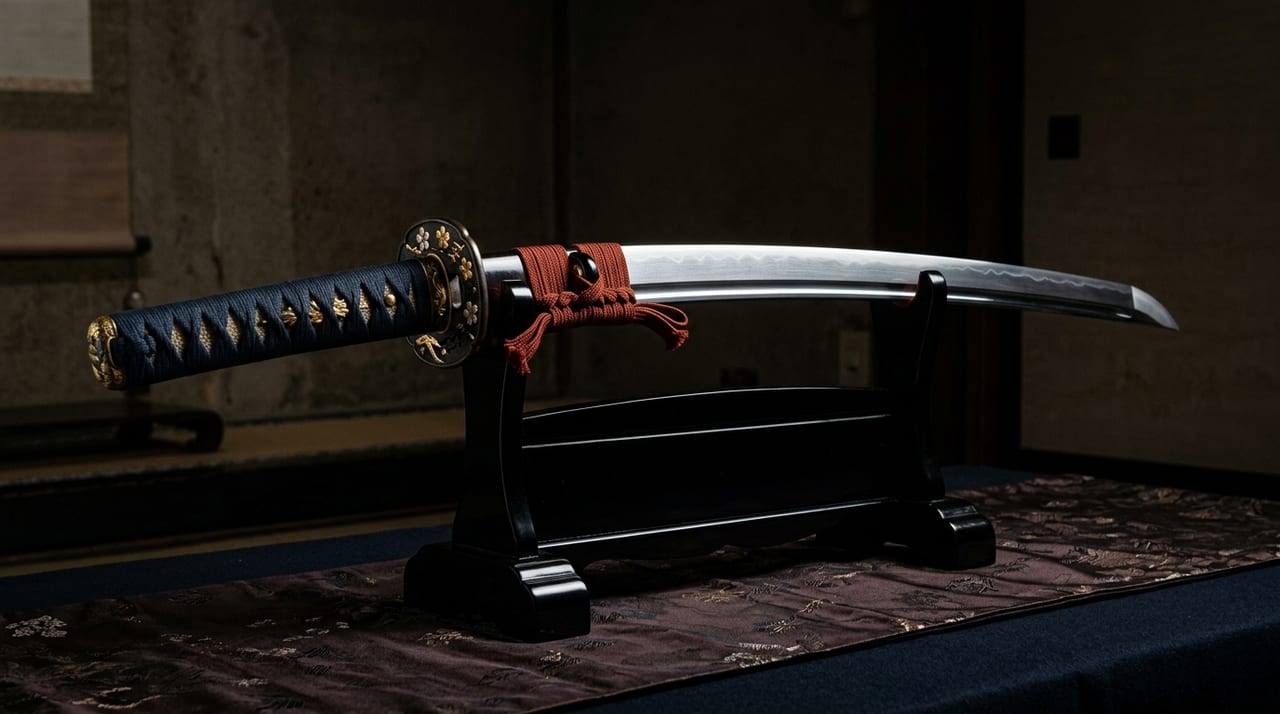 * Image is for illustrative purposes only.
Table of Contents
Hizen Tadayoshi - Who was he?: The Life of Founder Hashimoto Shinzaemon Tadayoshi
The first Hizen Tadayoshi (肥前忠吉) was a swordsmith who flourished in the early Edo period, with the birth name Hashimoto Shinzaemon. His birth year is subject to various theories, but is generally believed to have been around the second or third year of Genki (1571–1572) according to mainstream accounts. He was from Hizen Province (present-day Saga Prefecture) and is said to have traveled to Kyoto at a young age, where he trained under renowned swordsmiths.
The accepted theory is that he trained under Umetada Myōju, which is supported by major sword historical documents. The theory that he trained under Iga no Kami Kinmichi (of the Kyō-Mishina school) does not appear in major sources. Upon completing his training, the first-generation Tadayoshi returned to Hizen, where his skill immediately attracted the attention of the local powerful daimyo, the Nabeshima clan. During the Keichou era (1596–1615), he became the official swordsmith of the Nabeshima domain, thereafter becoming a central figure in establishing the reputation of "Hizen swords."
The forged swords of the first Tadayoshi were groundbreaking in establishing their own distinctive "Hizen sword" style. Distinct from the traditional production centers of Bizen, Soshu, and Yamato, the sword culture that embodied the Zeitgeist of the Shintou era (Keichou–Horeki) flourished in the Kyushu region.
Technical Characteristics of Hizen Swords - The Precision of Hoso-suguha and Konuka Jihada
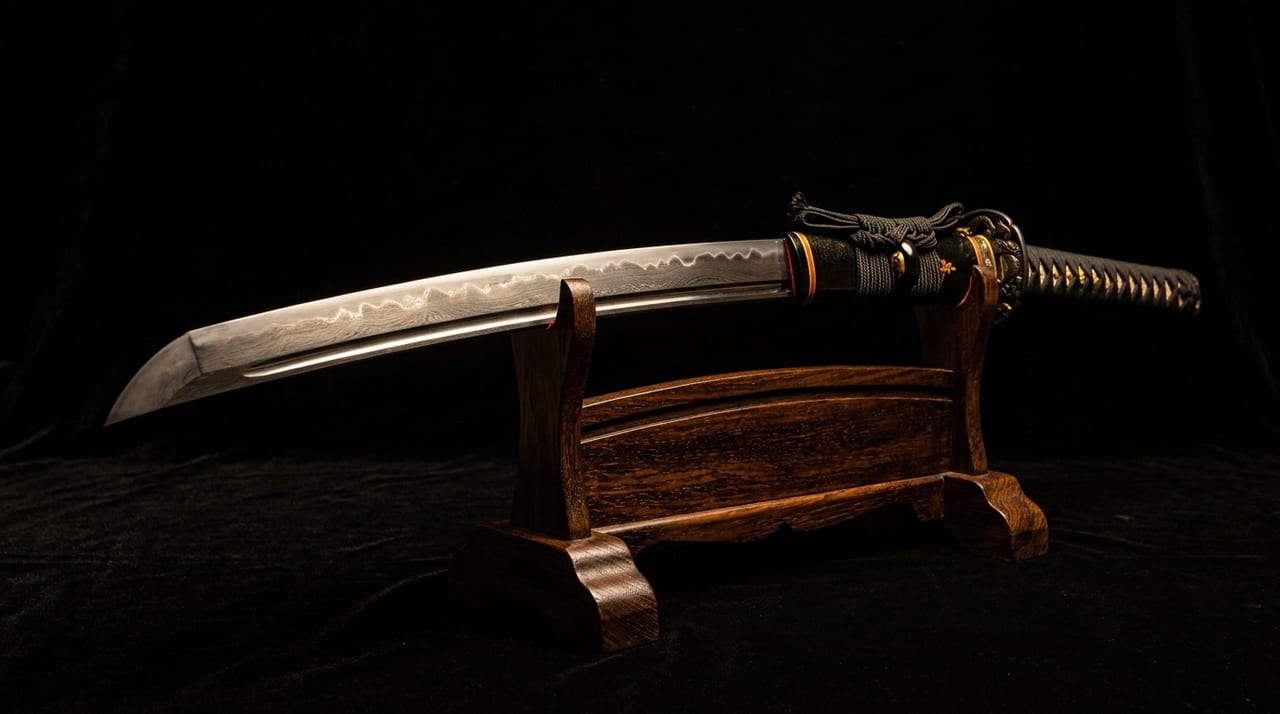
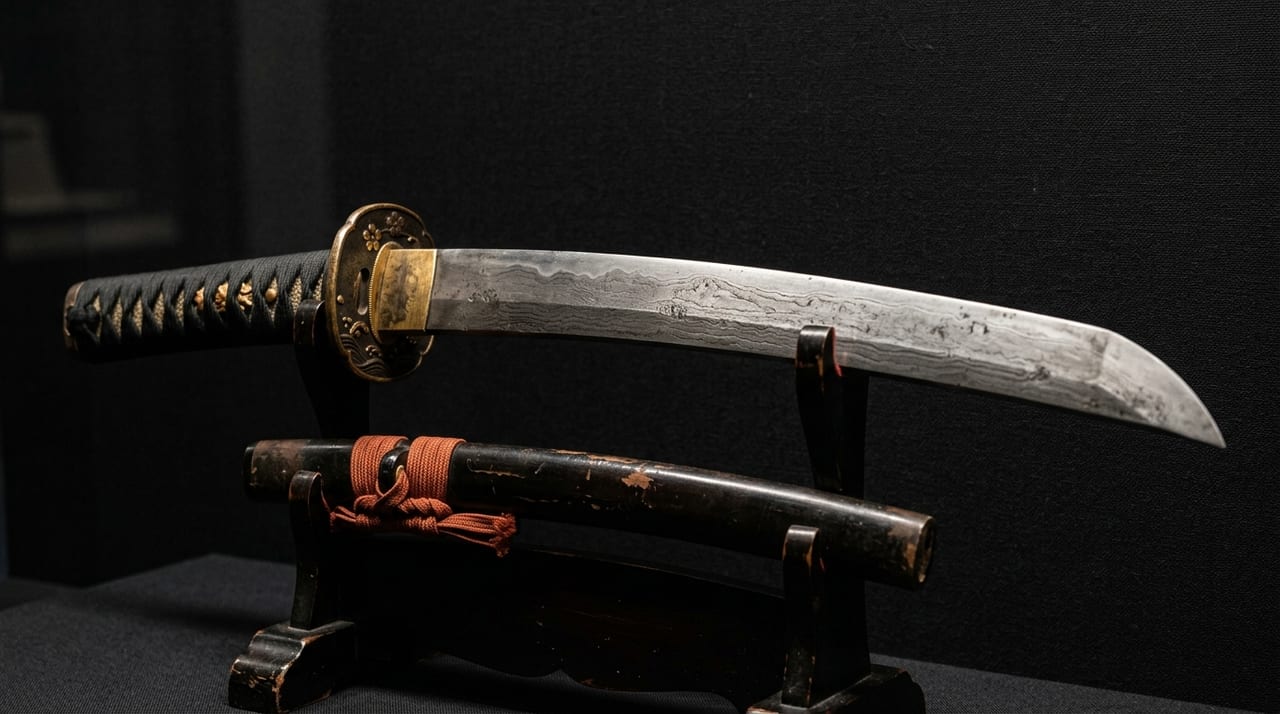
The most distinctive technical characteristic that distinguishes swords by the Hizen Tadayoshi school from other schools is the blade pattern called hoso-suguha (fine straight blade). The blade edge features a fine, remarkably uniform straight-blade pattern that shows almost no wavering, and when placed on a whetstone under fluorescent light, it reflects as clearly as a mirror, displaying an orderly and refined beauty.
The steel body (jigane) is characterized by what is called konuka hada (fine grain structure), an extremely finely-packed grain pattern that is the defining trademark of Hizen swords. This grain pattern, where ko-itame is packed to its limit, combined with the fine suguha blade creates an impression of cleanliness and precision. This represents the polar opposite of the rough, expansive nie spread of the Soshu tradition or the bold choji blade patterns of the Bizen tradition—a serene aesthetic that became widely favored as the formal swords of the samurai warrior class during the Edo period. The uniformity of the konuka hada is also highly valued in NBTHK authentication as a unique characteristic of Hizen swords.
The precise control of quenching temperature and the high quality of the finishing polish work guaranteed the quality of Hizen swords. In particular, the meticulous care of nugui-togi polishing was passed down among Hizen polishers, and the collaboration between swordsmith and polisher formed a regional culture that supported "Hizen sword beauty."
Official Swordsmith of the Nabeshima Domain - The Technological Deepening Brought by Daimyo Patronage
That the first Tadayoshi received the patronage of the Nabeshima domain played a decisive role in the technological advancement of Hizen swords. The position of official daimyo swordsmith provided not only economic stability but also opportunities for technological refinement through large orders for samurai (koshigatana, wakizashi, and uchigatana) destined for domain retainers and vassals.
The Nabeshima domain was a powerful daimyo of 350,000 koku or more, and there was substantial demand for sword supply to the samurai class. Moreover, in the early modern period in Kyushu, the following daimyo competed to secure excellent swordsmiths, and the fame of Hizen Tadayoshi spread throughout the Kyushu region:
- The Shimazu clan (Satsuma)
- The Hosokawa clan (Higo)
- The Kuroda clan (Fukuoka)
On the other hand, the first Tadayoshi is said to have also opened relations with the shogunal family. Scattered throughout Edo shogunate records and sword-related literature are records of works by Tadayoshi from the first through second generation being presented to the shogun as items for his inspection. This serves as the basis for the claim that "Hizen swords were beloved by the shogunal family."
The "Tadayoshi" Name Lineage Carried On - Succession Over Ten Generations and the Spread of Branch Families
The name "Hizen Tadayoshi" continued to be inherited by the family even after the death of the first-generation Hashimoto Shinzaemon Tadayoshi. From the second generation onward, successive generations inherited the Tadayoshi name, and for more than ten generations throughout the Edo period, swordsmiths continued to forge swords. This is one of the most remarkable examples of long-term succession in Japanese sword history.
As generations passed, the Tadayoshi school formed branch families, and several lineages operated in parallel, such as the following:
- Masahiro (正広)
- Tadahiro (忠廣)
- Yukihiro (行廣)
In particular, the "Tadahiro" lineage was highly valued as an independent name lineage and is distinguished in authentication as a swordsmith that preserved the orthodox techniques of Hizen swords.
Many swordsmiths from the Tadayoshi school were active during the late Edo period, but demand plummeted due to the Meiji Restoration's Haitorei (sword ban) in 1876. However, through protection by sword enthusiasts and re-evaluation as cultural property, the Hizen sword tradition continued thinly as "modern craftsmanship." In the present day, sword smiths who carry on the "Hizen Tadayoshi" name lineage still exist in Saga Prefecture, transmitting the lineage of technique spanning more than three centuries.
Modern Value of Hizen Swords - Appraisal and Market Evaluation
Swords by the Hizen Tadayoshi school continue to receive high appraisals in today's Japanese sword market and authentication circles. In NBTHK (Nippon Bijutsu Token Hozon Kyokai/Japanese Art Sword Preservation Society) examination, some works by the first generation and superior works from later generations are designated as "Juyo Token" (Important Swords), with their fine suguha blade patterns and uniform konuka jihada receiving high evaluation.
Market prices are evaluated as follows:
| Generation | Price Range |
|---|---|
| Superior works by the founder | Several million yen and above |
| Superior works from second generation onward | One million yen and above |
In particular, wakizashi and uchigatana forms where the fine suguha blade pattern remains beautifully tend to be traded at higher prices. If koshirae (sword fittings) are included, added value is recognized as a craft object that transmits the unique decorative culture of the Hizen region.
The name "Hizen Tadayoshi" has transcended the name of a single swordsmith to become a brand symbolizing "a family's technical heritage." The succession of a swordsmith family continuing for over three hundred years stands as a valuable testament to the enduring strength of Japanese sword culture.