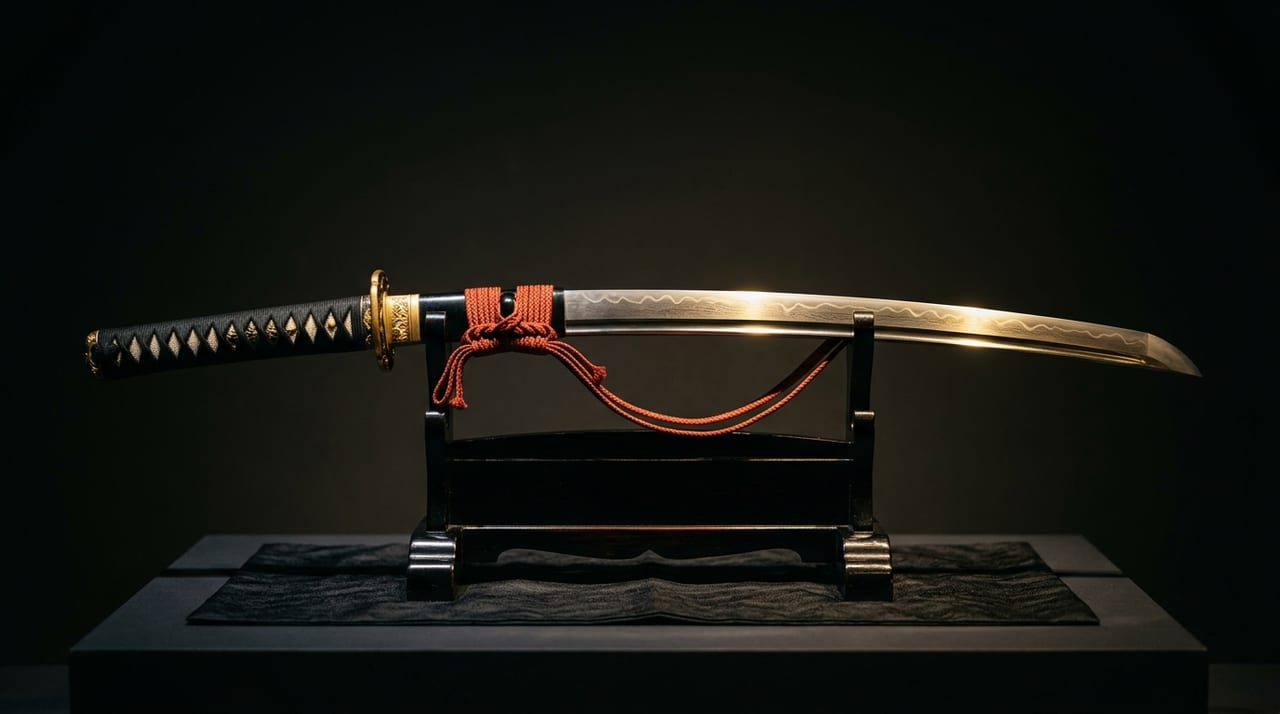
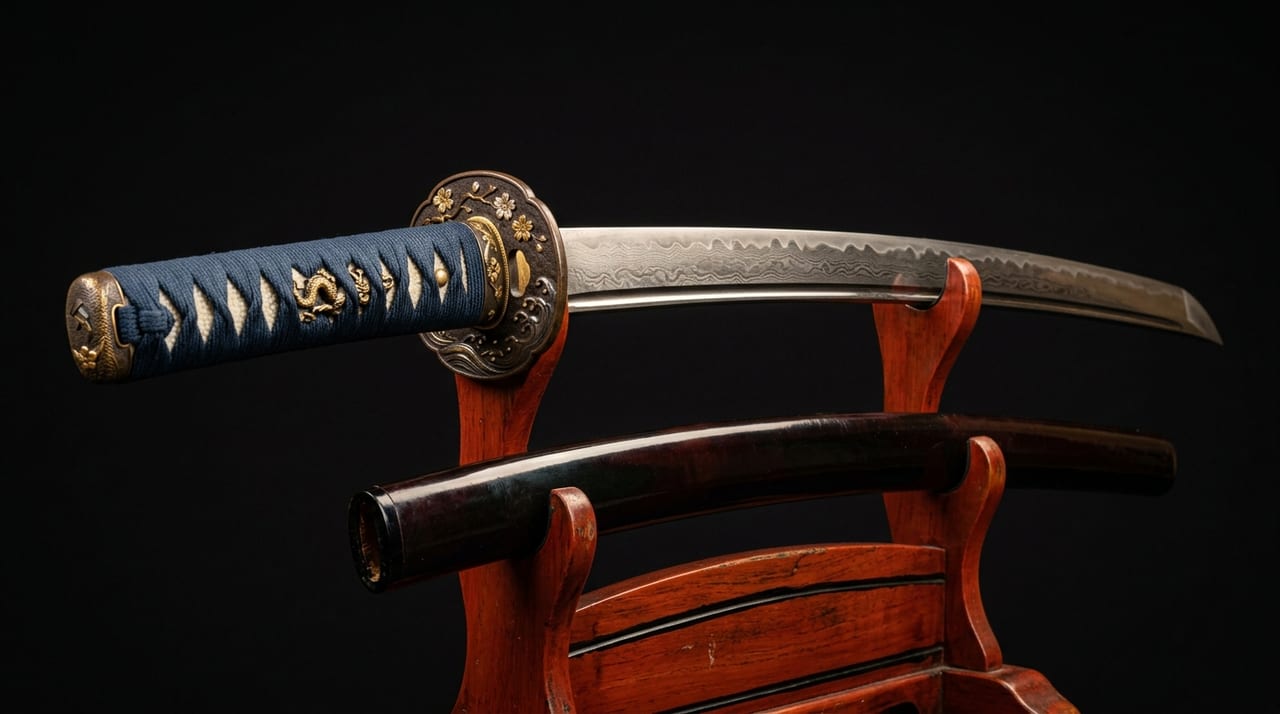
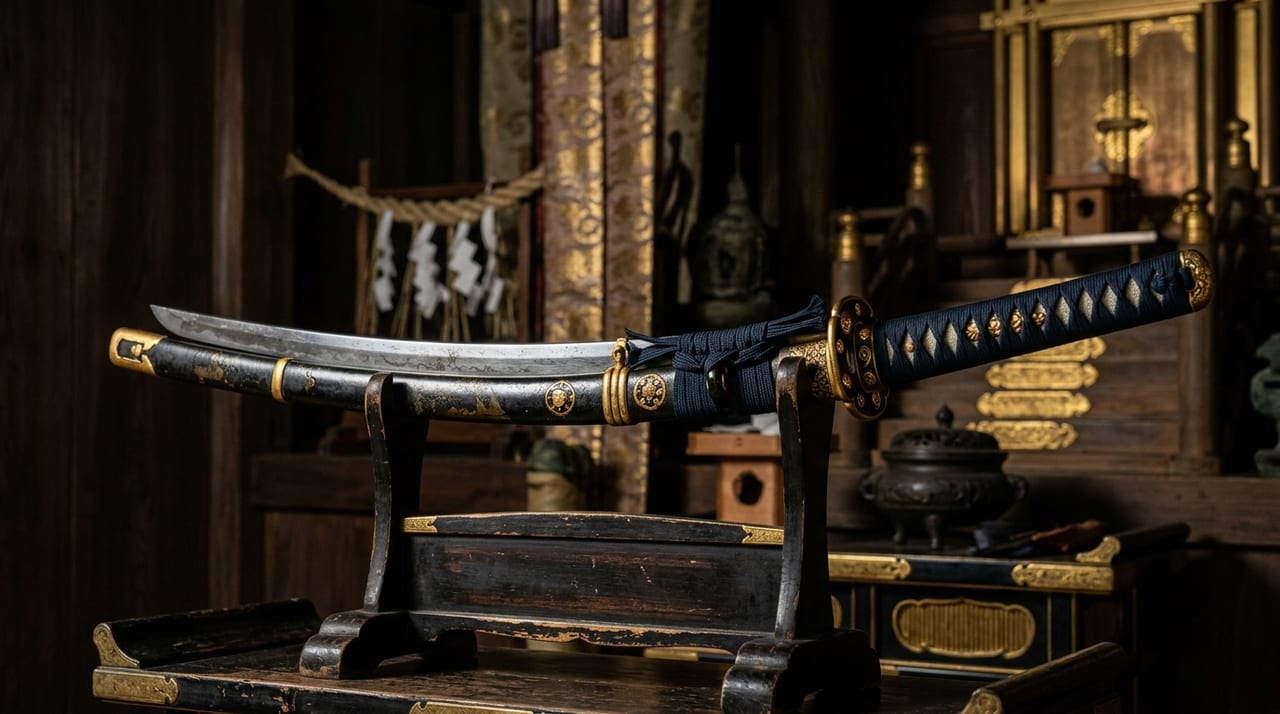
The Kyōtoku Rebellion (1455–1483) and Sword Culture: The Rise of Regional Swordsmiths and the Demand Structure for Kazuuchi-tō That Emerged from Twenty-Eight Years of War in the Kantō Region
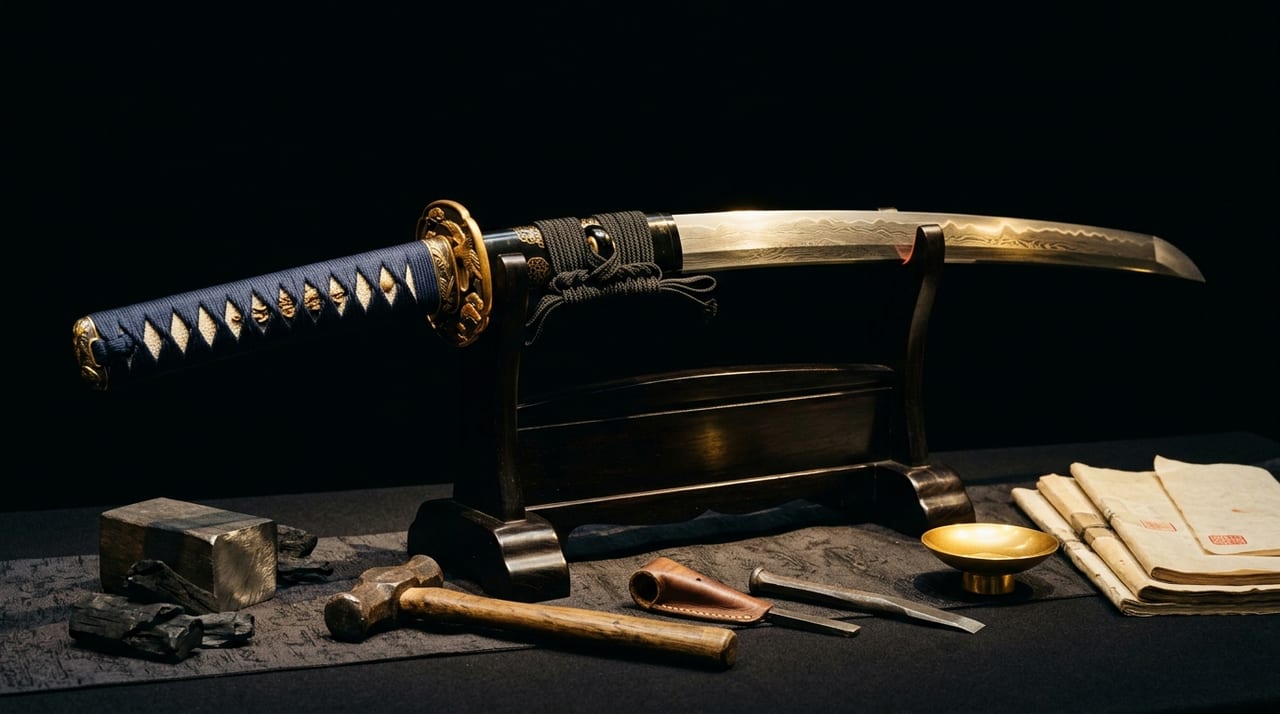 * Image is for illustrative purposes only.
Table of Contents
What Was the Kyōtoku Rebellion: The Collapse of Muromachi Shogunate Authority and the Great War in the Kantō Region
The Kyōtoku Rebellion began in 1454 (the 3rd year of Kyōtoku) and continued for approximately twenty-eight years until the Tohi-gattai reconciliation of 1483 (the 15th year of Bunmei). It was triggered by the assassination of Kantō Kanrei Uesugi Noritada by the Kamakura Kubō, Ashikaga Shigeuji. This caused a prolonged conflict in the Kantō region between those siding with the Kamakura-fu and those supporting the shogunate, developing into an upheaval that later generations would describe as "the starting point of the Sengoku period."
Ashikaga Shigeuji subsequently left Kamakura, relocated his base to Koga in Shimōsa, and came to be known as the Koga Kubō. In response, the shogunate dispatched a new Horikoshi Kubō to the Kantō region, entrenching a structure of conflict in the form of a split within the Kantō Ashikaga clan. This conflict was not fully resolved even after the end of the Kyōtoku Rebellion and would continue to influence the political situation in the Kantō region throughout the Sengoku period.
In the Kantō region, where the governing structure of the Muromachi shogunate had become dysfunctional, powerful daimyo and kokujin were compelled to build their own independent military forces. This situation would fundamentally transform the structure of demand for swords. There was no means to procure fine swords from prestigious production centers in the Kinai and western provinces such as Kyoto, Yamato, and Bizen, and a system for locally procuring practical swords in large quantities began to take shape across the region.
The Explosive Growth of Sword Demand in the Kantō Region
Before the Kyōtoku Rebellion, most of the swords sought by the warrior class of the Kantō region flowed in from the western provinces. Tachi and swords of the Bizen Osafune school, masterworks of the Sōshū-den, and swords forged by rising tōkō in Kyoto were delivered to the eastern provinces through merchants and deputies. However, over the course of twenty-eight years of warfare, these long-distance procurement routes were frequently disrupted.
What emerged in their place was a regional procurement system that can be called "Kantō-jimawari." Warrior bands from the provinces of Izu, Sagami, Musashi, Kōzuke, Shimotsuke, Hitachi, Kazusa, and Shimōsa began placing large orders for kazuuchi-tō with nearby kaji. Kazuuchi-tō were swords bearing no mei and of mass-production quality, a class of sword that prioritized practicality — sufficient as long as they could be used in actual combat. In order to meet this demand, small-scale kaji proliferated across the Kantō region.
It is believed that sword demand in this period also showed a differentiation by social rank. While commanders and senior warriors continued as before to seek swords from prestigious production centers, as the numbers of ashigaru and foot soldiers mobilized grew, the proportion of kazuuchi-tō provided for their use increased. The Kyōtoku Rebellion, having become a prolonged conflict, was a war that normalized this polarization of demand in the Kantō region.
The Rise of Regional Swordsmiths: The Kaji of Musashi, Kōzuke, and Hitachi
Among the regions where records of tōkō activity in the Kantō area increase from the time of the Kyōtoku Rebellion are Musashi (present-day Tokyo and Saitama Prefecture), Kōzuke (present-day Gunma Prefecture), and Hitachi (present-day Ibaraki Prefecture). The kaji of Musashi in particular are referred to in documents from the Edo period onward as "Bushū-mono," and are remembered as a group that supplied practical swords during the period of warfare.
In Kōzuke, continuous demand for swords arose from within the Uesugi clan, which was caught in the midst of the warfare. There are also traces of local kaji beginning to forge, in addition to swords, a variety of bladed weapons such as spears and naginata. In Hitachi, there are records of warrior bands in the formative period of daimyo such as the Oda clan and the Satake clan offering protection to tōshō, and some researchers see this as the early beginnings of the Mito kaji tradition of the Edo period and after.
Most of these "regional tōkō" were not so much highly skilled craftsmen who produced masterwork swords as they were village kaji and agricultural-implement kaji who had been active since the Kamakura period and shifted their work in response to wartime demand. However, some did gain the patronage of local warriors, honed their skills, and grew to become tōshō in service to Sengoku daimyo in later times. It is thought that across various localities, lords provided protection by having kaji reside near their residences and granting them stipends to serve exclusively for them; some views hold that this became the prototype for the later "okakae-kaji" (retained smiths).
A further characteristic is that many of these regional tōkō are mumei or are figures whose lineage has not been transmitted. The fact that the estimation of attribution — "from which province, and from which period" — is weighted more heavily than individual maker names is a circumstance common to Kantō swords of the Kyōtoku Rebellion era.
The Economics of Kazuuchi-tō: The Rationality of Wartime Demand for Quantity Over Quality
On the battlefields of the Kyōtoku Rebellion, the significance of individual warriors possessing fine swords diminished, and demand grew for practical swords that were easy to handle and obtain. This was the direct factor that drove the expansion of the kazuuchi-tō market.
The manufacturing cost of kazuuchi-tō was far lower than that of individual commissioned forging (chumon-uchi). By forging multiple swords in succession to the same specification, consumption of charcoal, man-hours of hammer work, and the number of yaki-ire cycles could all be made more efficient. Though consistency of quality was low, for soldiers who would actually use them on the battlefield, the standard of "not breaking, not bending, and cutting" took priority.
It is generally noted that kazuuchi-tō tended toward yaki-ire in a suguha style that could be executed quickly and a simplified nakago finish, rather than careful cosmetic togi or complex hamon expression. This can be understood not as an aim for artistic completion but as a rational choice to reconcile battlefield durability with production efficiency.
This demand structure represented a significant business opportunity for regional kaji in the Kantō region and at the same time served as a site for accumulating mass-production techniques. The techniques of tōkō groups that took root across the Kantō region during this period formed the foundation for the organized arms procurement systems of Sengoku daimyo from the sixteenth century onward, and would eventually come to be positioned as the prehistory of Edo tōkō culture in the Tokugawa era.
What the Kyōtoku Rebellion Left in the History of Swords
The Kyōtoku Rebellion brought two noteworthy turning points in the history of Japanese swords.
The first was the regional dispersion of the sword industry. The production of high-quality swords, which had until then been concentrated in a limited number of production centers such as Kyoto, Yamato, and Bizen, became an opportunity, through growing demand in the Kantō region, for tōkō to take root across the eastern provinces. This became the matrix for the diverse regional tōkō cultures of the subsequent Sengoku period.
The second was the acceleration of the "toolification" of swords. Up through the early Muromachi period, the swords of warriors retained strong aspects as symbols of formal dress and authority, but after the Kyōtoku Rebellion, situations increased in which swords were recognized as more purely combat tools. This change became the ideological foundation that connects to the "golden age of practical swords" in the Azuchi-Momoyama and early Edo periods.
The twenty-eight years of the Kyōtoku Rebellion changed the sword sensibility of Kantō warriors, sowed the seeds of regional tōkō culture, and served as an important historical catalyst shaping subsequent Japanese sword history.
What to Know When Appraising and Collecting Swords of the Kyōtoku Rebellion Era
If one has the opportunity today to handle a sword thought to have been made in the Kantō region during the Kyōtoku Rebellion era, the first point to keep in mind is that being mumei is not uncommon. Kazuuchi-tō originally had little concept of identifying individual makers, and works by regional kaji frequently bear no mei at all. For this reason, the center of appraisal lies not in the name of an individual tōkō but in judging the overall positioning from the characteristics of period, province, and sugata.
When confirming the positioning of mumei swords of this kind, the kanteisho issued by appraisal bodies such as NBTHK (the Society for the Preservation of Japanese Art Swords) become important documents. Even for swords whose maker cannot be identified, by demonstrating from a specialist perspective the consistency of period, province, and sugata, they fulfill the role of providing objective corroboration for swords of regional make with sparse provenance.
In the practical matter of collecting and purchasing, checking the following points will help inform one's judgment.
- Whether, beyond the presence or absence of mei, the finish of the nakago, the yasurime, and the overall period impression conveyed by the sugata are consistent with the period and province recorded in the kanteisho
- How elements indicating a history as a combat sword — such as thinning from togi and traces of repair to chipped edges — are recorded and explained
- When provenance (who the sword has passed through) is known, how far that information corroborates the background of the sword
Kantō swords of the Kyōtoku Rebellion era, including kazuuchi-tō, are evaluated by different criteria than ornate art swords. That is, value is found not in the beauty of refined jigane or hamon but in the historical reality of a practical sword that survived the age of warfare. Surviving examples are by no means numerous, and a sword whose historical background is corroborated by a kanteisho carries a significance beyond mere arms — it bears meaning as a document that tells the story of the transitional period during which the Kantō region was plunging into the Sengoku era.