Beginner's Guide to Sword Authentication
 * Image is for illustrative purposes only.
Table of Contents
Introduction: The Importance of Authenticity Verification in Sword Purchasing
Purchasing a sword is a decision fraught with tension for many beginners. With the proliferation of internet transactions, the risk of encountering poor-quality counterfeit swords or illegally sold items has increased. This article introduces practical methods for distinguishing authentic swords from fakes, even for those who are not sword appraisal experts.
Information to Verify at the Purchase Stage
1. Transparency of Provenance
When purchasing from a trustworthy dealer, there are certain items you must always verify.
- When and where was it obtained: An honest seller can explain the past ownership history of the sword. Whether it was inherited through family succession, purchased at an antique market, or acquired from a noted collector—clarity of provenance is an indicator of trustworthiness.
- Evidence of ownership history: Check whether there are documents such as photographs, invoices, or gift agreements that demonstrate past ownership. Items that have been housed in the same family for a long time gain additional credibility.
- Presence of registration certificate: Japanese swords may have an official document called the "Firearms and Swords Registration Certificate." By confirming the presence or absence of this certificate and its registration number, you can cross-reference it with official records.
2. Initial Assessment by Photograph
In modern internet transactions, it is often necessary to make an initial assessment from photographs.
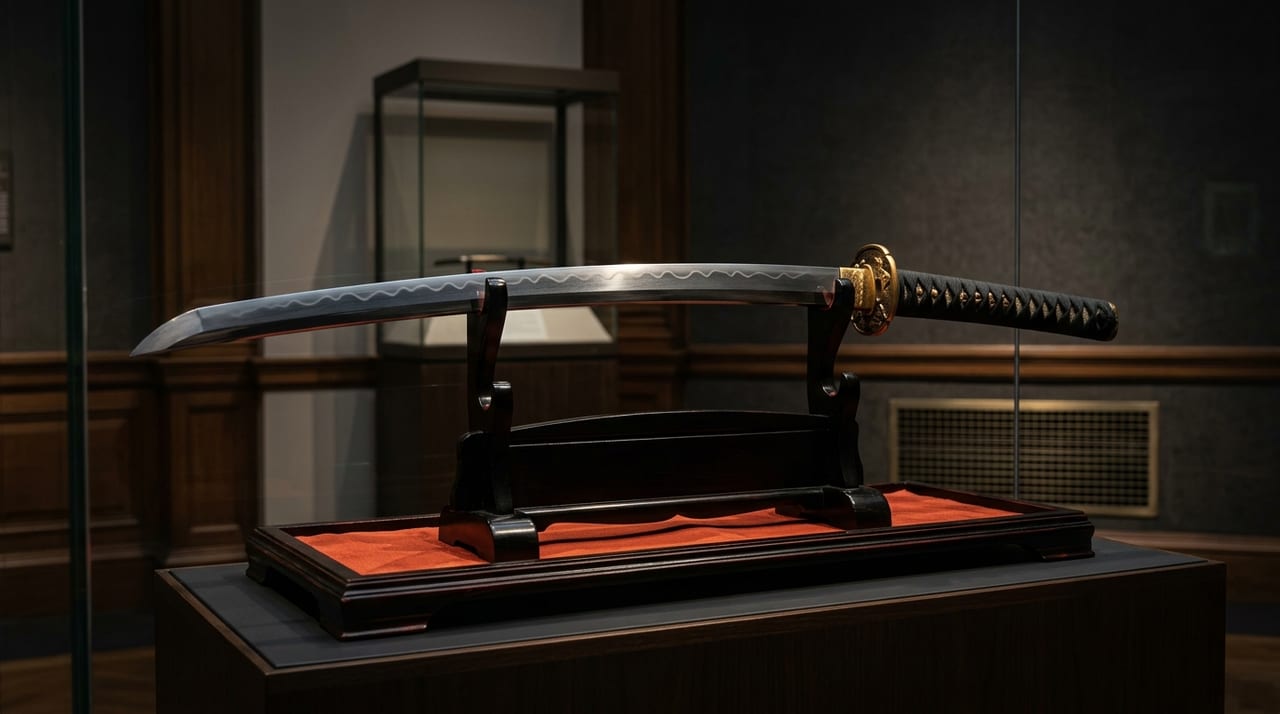
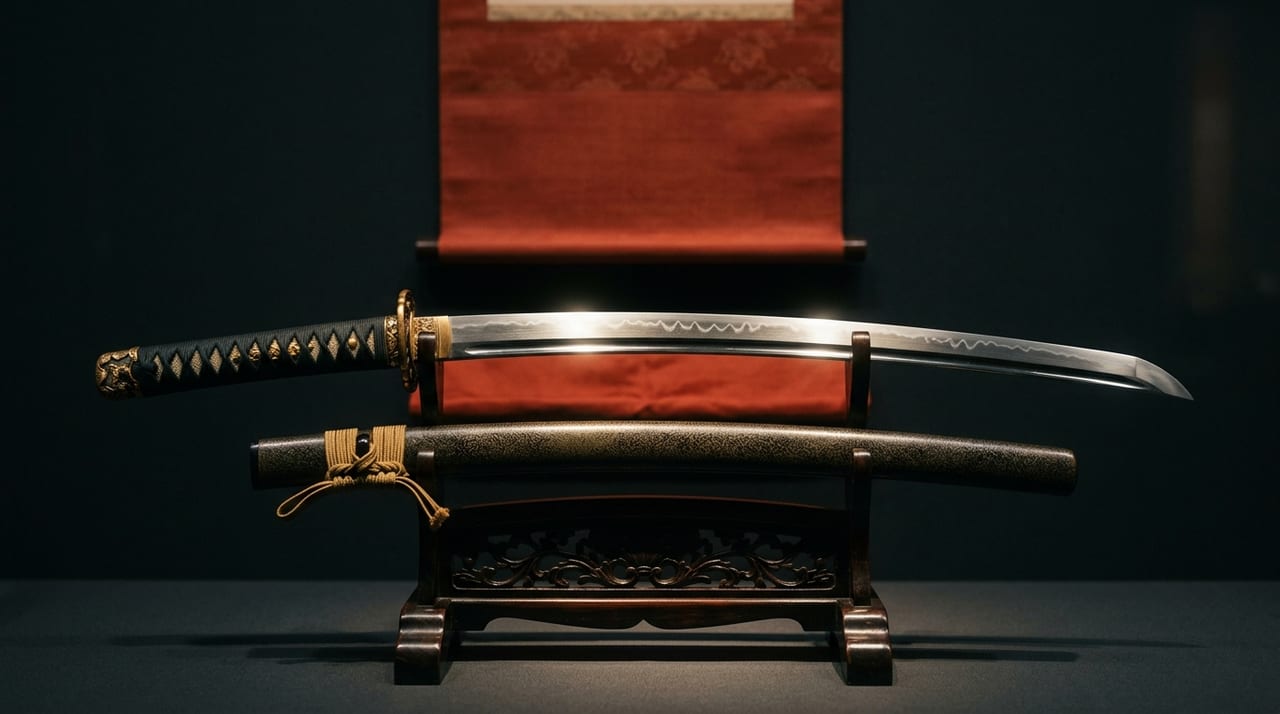
- Regularity of the hamon: The hamon is the element that most strongly expresses the individuality of a sword. The hamon of authentic swords is natural, with a balance of regularity and irregularity. Conversely, the hamon of counterfeit swords often appears artificial and monotonous.
- Color of the hardening: The hardened section (cutting edge) of an authentic sword displays a distinctive "luster" that changes in tone depending on the angle of light. In counterfeit swords, this luster may appear uniform or have an unnatural hue.
- Condition of the polish: The surface of a carefully polished sword has subtle "lines" and "blurring." If this appears uniform, it may be an over-polished counterfeit sword.
- Pattern of rust (patina): Old swords bear natural rust and oxidation marks that record the passage of time. This rust pattern is unique to each sword and is extremely difficult to replicate.
Practical Checklist When Inspecting the Physical Sword
When actually holding a sword, check the following points.
3. Weight and Feel in Hand
Authentic Japanese swords have a distinctive "quality of weight."
- Appropriate weight balance: Authentic swords are designed to taper gradually from the base to the tip of the blade, creating a "tip-heavy" sensation when held. Counterfeit swords often have weight distributed uniformly throughout, resulting in a different feel in the hand.
- Texture of the tsuba: The weight and texture of the tsuba are also important indicators. Old tsuba have a distinctive quality from the casting process, and the sound produced differs from a newly manufactured counterfeit sword's tsuba.
4. Detailed Observation of the Nakago
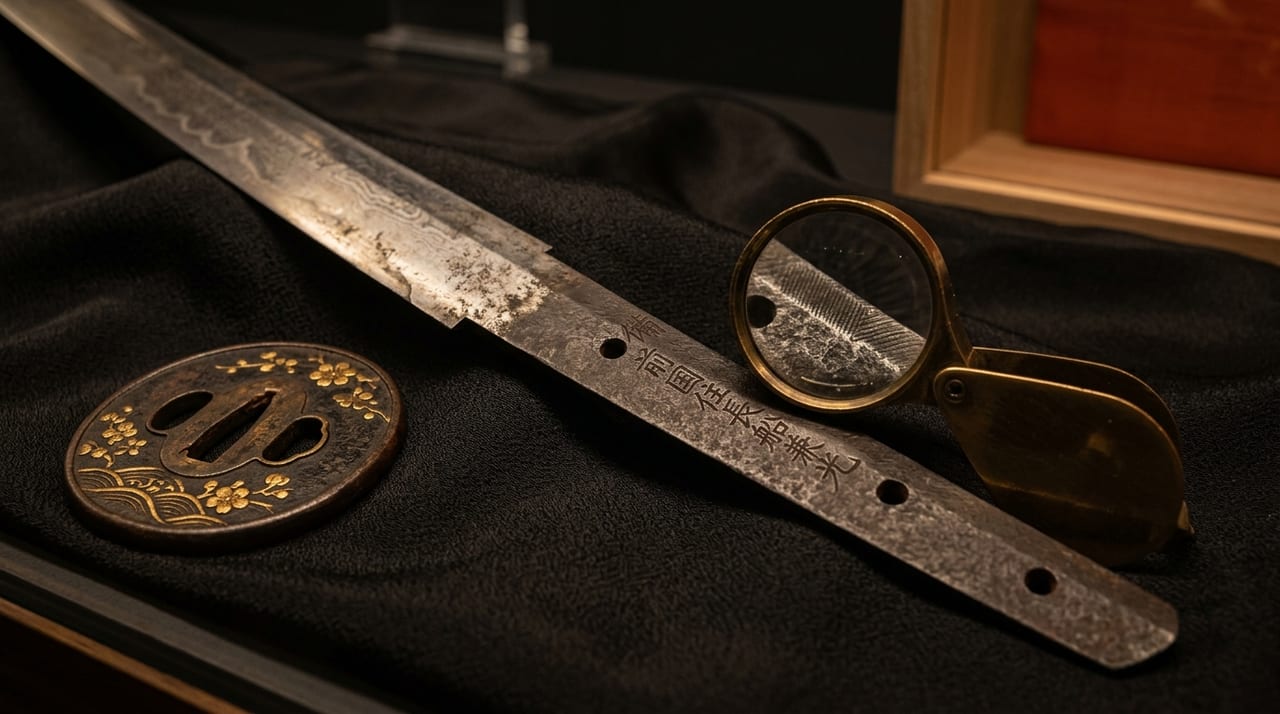
The nakago is an important area where the mei (the bladesmith's signature) is carved.
- Depth and angle of the mei carving: Authentic mei have consistent characteristics in carving depth, line angle, and character size according to the era and bladesmith. In forged mei, the line depth may be uneven, or character styles inconsistent with the era may be used.
- Condition of the mekugi hole: The mekugi hole in the nakago is an important indicator of whether the sword was actually used. Check whether the area around the hole shows blackening or fraying from long years of wear. These traces are absent in newly made counterfeit swords.
- Yasuri marks: The surface of the nakago retains fine marks from finishing with old files. Authentic yasuri marks display specific patterns according to the era. By observing these marks in detail, both era determination and authenticity assessment become possible.
5. Detailed Observation of the Hamon
The hamon is the most distinctive feature of a sword. Examine it using a magnifying glass or loupe.
- Size and regularity of the waves: Authentic swords have "waves" in the hamon characteristic of their era and bladesmith. Unless the sword has been shortened or re-hardened, this wave pattern is extremely difficult to replicate.
- Nie and nioi: The fine particles (nie) that form in the blade during hardening and the vague haze (nioi) seen at the base of the blade indicate the quality of the hardening. In authentic swords, these are naturally distributed, but in counterfeit swords, this distribution is unnatural.
- Historical nature of scratches and chips: Scratches and chips on old swords show brown or black oxidation in areas that have become susceptible to rust. From the state of this oxidation, you can determine whether the damage is truly old.
Verification of Registration Certificate and Official Documents
6. Verification of the Firearms and Swords Registration Certificate
To own a sword in Japan, a registration certificate is required in principle.
- Verification of registration number: The number listed on the certificate is recorded with the Board of Education in each prefecture. A trustworthy dealer will support verification of this registration number.
- Consistency of recorded information: Verify that the length, curvature, and weight listed on the certificate do not contradict the physical sword. If they differ significantly, the sword may have been shortened or modified.
- Year of issue and elapsed time: The older the certificate's issue date, the higher the credibility of the sword's provenance. A sword registered for the first time within the past few years may have been recently forged or modified.
7. The Role and Limitations of Appraisal Certificates
Appraisal certificates from official organizations such as the NBTHK (Society for Preservation of Japanese Art Swords) are highly valuable.
- Possession of appraisal certificate: If an appraisal certificate is available, verify that its issue date and the current condition match. If the preservation condition has deteriorated, particularly ask the seller about the reason (theft, restoration, re-polishing, etc.).
- Swords without appraisal certificates: Even if there is no appraisal certificate, the sword may still be authentic. However, be cautious if the price is significantly lower than that of a comparable sword with a certificate.
Negotiation and Safety Measures at Purchase
8. Building a Relationship with the Dealer
Finding a trustworthy dealer is the best method for authenticity assessment.
- Multiple transactions: You can verify a dealer's credibility by making multiple purchases from the same dealer. It is recommended to start with relatively inexpensive swords.
- Online reputation verification: Check the dealer's reputation in online sword communities. If the same dealer has been mentioned favorably for many years, they are likely highly trustworthy.
- Refund guarantee: Trustworthy dealers often provide a return guarantee within a certain period after purchase. The presence or absence of such a guarantee is also an indicator of credibility.
9. Verification Steps After Purchase
Even after purchasing a sword, verification should be conducted at multiple stages.
- Consultation with experts: Having your purchase appraised by a trustworthy appraiser after purchase is an excellent investment. Especially for your first purchase, it is recommended to undergo appraisal even if it requires spending money.
- Photographic records and document storage: Organize and store photographs from the time of purchase, invoices, and documents of ownership transfer. These records will serve as proof of provenance if you sell the sword in the future.
- Regular condition monitoring: Swords oxidize over time. Check their condition regularly and consult with specialists as needed.
Common Pitfalls for Beginners
10. Points to Watch Out For
- Significantly underpriced swords: Swords priced significantly below market rates likely have some reason. While counterfeits are possible, they could also be stolen goods, swords with unknown provenance, or swords with legal issues.
- Use of internet auctions: Purchasing swords on auction sites is not recommended for beginners due to difficulty in verifying seller credibility.
- Pressure for immediate purchase: Avoid dealers who use pressure tactics such as "I'll sell this to someone else if you don't buy today."
- Clearly unnatural polish marks: Recently over-polished swords may hide old scratches and rust.
The Path to Acquiring Expert Knowledge
The ability to assess authenticity cannot be acquired overnight. However, through continuous learning, even beginners can develop basic authenticity assessment skills.
It is important to gradually build knowledge and experience through the following:
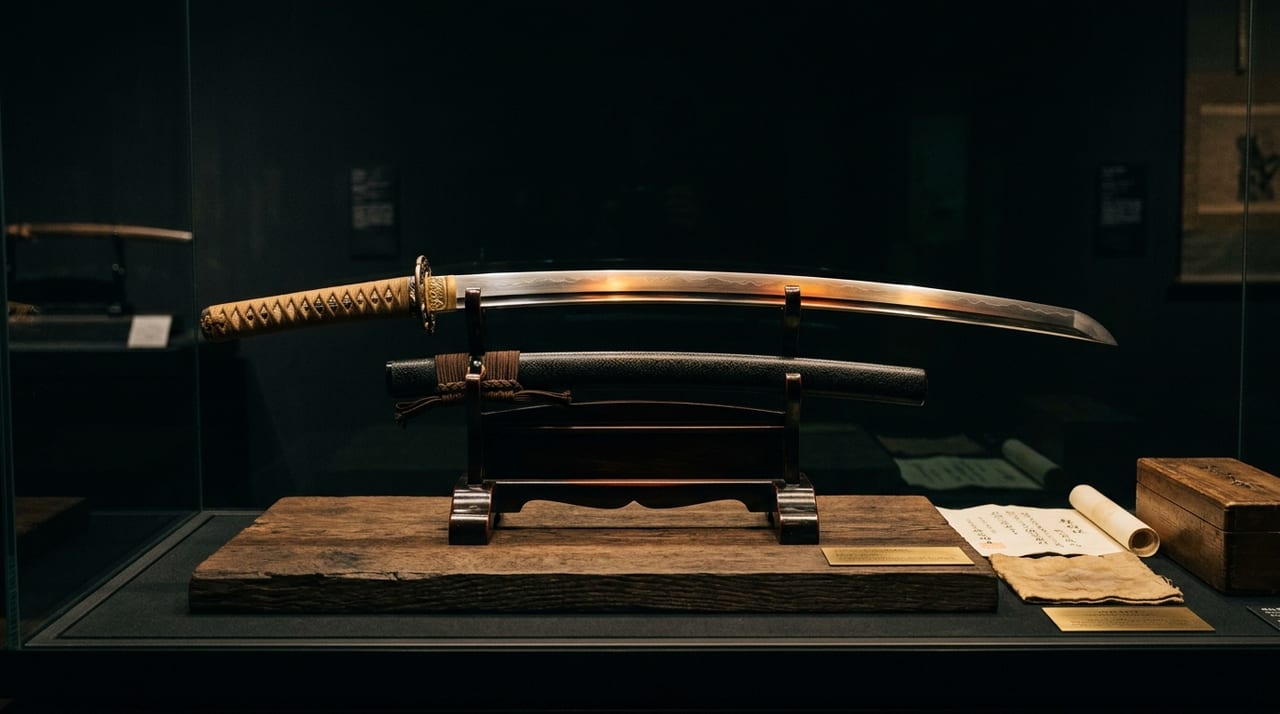
- Viewing exhibitions at sword museums
- Reading introductory books on sword appraisal
- Interacting with other collectors in online communities
Sword collecting is not merely an investment or hobby, but an endeavor deeply connected to Japanese culture. Taking time to learn and experiencing the joy of meeting a genuine sword opens the path to becoming a true collector.