How to Participate in Japanese Sword Auctions and Win Bids: Preparation and Precautions for First-Time Bidders at Domestic and International Sales
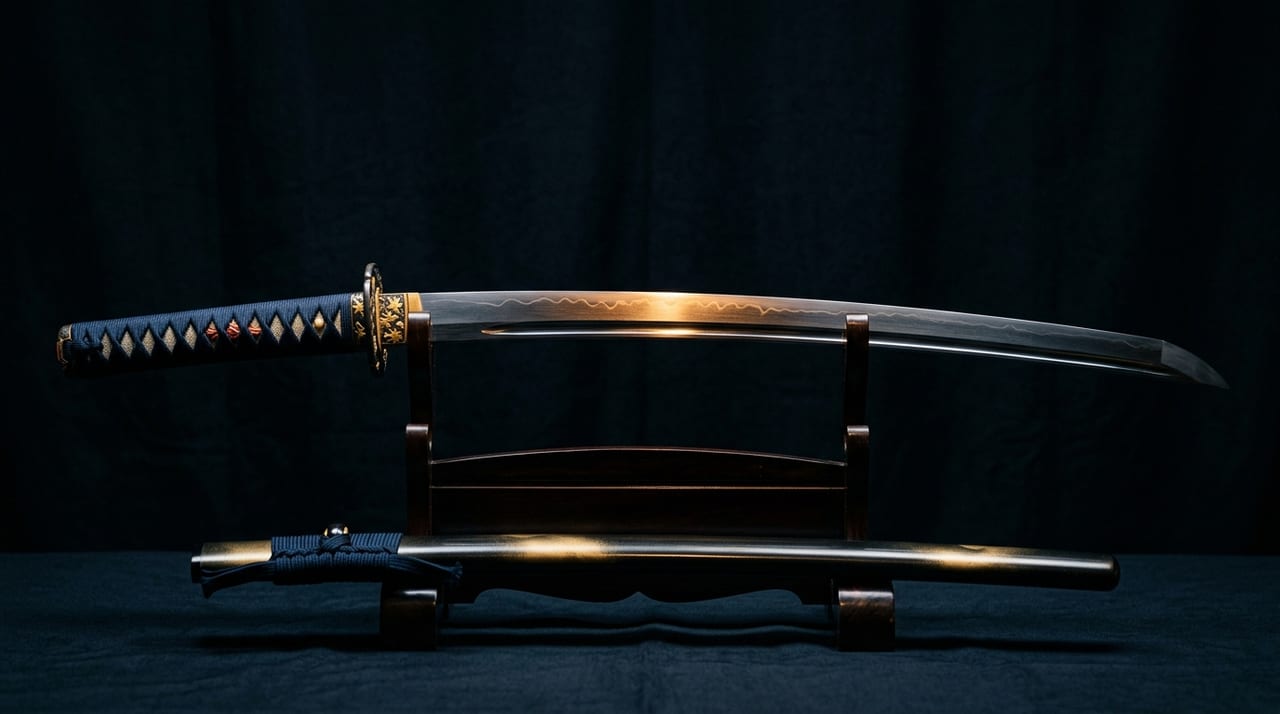 * Image is for illustrative purposes only.
Table of Contents
What Kind of Venue Is a Japanese Sword Auction?
Japanese sword auctions fall broadly into two categories: sales organized regularly by sword dealers, and fine art auctions held by general auction companies. Dealer-organized sales tend to be trade-oriented, and in many cases require registration with a sword dealers' association or a letter of introduction to participate. By contrast, Japanese swords handled by the major fine-art auction houses in Tokyo, Osaka, and Kyoto are open to general enthusiasts, provided they register in advance.
Overseas, major auction houses in New York and London offer swords several times a year as part of their Japanese art sales. Because Japanese is often not spoken, it is common practice to use a specialist intermediary for both consignment and bidding. In recent years, online bidding systems have been put in place, and the number of opportunities for Japanese collectors living abroad and foreign enthusiasts to participate has grown.
Preparation Before Bidding
The first priority is "registration." Japan's major auction houses require member registration (buyer registration), and applicants must submit identity verification documents. It is also essential to confirm the payment method for winning bids. Cash transfer and bank remittance are standard, though some companies accept credit cards or promissory notes.
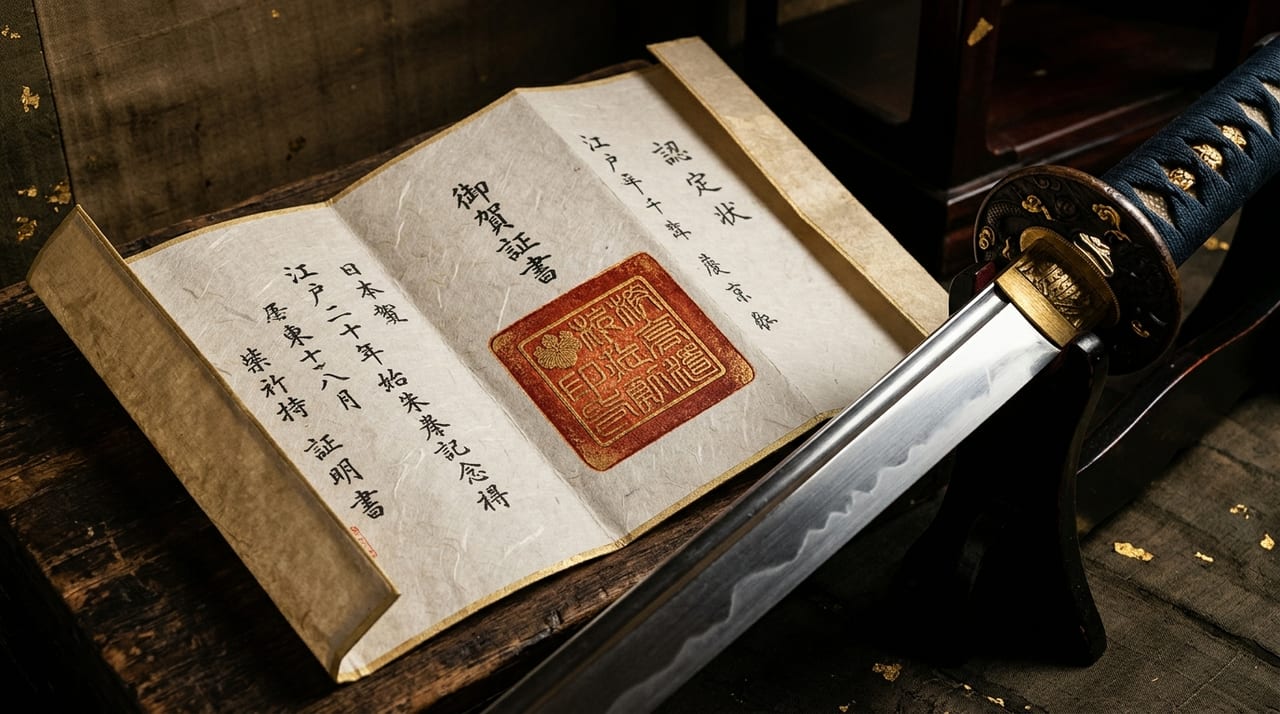
Next, one should make a habit of obtaining the catalog published before the auction and studying it thoroughly. It contains photographs, descriptions, and estimated hammer prices (estimates), allowing you to check the condition and provenance of items of interest in advance. Always check whether a kanteisho (appraisal certificate) is included. Items accompanied by a kanteisho from NBTHK or NTHK carry high credibility and tend to command stable prices.
Attending the preview in person is strongly recommended whenever possible. You can examine firsthand the clarity of the hamon, the texture of the jigane, and the condition of the habaki and shirasaya — details that photographs alone cannot convey. It is also an opportunity to ask questions of the venue staff or the person in charge.
Reading Hammer Prices and Setting a Budget
Estimates are reference figures only; popular pieces can attract bids far exceeding expectations. Items designated as jūyō bunkazai (Important Cultural Property) and top-tier works by renowned tōkō are especially fiercely contested. On the other hand, it is not uncommon for items lacking a kanteisho or with condition issues to sell below the estimate.
A buyer's premium is added to the hammer price. The going rates are as follows.
| Venue | Buyer's Premium |
|---|---|
| Major domestic houses | Approximately 10–15% of the hammer price |
| Major overseas houses | Around 20–25% |
Shipping costs, insurance, and packing fees are added on top of this, so budgets must be set with the understanding that the total amount actually paid will be considerably higher than the hammer price.
Even when buying swords for investment purposes, it is wise in the long run to prioritize items "whose value you understand and with which you would be satisfied to live." Deciding your maximum bid on the basis of the work's own quality, rather than being swayed by market fluctuations, leads to calm, clear-headed decisions.
The Process on Auction Day
On arrival at the venue, collect your paddle (bidding number card) at the reception desk. Lots proceed in numerical order; the auctioneer calls out the current price and those who wish to bid raise their paddles. Bidding typically starts near the lower end of each lot's estimate and is raised in increments. Absentee bidding, telephone bidding, and online bidding are available at many venues, so participation is possible even if you cannot attend in person.
Once a lot is won, payment and collection procedures take place either on the day or at a later date. The registration certificate, receipt, and required documents (registration certificate documents) will be issued, so check the contents carefully when you receive them.
Registration Certificates and Shipping Precautions
Under the Act for Controlling the Possession of Firearms or Swords and Other Such Weapons (Jūtōhō), purchasing a Japanese sword requires filing a "change of possession notification" with the prefectural Board of Education. Winning a sword at auction is no exception: the registration must be transferred from the previous owner's name to that of the new owner (the winning bidder). Venue staff will often prepare the necessary paperwork, but because missing the deadline creates legal problems, it is important to act promptly.
As the laws governing export and import differ from country to country, it is necessary to research the importing country's regulations on weapons and swords in advance. Some countries require a permit; others prohibit them outright. When winning a lot at an international auction, it is safest to engage a specialist shipping company in the relevant country.
Tips for Getting the Most Out of Auctions, and Common Mistakes
For a first auction, it is recommended to start by attending as an observer. Simply watching the rhythm of the bidding, how prices rise, and the behavior of other bidders yields a great deal of knowledge. Learning the fundamentals of what to look for in a Japanese sword — hamon, jigane, nakago mei, and sori — before making a purchase is the single most effective way to avoid mistakes.
Common mistakes include the following.
- Getting swept up in the excitement of the venue and greatly exceeding the budget
- Bidding on a piece with chips or rust based on photographs alone
- Paying a high price without reading the contents of the kanteisho
Calm, thorough research and a clear maximum bid are the foundations of a satisfying auction experience.