Yamada Asaemon — The Cultural History of Edo's Official Tameshigiri Practitioner and the Wazamono Rankings
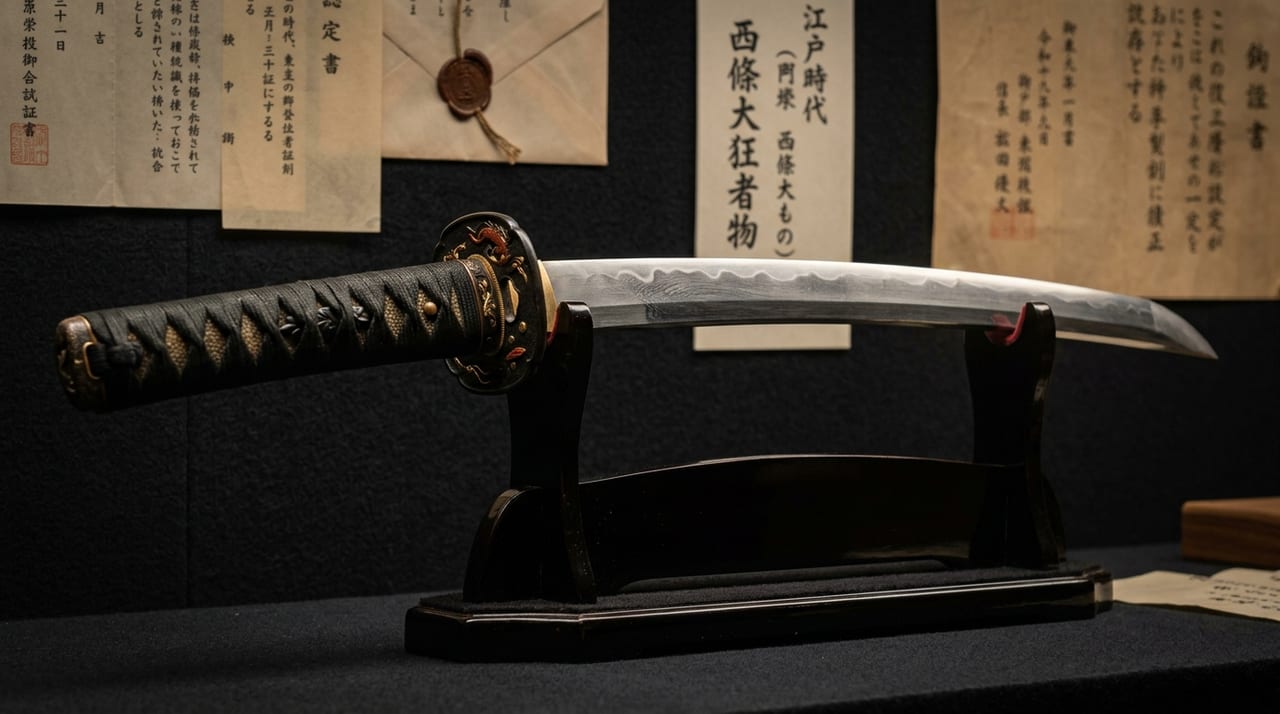 * Image is for illustrative purposes only.
Table of Contents
Who Were Edo's Official Tameshigiri Practitioners?
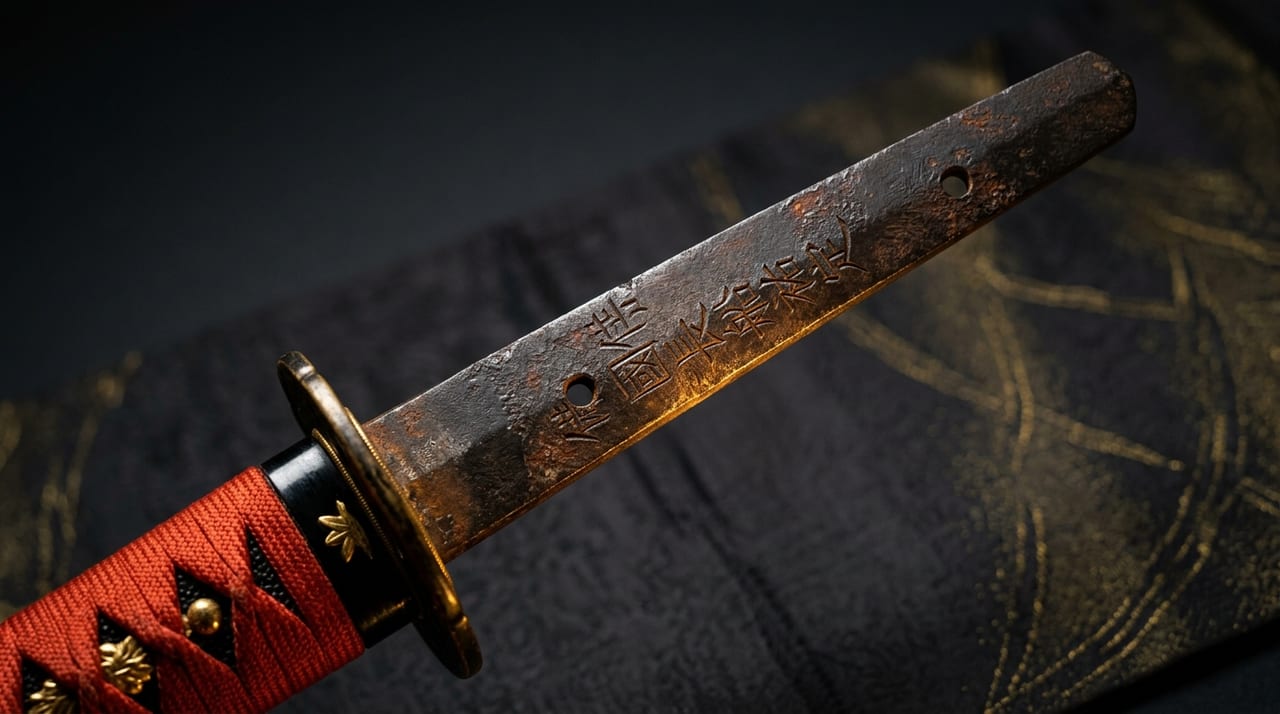
Yamada Asaemon is the hereditary title of a distinctive professional lineage that received the official tameshigiri commission from the shogunate during the Edo period. The formal family name was "Yoshichika," and successive generations took the name "Asaemon." Known in official shogunate records as "otameshi-goyō," this role was an institutional practice unique to the Edo period: testing the cutting performance of nihontō on the bodies of executed criminals.
The first generation, Yamada Sadatake (1657–1717), lived during the Genroku–Hōei era, and the otameshi-goyō is said to have become established as a formal institution from the Genroku period (the 1690s) onward. The family continued to hold this role for eight generations, until the prohibition of tameshigiri in Meiji 3 (1870). Tameshigiri was conducted primarily at the execution ground of Kozukahara in Edo (present-day Arakawa Ward), a site inextricably linked to its parallel function as a place of fuwake (anatomical dissection).
What makes the Yamada family's position particularly interesting is that they were not formal retainers of the shogunate. Unlike samurai who held stipended official positions, they were rōnin granted the privilege of bearing a surname and wearing swords, and they sustained their trade primarily through fees for tameshigiri commissions and for issuing trial certificates. They were, in a sense, professionals who operated under the authority of the shogunate while building their reputation through demonstrable skill and a record of results.
The Birth of the Wazamono Rankings — An Attempt to Rank Sword Cutting Performance
The greatest contribution the Yamada family left to history was the compilation and publication of the wazamono-banzuke (wazamono ranking). In Kansei 9 (1797), the fifth-generation Yamada Asaemon Yoshichika authored a work entitled "Kaihō Kenjaku" and published for the first time a graded ranking of nihontō by cutting performance.
The ranking adopted the sumo ranking format of ōzeki, sekiwake, komusubi, and maegashira, allowing people of the time to understand sword grades in a visually intuitive format. The structure of the ranking was as follows.
- Saijō ō-wazamono: The highest grade. Twelve smiths were listed, including Kotetsu, Magoroku Kanemoto, Hizen Tadayoshi, Sendai Kunikane, and Miyoshi Nagamichi.
- Wazamono
- Ryō-wazamono
What made this ranking system groundbreaking was its claim to objectivity based on data from actual cutting tests using human remains, rather than the subjective assessments of a tōkō's school or legendary reputation. The number of stacked bodies cut — "hitotsu-dō" (one body), "futatsu-dō" (two bodies), "mitsu-dō" (three bodies) — became the metric for evaluating cutting performance, exerting a profound influence on later generations' perception of sword value.
The wazamono ranking was not completed in a single publication; the Yamada family revised and expanded it with each successive edition. It is important to note that even for the same tōkō's mei, cutting performance could vary depending on the period of manufacture and individual differences; therefore, the ranking indicated tendencies at the school or smith level and did not guarantee the individual performance of each surviving sword.
Tameshigiri in Practice — Between Institution and Ethics
Tameshigiri may appear cruel by today's standards, but in the Edo period there existed a cultural foundation that regarded punishment and the post-mortem use of the body as part of a single continuum. The bodies of executed criminals were semi-officially sanctioned for use in medical dissection (fuwake) and tameshigiri, and the Yamada family held an exclusive monopoly over this institution.
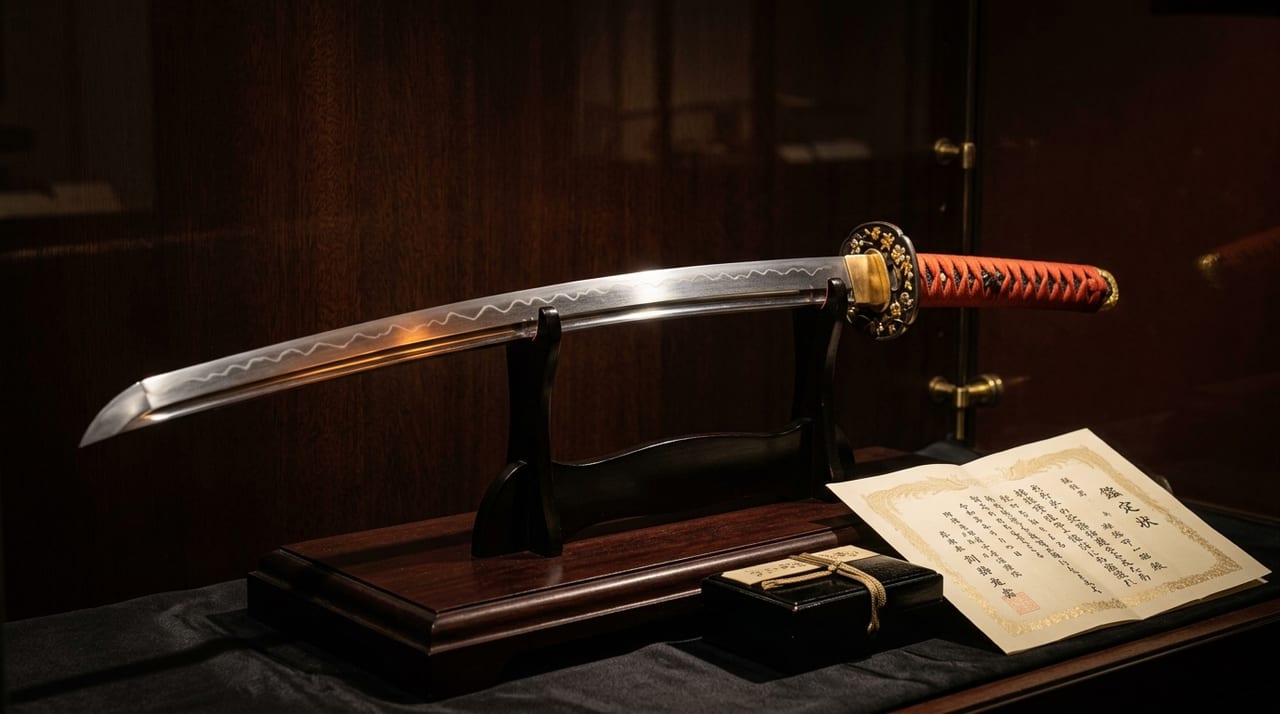
The basic arrangement was for sword dealers and samurai families to bring their blades to the Yamada family by commission. The Yamada family would test the commissioned blade in practice and issue a written "otameshi-shōmon" documenting the results. A sword accompanied by this certificate commanded a higher market value, and the phrase "Asaemon orikami-tsuki" (certified by Asaemon) came to serve as a mark of trust in the sword trade.
On the other hand, doubts were occasionally raised about the reliability of the certificates. In periods when bodies were difficult to obtain, tests using green wood or substitutes are said to have been conducted, and during the Bakumatsu era the forgery of "Asaemon certificates" became so widespread that the authentication of genuine and fake documents turned into a serious problem.
Relations with Sword Dealers — The Function as an Officially Recognized Appraiser
Yamada Asaemon's role extended beyond mere tameshigiri; in the Edo sword market, the family came to occupy a position akin to that of an officially recognized appraiser. Sword dealers enhanced the added value of their merchandise by attaching the Yamada family's certificates, and it became customary for samurai and daimyo households to commission the Yamada family before making purchases.
The seventh-generation Asaemon in particular was prolific in publishing materials recording tōkō information, sword price ranges, and the characteristics of swords by region of production. These works were later systematized as tōken-sho (sword treatises) and continue to be consulted as primary sources in modern sword research.
From the perspective of the sword industry, the Yamada family functioned as a "sword performance certification body" of the Edo period, a role analogous to that of the modern NBTHK (Society for the Preservation of Japanese Art Swords) kanteisho. Though their methods were the primitive means of cutting tests rather than scientific techniques, they anticipated the essential qualities of an evaluation body: objectivity, systematization, and documentation.
Dissolution and Its Aftermath — The Culture of the Wazamono Rankings After Meiji
By a Daijō-kan decree of Meiji 3 (1870), tameshigiri using human remains was prohibited. With the generation of the eighth-generation Asaemon Yoshitoyo, the Yamada family's official commission came to an end, and this distinctive professional culture was institutionally extinguished.
Yet the influence of the wazamono ranking did not disappear; through the reprinting and citation of sword treatises after Meiji, the grading concepts of "wazamono" and "ō-wazamono" lived on. Even in modern sword appraisal, the framework of the wazamono ranking is occasionally consulted as a reference standard for evaluating Bakumatsu-era tōkō.
Yamada Asaemon represents a rare case in the history of the sword industry, one that reflects both the distinctly Japanese impulse to systematically record and evaluate a single attribute — the cutting performance of a sword — and the intellectual sophistication of Edo society in overlaying economic and cultural value upon the sword as a weapon. While one cannot evaluate their achievements in isolation from the ethical questions they raise, the impact of the wazamono ranking on the market value framework for nihontō remains an undeniably significant legacy that endures to this day.
How Does the Wazamono Ranking Help with Sword Selection Today?
When purchasing or collecting nihontō today, the kanteisho issued by the NBTHK (Society for the Preservation of Japanese Art Swords) is the most important consideration; within it, the value of a sword is assessed from aesthetic perspectives such as jigane, hamon, sugata, and condition. This is a different standard from the evaluation of "cutting performance" as a practical attribute carried out by the Yamada family, and it is important first to understand that the two are fundamentally different measuring sticks.
Works by tōkō listed in the wazamono ranking — such as Kotetsu and Magoroku Kanemoto — are highly regarded both for their cutting performance and as works of art, with the result that they tend to remain popular and in demand even today. However, the wazamono ranking itself is a record limited to the works of tōkō that survived into the Edo period and were actually subjected to tameshigiri. Works by renowned smiths of earlier eras could not have been subjected to such tests and are therefore not included in the ranking; the absence of a tōkō's name from the ranking does not in itself indicate any inferiority of skill. Keeping this premise in mind allows one to understand the nature of the wazamono ranking as a historical source more accurately.
When selecting a sword, the wazamono ranking assessment should be treated as one historical point of reference among others; in practical buying and selling, it is important to examine comprehensively the kanteisho attached to individual swords — such as those from NBTHK — together with condition and provenance. Understanding the history of how the evaluative axis has shifted from the era of tameshigiri as a practical test to the modern appraisal system based on aesthetic value will serve as an aid to grasping the depth of nihontō as a craft object.