The Relationship Between Yaki-ire and Water Quality: The Science of How Water Temperature, Hardness, and pH Affect Hamon Formation
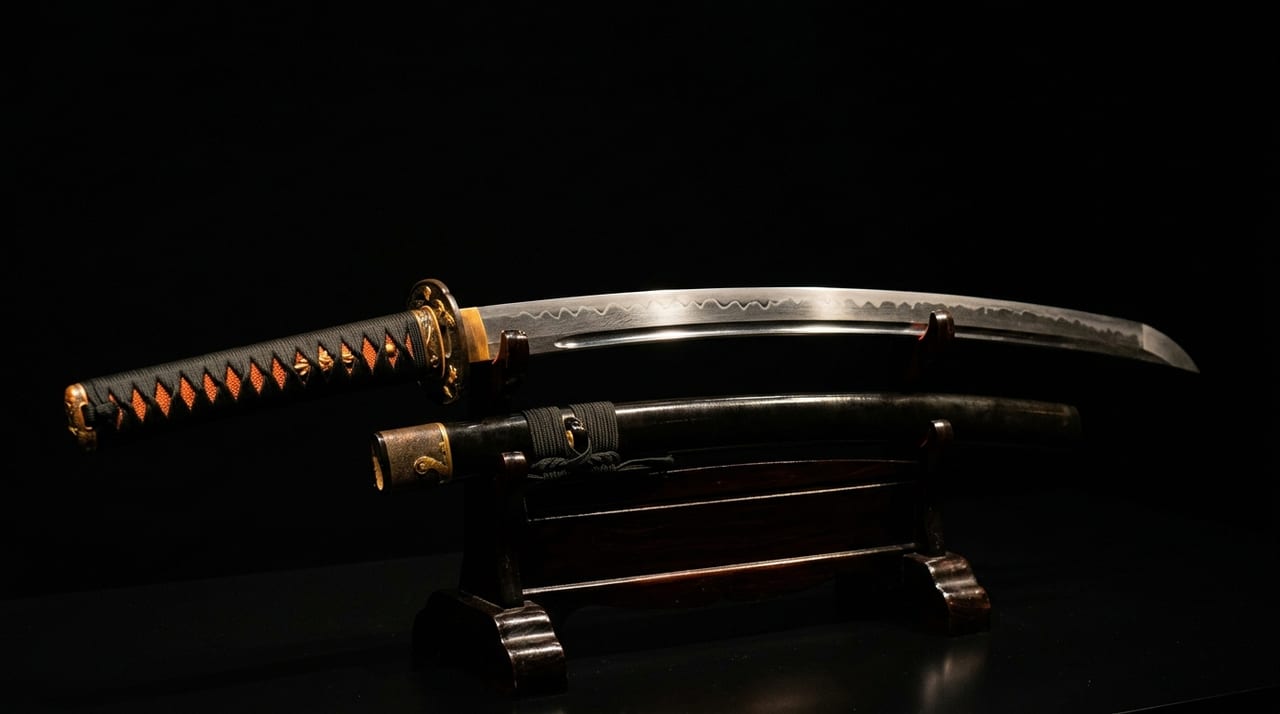 * Image is for illustrative purposes only.
Table of Contents
The Instant of Water Quenching Decides the Fate of a Sword
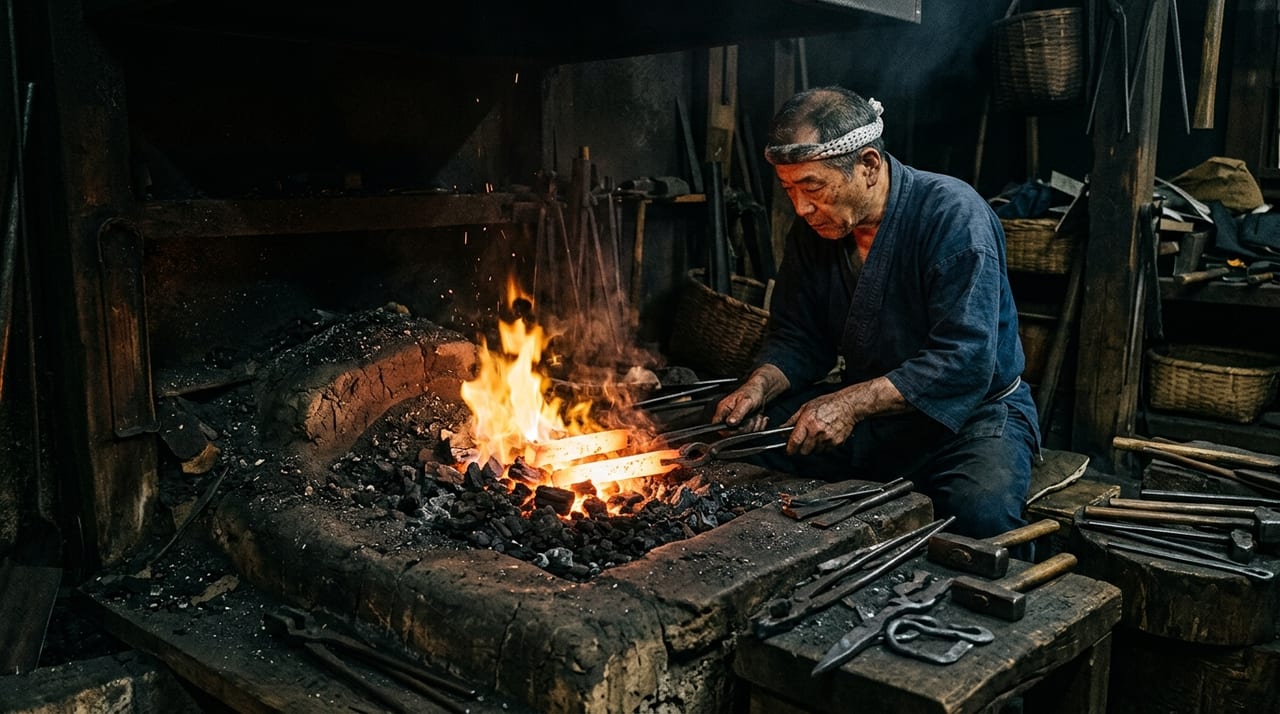
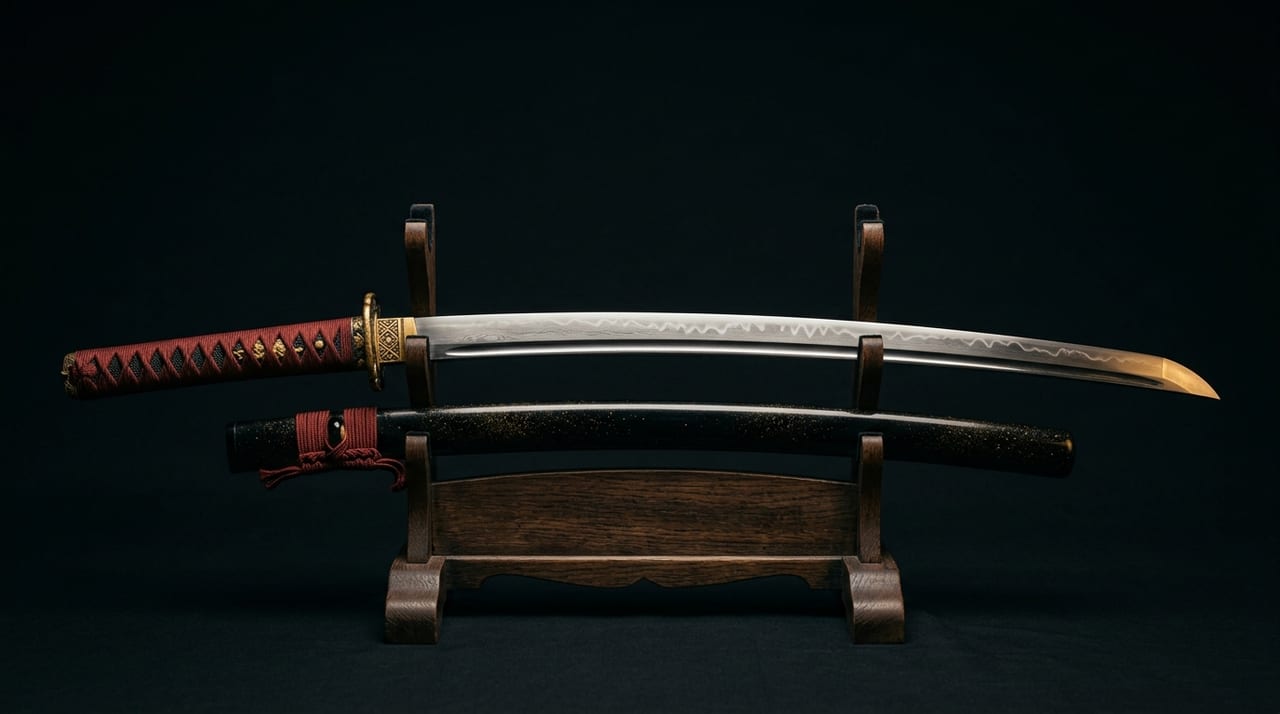
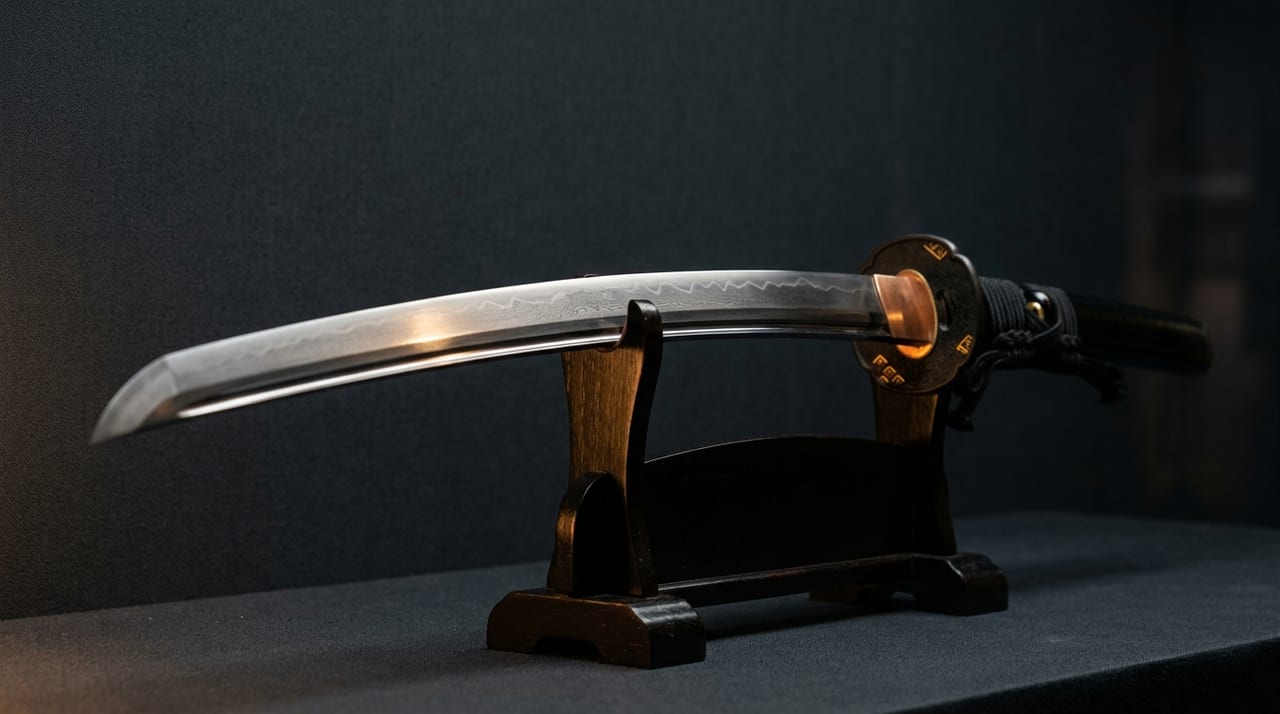
In the entire process of nihontō manufacture, the moment that puts a tōkō under the greatest tension is yaki-ire. By plunging a blade heated to approximately 850–900°C in the furnace directly into water (water quenching) or into oil (oil quenching), martensitic transformation is induced by rapid cooling in the edge alone, hardening it. It is this rapid cooling that produces the hamon — the symbol of a nihontō's beauty.
For a tōkō who employs water quenching, the question of what water to use is a critical variable in sword-making. References to "the selection of quenching water" appear here and there in the secret transmission texts of Edo-period tōkō, showing that smiths empirically recognized that differences in water quality affected quenching results. From the perspective of modern science, then, which factors in water quality affect yaki-ire?
The Effect of Water Temperature: The Most Fundamental Variable
Among water quality factors, the one with the greatest effect on yaki-ire and the one most easily controlled is water temperature.
| Water Temperature | Effect on Quenching Speed | Likely Hamon and Results | Risk |
|---|---|---|---|
| Low (15°C and below) | The temperature difference between blade and water increases, raising the quenching speed | Martensitic transformation occurs more deeply and uniformly, making a hard hamon more likely to form | The risk of yaki-ware — cracking of the blade, a fatal failure — due to thermal stress increases |
| High (25°C and above) | Quenching speed drops | Martensitic transformation remains in a shallow zone, making a soft hamon known as nioi more likely to form | There is also a risk of insufficient hardness in the edge |
Many traditional tōkō learned empirically that the following were suitable conditions for yaki-ire.
- Well water in early spring (water temperature is low)
- Water drawn at night in autumn (outside temperature is low and water temperature is stable)
These are empirical rules for managing water temperature, and they align with modern heat-treatment science.
The Effect of Hardness (Mineral Content): Calcium and Magnesium
Water "hardness" is determined by the dissolved concentrations of calcium (Ca²⁺) and magnesium (Mg²⁺). Modern materials science research suggests that quenching results differ between soft water (low hardness) and hard water (high hardness).
- Effect of hard water: Hard water with high concentrations of dissolved calcium and magnesium can form a thin mineral layer (scale) on the blade surface during yaki-ire. This scale may affect the formation of the "vapor film," altering the characteristics of the quenching curve. When the vapor film collapses early, quenching speed increases; conversely, when the vapor film persists, cooling becomes more gradual.
- Effect of soft water: Soft water that does not pass through limestone regions (water from Japan's mountain areas and granite zones) has low mineral content. It is thought by some that it is no coincidence that many of the nihontō production centers — Bizen (Okayama), Mino (Gifu), and Yamashiro (Kyoto) — are in relatively soft-water areas. Soft water is thought to enable uniform quenching and to be advantageous for predictable hamon formation.
However, because the effect of hardness acts in combination with water temperature, blade temperature, and the thickness of the tsuchioki, no simple conclusion that "soft water is always better" has been reached.
The Effect of pH (Acidity and Alkalinity): Its Relationship with Corrosion Rate
The pH of water affects the corrosion rate of metals. The greater the deviation from pH 7 (neutral), the more iron corrosion is promoted. Whether pH directly affects hamon formation in the instantaneous process of yaki-ire is debated, but the following indirect pathways of influence are considered possible.
- In the case of acidic water (pH < 7): Fine corrosion of the blade surface may occur in the early stage of quenching. It has been pointed out that this could have a minute effect on the pattern of martensite formation at the surface, but empirical data are limited.
- In the case of alkaline water (pH > 7): Groundwater from limestone regions is often alkaline. Alkaline water encourages scale precipitation and may bring about vapor-film changes similar to those of the hard water mentioned above.
Behind the insistence of traditional tōkō on the choice of water source is thought to lie an empirical awareness called "mizu no kuse" — the "character of the water" — a composite of pH, hardness, and temperature. The assessment that the water of regions known as famous production centers is "suited for swords" may have this kind of chemical background.
Dissolved Oxygen: A Third Factor Linked to Water Temperature and Quenching Speed
The amount of oxygen dissolved in water (dissolved oxygen, DO: Dissolved Oxygen) also changes in tandem with water temperature. Cold water holds more dissolved oxygen; warm water holds less. Dissolved oxygen may be involved in the electrochemical reactions that occur at the interface between blade and water during yaki-ire, but research in this area is at the cutting edge of materials science and has not been fully elucidated.
One hypothesis holds that in cold water with high dissolved oxygen, fine oxidation of the blade surface occurs immediately after yaki-ire, and that this may affect the microstructure of the hamon (the particle distribution of nie and nioi). At present, however, this remains within the realm of hypothesis.
Differences in Water by Production Center: Why Traditional Centers Used Specific Water
The three great nihontō production centers of Bizen (Okayama Prefecture), Mino (Seki City, Gifu Prefecture), and Yamashiro (Kyoto) each had distinct water quality environments.
| Production Center | Water System and Quality | Relationship to Swords and Research |
|---|---|---|
| Bizen | Water from the Yoshii River and Asahi River systems is predominantly soft water flowing through granite zones, placing it among Japan's leading "soft-water regions" | It is possible that the uniform quenching conditions provided by soft water lie behind the long-praised beauty of the jihada of Bizen blades and the richness of nie-deki in their hamon |
| Mino | Water from the Kiso River system is slightly harder than Bizen water but still falls within the category of soft water | Research scientifically verifying the relationship between water quality and the characteristic sharpness of Mino blades is still limited |
| Yamashiro (Kyoto) | The Kamo River system flows through geology mixing granite and shale, with hardness ranging from soft to moderate | The water quality at Awataguchi and Sanjo — the tōkō clusters of Kyoto — is thought to have differed subtly from one another |
The Practice of Modern Tōkō: Integrating Science and Experience
Many modern tōshō practice strict management of water temperature, with individual approaches varying.
- Tōkō who use a thermometer to keep the quenching water at around 15–20°C
- Tōkō who use ice to lower the water temperature
- Tōkō who continue to use local spring water or well water
Some research-minded tōkō and sword researchers have been attempting to measure the pH and hardness of the water they use and preserve the data as sword-making records. If such empirical approaches accumulate, a day may come when it becomes possible to give a scientific answer to the question of why a particular tōkō's hamon has the characteristics it does.
Water — a material found anywhere in Japan — interacts with the tōkō's skill, the geology of the region, and the climate of the season to give each nihontō its individual character. Elucidating these complex interactions is a challenge at the frontier of sword science and a research domain that can serve as a bridge between tradition and modern science.