Heian Court and Warrior Swords—The Divergence of Ceremonial Blades and Combat Swords and the Origins of Japanese Sword Duality
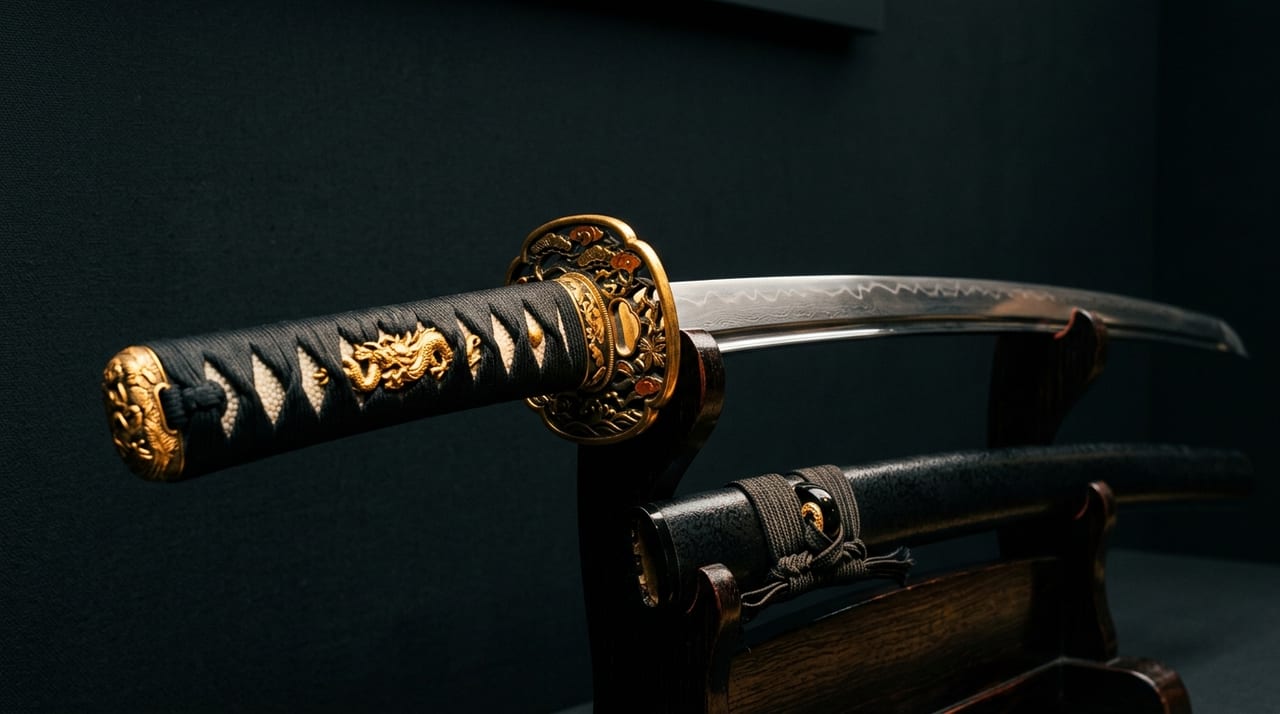 * Image is for illustrative purposes only.
Table of Contents
The Heian Period—When Blades Divided into "Weapon" and "Ritual Object"
The Heian period (794–1185) represents one of the most critical turning points in Japanese sword history. During this era, a new social class of "samurai (warriors)" emerged, and blades became clearly divided into two categories: "ritual objects of the imperial court" and "weapons of actual warfare." It was also a transitional period for the blade itself, as the warabitetō and kenukigata tachi gave way to curved blades with sori.
For the kuge (aristocrats) and samurai (warriors), the act of carrying a blade held entirely different meanings. This divergence became the prototype for the duality that would define Japanese sword culture thereafter—blades as "artistic treasures" and blades as "instruments of war."
The Aristocratic Philosophy of Blades—Symbols of Etiquette and Authority
The Meaning of Blades in the Heian Court
In the imperial court of the Heian period, blades primarily functioned as "ritual objects (raiki)" and "marks of social status."
The role of blades in ceremony:
- Genpuku (coming-of-age ritual): The tradition of presenting a tachi to young men upon reaching adulthood
- Settō (investiture sword): A "sword of authority" bestowed by the Emperor upon military commanders
- Diplomatic gifts: Presents for envoys to China and Korea
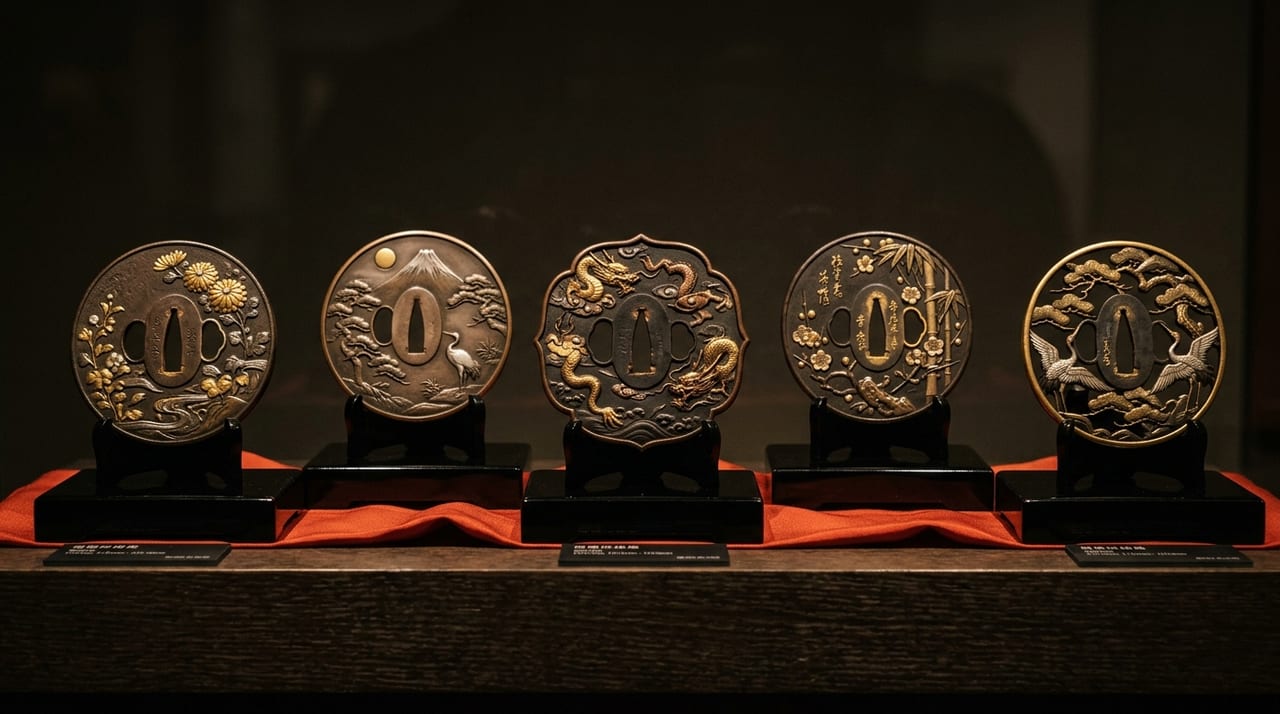
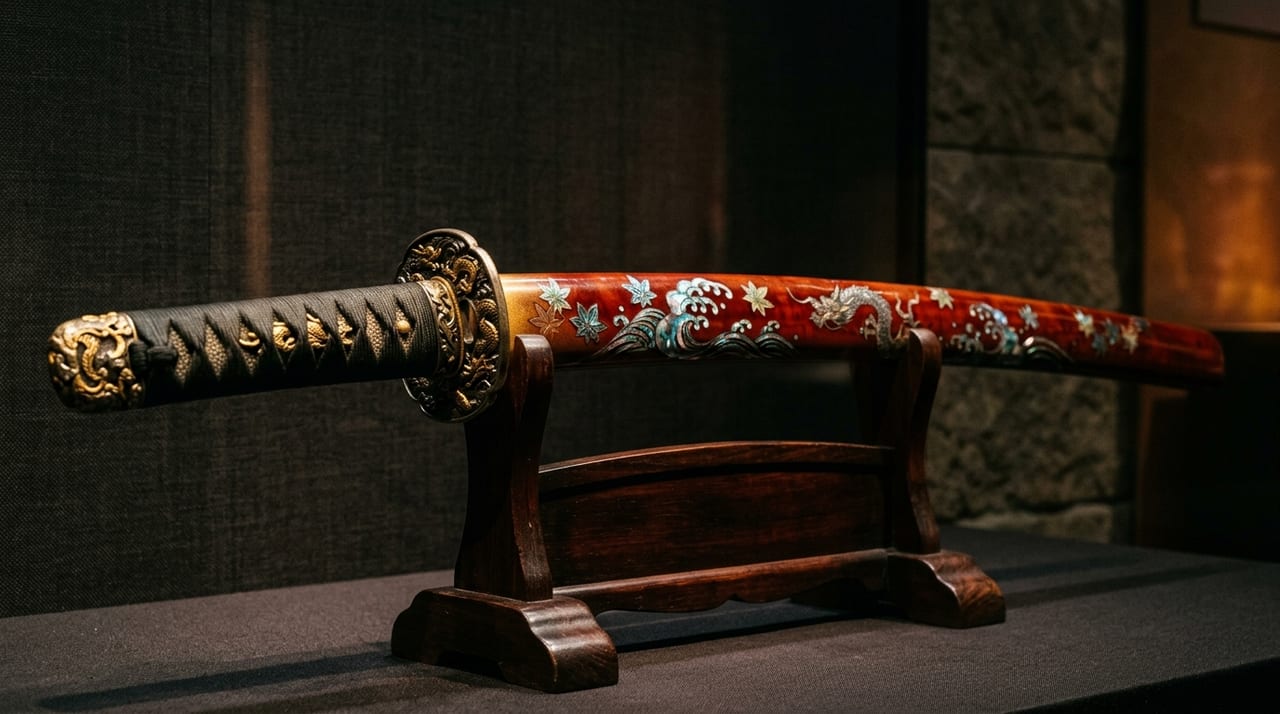
The significance of bearing a blade for aristocrats: When Heian period nobility wore a blade, it was not an imitation of warrior culture but rather a visible manifestation of high social rank and authority. Meticulously decorated with makie (gold lacquer work), raden (mother-of-pearl inlay), and fine metalwork, the "ornamental tachi (kazari-tachi)" was neither a functional weapon nor a practical tool but rather an artwork and symbol of prestige.
The Aesthetics of Ornamental Tachi
The tachi carried by Heian aristocrats ("imperial ceremonial swords," "house swords," etc.) rank among the finest examples of craftsmanship even by modern standards:
Scabbard decoration: Multiple layers of black lacquer are applied and embellished with gold and silver makie. The Heian-period tachi mountings preserved in the Shosoin and various shrines throughout Japan represent the pinnacle of global blade craftsmanship artistry.
Precision metalwork: Metal fittings such as the habaki (blade collar), kurigata (cord fastener), and kojiri (scabbard tip) were crafted from pure gold and gold-silver work, incorporating the finest metalworking techniques of the era.
Blade shape and curvature: Rather than functional sharpness for combat, aesthetic priority was given to "beautiful curvature and balanced proportions." Some ornamental tachi feature slender, delicate blade profiles unsuited to actual warfare. The process by which the technique of curvature itself became established is covered in more detail in the emergence of curved blades with sori in the Heian period.
The Warrior Philosophy of Blades—Optimization for Combat
The Rise of Samurai and the Weaponization of Blades
From the late ninth century onward, warrior groups (samurai bands) formed in the provinces, and they employed blades in actual combat. Court aesthetics held secondary importance in their value system.
Characteristics of warrior blades:
- Durability prioritized: Thick, strong blade construction designed to resist breaking
- Functional curvature: Waist-set curve optimized for mounted combat
- Practical mountings: Emphasis on ease of handling and secure fastening through leather and cord rather than decorative elements
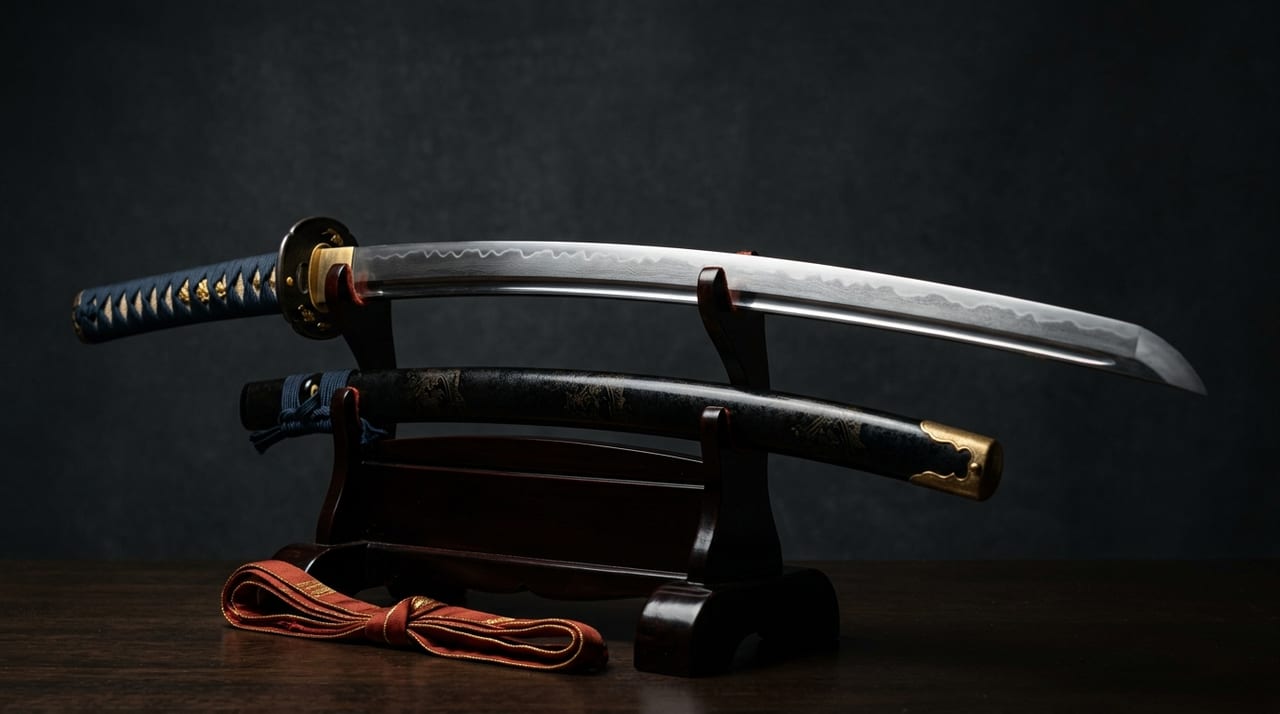
Equipment of Minamoto and Taira warriors: Minamoto and Taira samurai employed "kake-tachi" (slung swords) or "tachi" (long swords) built to endure actual combat. Durability of the scabbard and ease of unsheathing took precedence over makie decoration.
The Emergence of Warrior Aesthetics
However, warriors were not indifferent to beauty. Upper-ranking Minamoto and Taira commanders, influenced by court culture, sought blades that were "strong and beautiful." This desire became the foundation for the "samurai aesthetic of blades" that would flourish during the Kamakura period.
Swords by "Rai Kuniyuki" (of the Yamashiro Rai school), known for masterpieces of the mid-Kamakura period, and by "Yukihira," a smith of Bungo Province, have come down to later generations as the works of smiths who answered warrior demand. Note that Miike Tenta Mitsuyo was a smith of Chikugo, belonging to a different school and province from Yukihira.
Comparison of Aristocratic and Warrior Philosophies Regarding Blades
| Aspect | Aristocratic Blade | Warrior Blade |
|---|---|---|
| Primary Use | Ritual and status symbol | Weapon for warfare |
| Mounting Priority | Decoration and artistry | Practicality and durability |
| Blade Emphasis | Beauty of form | Cutting power and durability |
| Materials | Luxurious materials (gold, silver, lacquer) | Functional materials |
| Symbolic Meaning | Authority and refinement | Combat prowess and warrior honor |
The Hogen and Heiji Rebellions—The Turning Point When Blades Emerged as Actual Weapons
The successive military conflicts of 1156 (Hogen Rebellion) and 1159 (Heiji Rebellion) mark a historic watershed: the beginning of an age when "blades were actually employed in warfare."
The significance of the Hogen Rebellion: The first large-scale armed urban conflict in which samurai were mobilized for disputes between emperors and retired emperors. Blood was spilled in Kyoto's imperial court—a place where blades were traditionally forbidden.
The significance of the Heiji Rebellion: A power struggle between samurai clans (Minamoto versus Taira). This conflict confirmed the defeat of Minamoto Yoshitomo and the victory of Taira Kiyomori, opening the path toward "rule based on military force" by the Taira clan.
Through these rebellions, the understanding that "blades are weapons to be used" spread throughout society, including among the aristocracy. Along this trajectory, even larger tachi, further adapted to actual combat, appeared in the Nanboku-chō period. For details, see also "The Sword Revolution of the Nanboku-chō Period."
Insei (Rule by Retired Emperor) and Blades—Warrior Mobilization Under Shirakawa and Toba
During the "insei" period of the late Heian era (11th–12th centuries), retired emperors established organizations of "Hokumen no bushi" (northern guard warriors) who wielded direct military force. This signified the collapse of the traditional aristocratic view that "blades must not approach the court."
Notable Hokumen no bushi include Satō Norikiyo (later the priest Saigyō) and Minamoto Yoshitomo (father of Minamoto Yoshitsune). The "military force of the court" they represented laid the foundation for the eventual establishment of the Kamakura shogunate.
Conclusion—How the Heian Divergence Created the Duality of Japanese Sword Culture
The two contrasting philosophies of the Heian period—the "ritual blade of the aristocracy" and the "practical blade of the warrior"—became the origin of the duality that would define Japanese sword culture thereafter.
The duality of the blade as "artistic treasure (subject of appreciation and collection)" and as "weapon (tool of martial arts and warfare)" remains central to Japanese sword culture even today. Understanding the Heian period's divergence enriches contemporary sword appreciation with deeper historical context and meaning.