Swords in Noh and Kabuki — The Symbolism of the Blade on Stage
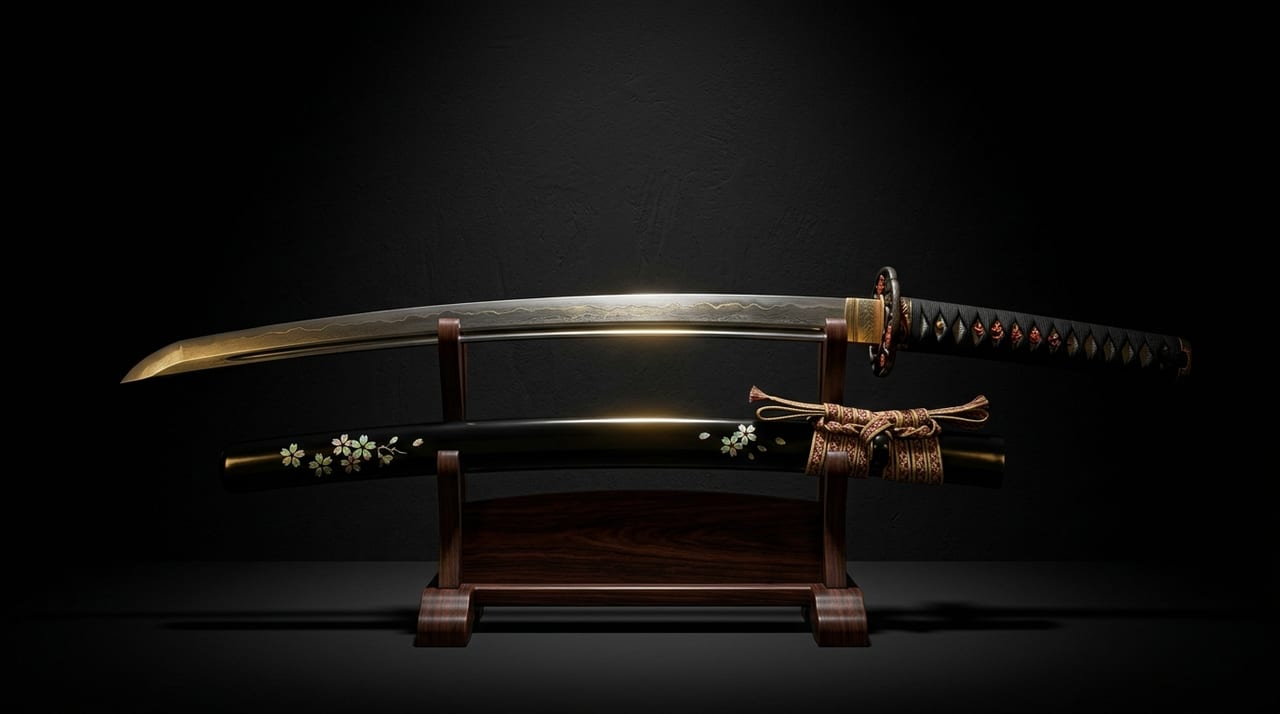 * Image is for illustrative purposes only.
Table of Contents
Noh and Kabuki, Japan's classical performing arts, each possess numerous plays based on the world of the warrior, history, and legend, in which swords frequently play a central role in the narrative. By tracing how swords are handled on stage and what they have symbolized, we come to understand the spiritual place of swords in Japanese culture.
Swords in Noh
Noh is a masked drama that matured in the Muromachi period, valuing yūgen (ethereal grace). In shura-nō (修羅能, "warrior plays"), in which the spirits of warriors appear, and in plays where martial figures take the leading role, swords and naginata (薙刀, long halberds) play important parts. In Noh, martial equipment is not used primarily to recreate realistic warfare, but rather serves as a tool symbolizing a character's status, destiny, and lingering attachments. The sight of a character holding a sword amid restrained movement quietly tells of fierce battle memories and a spirit that cannot be laid to rest.
Swords in Kabuki
In Kabuki, which developed as popular entertainment in the Edo period, swords appear in more direct and dramatic forms. In stories centered on revenge or loyalty, and in plays depicting the conflicts of warriors, the sword often holds the key to the narrative. There are plays in which struggles over celebrated blades, or the karmic ties bound within a sword, form the center of the plot, with swords depicted as beings that shape the destinies of the characters.
"Tatemawari" and Stylized Beauty
One of Kabuki's highlights is tatemawari (立廻り, choreographed sword combat), scenes of battle using swords. Rather than recreating actual swordplay, this is a theatrical technique that expresses tension and exhilaration through stylized movement and kata (型, established forms). The way the sword is wielded, the stance, and the maintenance of distance all possess refined aesthetic formality; the audience experiences the dramatic intensity of the scene through this stylization. Here, the sword is both a real weapon and a symbolic prop that creates stage beauty.
What Stage Swords Are Made From—The Innovation of Takemitsu
Most swords actually used on stage are not real blades but props called takemitsu (竹光, literally "bamboo luster"). Bamboo and similar materials are carved into sword-blade shape and treated with foil or lacquer to create the appearance of metal luster, resulting in lightweight, safe props that appear like actual swords from the audience's perspective. Combined with the actor's movement and stage lighting, the takemitsu radiates a presence on stage equal to that of a real blade.
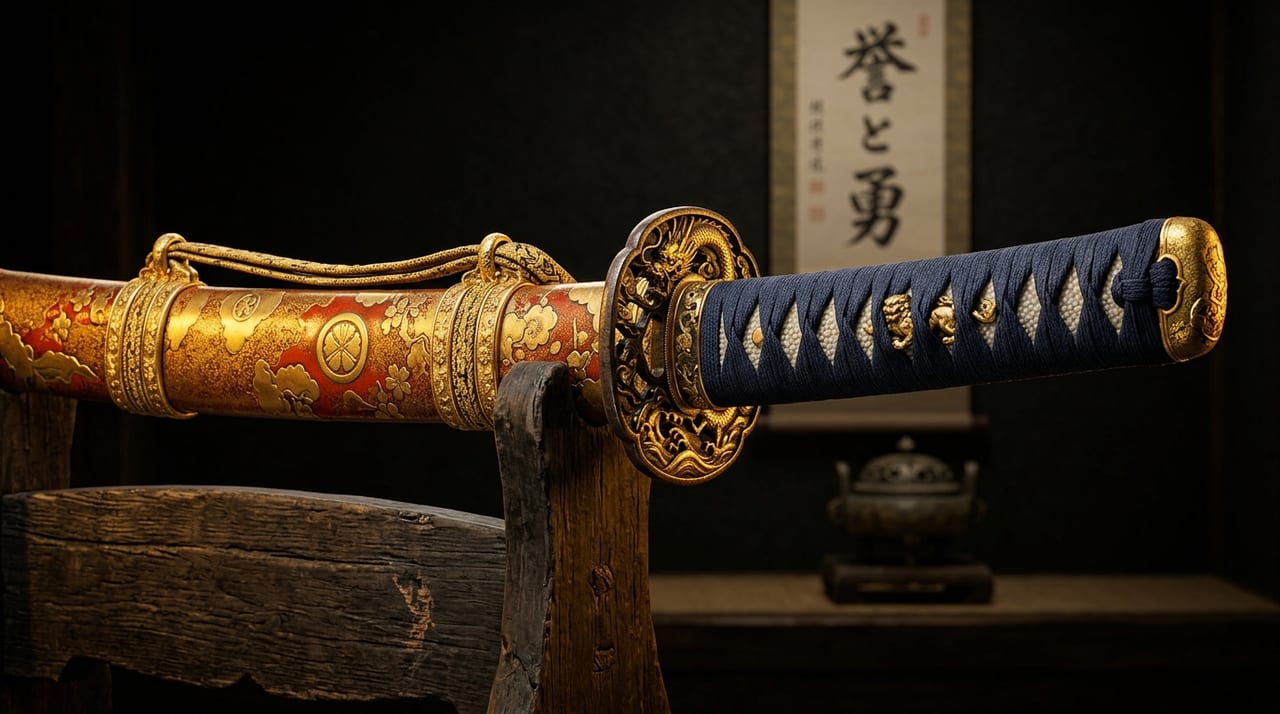
Props swords also require period-accurate koshirae (拵, the mounting—grip, scabbard, and hand guard). The design of the koshirae, chosen to suit a character's social status and the historical period, forms part of the visual language that, together with costume, conveys the character to the audience. Looking closely at a stage sword, one finds clues for reading the story's setting.
A Play About Sword-Making—Noh "Kokaji"
A widely known play whose subject is the sword itself is the Noh piece Kokaji (小鍛冶, "The Little Blacksmith"). A swordsmith named Sanjō Kokaji Munechika, having received an imperial command, is troubled by the fact that no one is available to serve as his striking partner (aizuchi 相鎚, the hammer-wielder who strikes while the smith guides). He prays to Inari Myōjin, and a spirit fox (the avatar of Inari's messenger) appears to serve as his striking partner, resulting in the forging of a celebrated blade named Kogitsune-maru (小狐丸, "Little Fox").
This play demonstrates that the act of forging a sword has been understood as a sacred undertaking. The sense of purifying the smithing place and striking the hammer in prayer speaks to the spiritual dimension of sword culture. It is a prime example of how theatrical art has transmitted, even to the present day, the sense of faith and reverence that surrounds swords.
Points to Watch When Viewing Classical Theater
If you have the opportunity to watch Noh or Kabuki, paying attention to the following points related to swords will deepen your appreciation.
- How the sword is worn and drawn: How the sword is positioned at the waist and how it is drawn in each movement. The handling changes according to status and scene
- Respect for the sword: Whether etiquette such as not stepping over a sword or handling it carelessly is observed even on stage
- The design of the koshirae: How a character's status and personality are expressed in the color and form of the mounting
- The forms of tatemawari: How the choreography is constructed as stylized beauty rather than a recreation of actual combat
These perspectives connect to the eye for observation when appreciating actual swords.
Plays Featuring Celebrated Blades
Noh and Kabuki alike contain not a few stories centered on particular celebrated blades or swords imbued with spiritual power. That the sword is depicted as transcending mere tool to become a vessel of spirituality and karmic destiny is deeply connected to the sense—felt by Japanese people since ancient times—that swords embody soul and divinity. The sword on stage appeals to the audience's heart as a symbol that condenses this cultural sense.
Sword Culture as Seen Through Performance
The two classical performing arts, Noh and Kabuki, have each brought swords to life on stage through their distinct styles. Noh with its yūgen, Kabuki with its brilliance—the methods of expression are contrasting, yet both align in treating the sword as a symbol reflecting human destiny and spirit. Understanding the sword as it appears in performance becomes one pathway to grasping the Japanese perspective on swords.
At TOUKENZA, you can view actual swords offered for sale in our online catalog. Please enjoy both the symbolism of the sword as it comes alive on stage and the appeal of holding and appreciating an authentic blade. If you are interested in any particular work, we invite you to contact us through our inquiry form.