Naginata-jutsu and Warrior-Class Women: The History of How Naginata Became a Woman's Weapon and Its Transmission to the Modern Age
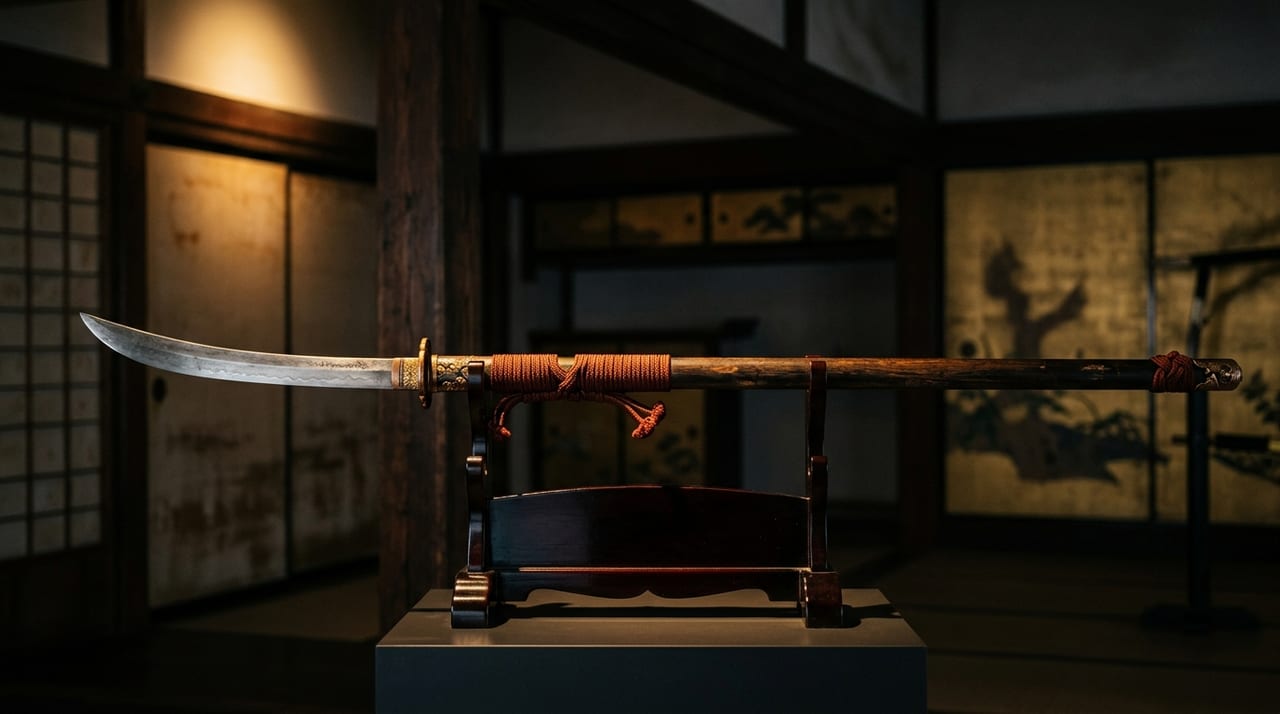 * Image is for illustrative purposes only.
Table of Contents
When Did Naginata Become a "Woman's Weapon"?
In the modern age, the image of naginata as a martial art practiced by women is firmly established. Yet tracing history back, naginata was originally a man's weapon. So why and when did naginata become associated with women? — this article follows that turning point.
Naginata in the Heian-Kamakura Period: A Masculine Weapon of Warrior Monks and Samurai
Naginata is said to have first appeared in historical documents from the late Heian period (around the 10th–11th centuries). It was initially a weapon favored by warrior monks (sohei) at temples such as Hiei-zan and Kofuku-ji. Its form — a single-edged blade mounted on a long shaft — was effective for foot soldiers and warrior monks to unhorse mounted samurai, and it was also used for sweeping attacks in group combat.
In the Kamakura period, mounted warriors also carried naginata, and the Heike Monogatari contains depictions of commanders fighting valiantly with naginata in hand. The image of Benkei at Gojo Bridge holding a naginata also reflects the masculine view of naginata in this era.
At this stage, naginata was clearly a weapon of men and warriors.
The Shift in the Nanbokuchō–Muromachi Period: Enlargement and "Naginata-naoshi"
In the Nanbokuchō period (14th century), naginata wielded devastating power on the battlefield in its enlarged form, the ō-naginata. However, as the Sengoku period began, the yari (spear), with its superior mobility, came to replace naginata.
There are multiple reasons why naginata withdrew from its leading role on the battlefield:
- The yari was longer than naginata and better suited to forming ranks in group combat.
- Large-scale mobilization of ashigaru (foot-soldier warfare) became mainstream, making the easier-to-handle yari more advantageous than the naginata, which demands individual skill.
- Naginata is a weapon for "cutting," while yari is a weapon for "thrusting." Against an armored opponent on the battlefield, "thrusting" was more effective.
Within this change, an important phenomenon is "naginata-naoshi." The original naginata blade was shortened by suriage (shortening) and repurposed as a wakizashi or katana, and many swords now handed down as "wakizashi" frequently include naginata-naoshi examples.
The Early Edo Period: The Beginning of Naginata Instruction for Women
Naginata came to be positioned as a weapon for women during the early to middle Edo period. The background is multifaceted:
The warrior household's logic of "defending the home": As the age of warring states ended, husbands (samurai) had more occasions to leave home for the sankin-kotai (alternate attendance) system and official duties. It was considered rational for the wives and daughters of warrior households to learn naginata in order to defend their castles and residences.
Physical reasons why naginata "suited women": Because naginata leverages centrifugal force through its long shaft, it was said to be effective even for those with inferior physique and arm strength compared to men. It was also taught that naginata's characteristic of "maintaining distance" was suited to self-defense against opponents with a physical advantage.
Fusion with warrior-class women's education: Naginata came to be taught alongside kendo, kyudo, and etiquette as a "household art" of warrior families, and naginata practice was incorporated as part of a young woman's pre-marriage training.
In powerful daimyo houses in particular, cases of requiring naginata as a compulsory self-defense art for princesses increased. It is said that naginata education was especially valued in domains with a strong warrior spirit, such as the Aizu, Kishū, and Satsuma domains.
The Middle to Late Edo Period: The Appearance of Naginata Dojos and Female Instructors
By the 17th–18th centuries, naginata instruction for warrior-class women had spread nationwide, and specialized female instructors (shihan-dai) began to appear.
Schools centered on naginata-jutsu, such as Jikishinkage-ryu and Tendo-ryu, refined their kata and built training systems oriented toward women. This systematization became the foundation for elevating naginata from a mere weapon to a "budo."
In the late Edo period, not only warrior women but also women from wealthy merchant households began practicing naginata, and its meaning expanded from "a warrior household accomplishment" to "proof of a woman's refinement." Today, naginata is established as an official martial art, as a club activity at high schools and universities and as a competitive event at national tournaments.
The Reality of the Bakumatsu: Women Who Fought with Naginata in Hand
During the turbulent period from the late Edo era to the early Meiji era, cases of warrior-class women actually fighting with naginata in hand are recorded.
Aizu in the Boshin War (1868): Women of the Aizu domain are said to have fought against the new government army wielding naginata. The existence of a female combat unit called the Joshitai is passed down (some accounts include later fiction and exaggeration, but women's participation in combat can be confirmed in multiple historical sources).
Nakano Takeko: The daughter of an Aizu domain samurai and a master of naginata. She is said to have participated in actual combat in the Boshin War and died in battle after being struck by a bullet. Her story is still passed down in Aizuwakamatsu City today and has become a source of historical pride for Aizu.
On the new government side as well: Records of women carrying naginata and long swords remain in connection with the Shinsengumi and women's volunteer units in various regions.
These real examples demonstrate that naginata education for women throughout the Edo period functioned not merely as a "formality" but as a martial art with genuine combat capability.
The Meiji-Taishō Period: Naginata as Physical Education at Girls' Schools
After the Meiji Restoration, when the warrior household system was abolished, the context of naginata education for warrior-class women changed. However, far from disappearing, naginata was redefined as a physical education subject in modern girls' education.
From the Meiji 30s–40s (1897–1910s), naginata came to be taught at girls' schools and was institutionalized as a means of physical training, etiquette education, and spiritual cultivation. The aims of naginata education during this period were multifaceted:
- Improvement of physique and posture (building the correct body)
- Cultivation of manners and etiquette (learning from the etiquette of practice)
- Development of mental fortitude (the martial arts spirit of enduring hardship)
- Embodiment of the grace befitting a "Yamato nadeshiko"
There was also a militaristic background, and there is an aspect in which the state promoted naginata education for the purpose of improving women's physical and mental strength. However, as a result, naginata came to be widely recognized as "a traditional martial art passed down by Japanese women."
Modern Naginata-do: The All Japan Naginata Federation and Competitive Sport
Today, naginata is systematized and formalized as a competitive martial art.
The All Japan Naginata Federation (established in 1955) oversees the sport, and both forms — embu (demonstration of kata) and shiai (a striking competition with protective gear) — have been organized. The current registered membership is on the order of tens of thousands, the vast majority of whom are women.
Features of competitive naginata:
- A bamboo naginata-shaped implement called "ei" is used in place of a shinai.
- Striking targets: men, do, and sune (shin) — three points. Attacks to the sune are a distinctive feature of naginata-do.
- Kata: traditional technique forms performed in pairs.
Naginata clubs at high schools and universities exist nationwide, and naginata has become an official event at the Inter-High School Championships (National High School Athletic Festival). Regions with a strong warrior-class culture, particularly in Tohoku and Kyushu, tend to have more students joining naginata clubs.
Spread Around the World: The International Naginata Federation
Naginata has spread overseas as well, with more than 20 countries affiliated with the International Naginata Federation. Dojos exist in Europe, North America, and Australia.
A notable feature of how naginata has been received overseas is the strong interest in it as "a unique brand of Japanese women's martial art." It is less well-known than kendo, judo, and karate, but for that very reason there is a tendency for enthusiasts who carry an identity as "inheritors of authentic Japanese martial arts" to gather around it.
Conclusion: Naginata Is Not a "Woman's Weapon" but a "Weapon Inherited by Women"
Looking back at the history of naginata, one can see that the modern image of it as a "woman's weapon" is not the product of historical inevitability but was formed within the social changes of the Sengoku–Edo period.
Naginata, originally a weapon of men and warrior monks, was adopted as a self-defense art for warrior-class women, systematized as a martial art, an educational subject, and a competitive sport, and has been passed down to the present. In that process, practitioners with real combat experience such as Nakano Takeko emerged, and naginata was honed not merely as "formal etiquette" but as "a martial art that actually functions."
The women of today who study naginata are inheriting a lineage of martial skill among Japanese women spanning more than 400 years. It is not merely a "women's sport" but a living cultural heritage where the warrior-class culture of Japan and the history of women intersect.