The Sword Etiquette of Edo Warriors — The Samurai's Pride Embedded in the Protocols of Wearing, Drawing, and Audience
 * Image is for illustrative purposes only.
Table of Contents
The Sword as the Samurai's "Soul" — Its Cultural Meaning
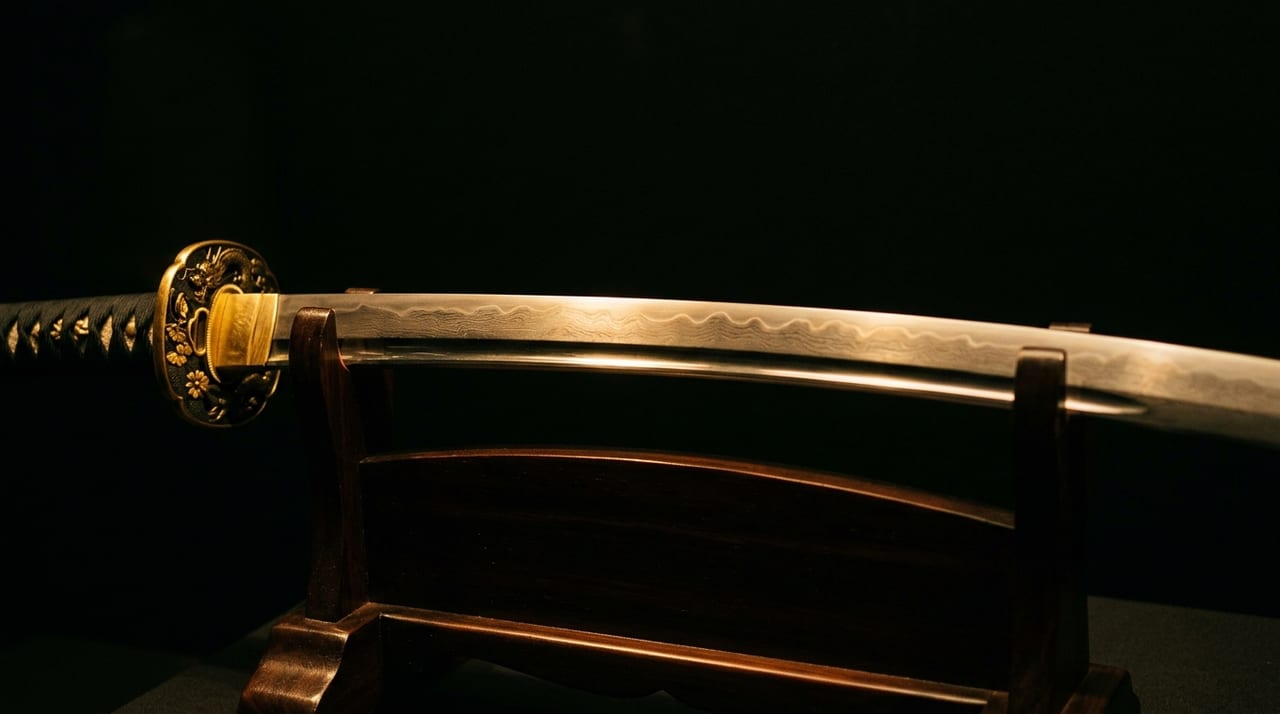
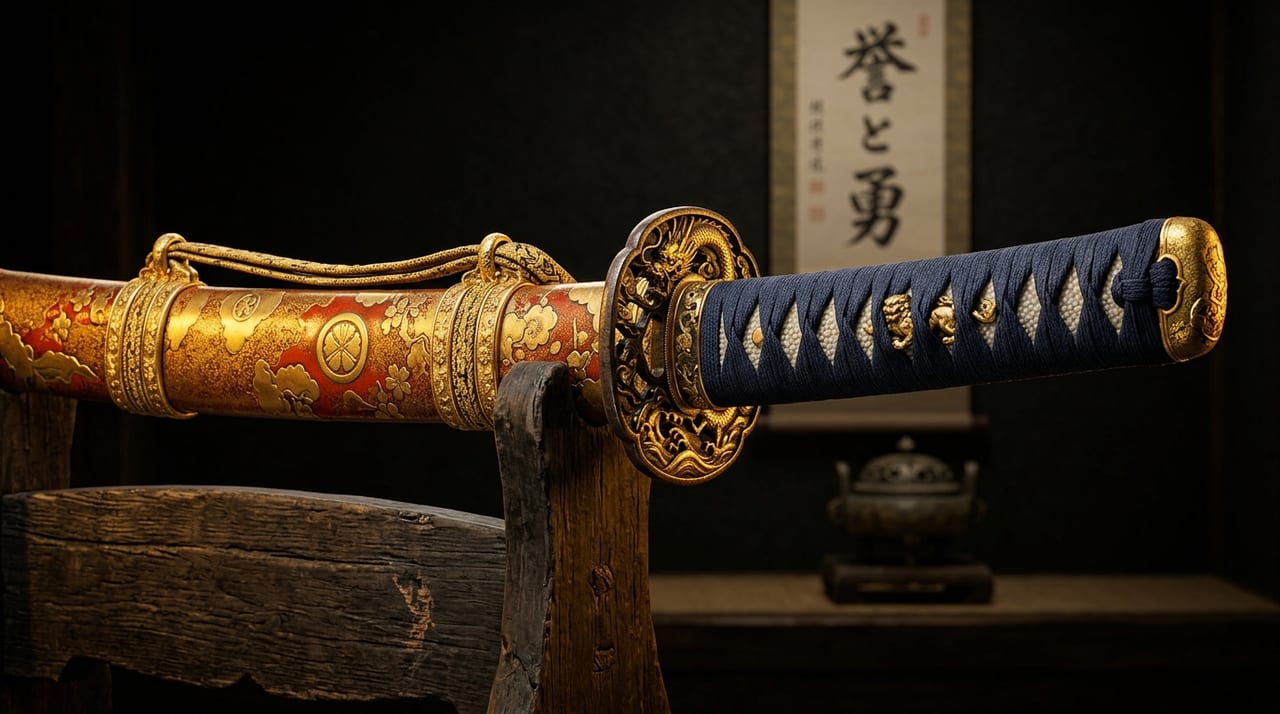
In the Edo period, the sword was not merely a weapon for the samurai. Described as "the soul of the warrior" and "the vessel of the soul," the sword was an embodiment of the samurai's status, spirit, and honor. This understanding gave rise to an elaborate system of etiquette and protocols surrounding the sword.
The belief that a tōkon (sword spirit) dwelt within a blade was widely shared; famous swords were given individual names and handed down as family treasures through generations. Just as Muramasa was reputed to be a "cursed blade" that brought calamity upon the Tokugawa clan — a sword Ieyasu is said to have abhorred — or as the celebrated blade Hime-Tsuru Ichimonji of Uesugi Kenshin, swords were deeply intertwined with the personality and fate of their warrior owners.
From the manner of wearing a sword to how one entered a room, how one showed a blade to another, and the protocols observed at an audience — everything was governed by meticulous rules. These were not merely formal courtesies but embodied the relationships of trust, respect, and power within samurai society. A person well-versed in etiquette was praised as "well-mannered," and lapses in propriety were said to bring dishonor to the family name.
The Principle of Wearing Two Swords — The Meaning of the Daishō and the Protocols of Wearing a Sword
As a rule, samurai wore a "daishō" — two swords consisting of an uchigatana and a wakizashi. This practice of wearing two swords, known as nihon-zashi, was also a mark of samurai status. The wearing of the daishō became established as the exclusive status symbol of the warrior class.
| Type | Nagasa | Characteristics and Meaning |
|---|---|---|
| Uchigatana (large) | Standard is two shaku (approx. 60 cm) or longer | The fundamental wearing method (sashikomi) inserts the blade edge-up through the obi; it spread from the late Muromachi period and became fully established in the Edo period |
| Wakizashi (small) | One shaku or more but less than two shaku | Served as a supplementary weapon and also held special significance as the blade used in seppuku (the honorable self-immolation of the samurai) |
As an indoor protocol, the uchigatana was held in the left hand and treated as a "sword at the hip" with the tsuka facing forward. When seated in a cramped tatami room with a long sword still at one's side, the blade might point toward others, which could be interpreted as a display of hostility. For this reason, it was customary in tatami rooms to place the uchigatana to one's left and wear only the wakizashi.
When ascending to the castle (tōjō), it was proper etiquette to entrust the uchigatana to a guard known as the katanaban at the entrance and enter carrying only the wakizashi. At official audiences (omemie) with a shogun or daimyō, one was further required to remove even the wakizashi. This was an expression of "complete submission" and a physical demonstration of absolute trust toward the other party.
Holding and Passing the Sword — The Details of Etiquette
Strict protocols governed the showing and handing over of a sword to another person.
When handing over a sword: The proper protocol is to present it with the cutting edge facing toward oneself (the giver). Turning the edge toward the other person was considered a discourtesy implying hostile intent. When presenting a sword to a superior, one was required to hold it with both hands and offer it with a lowered posture.
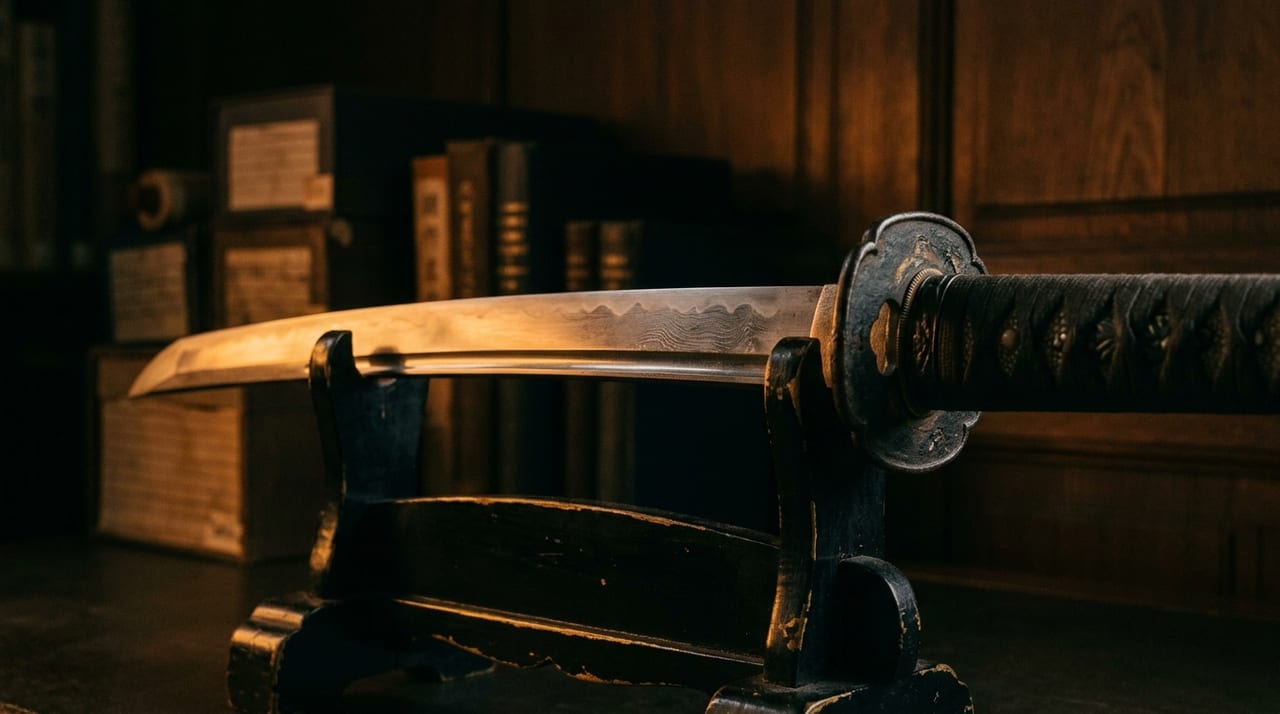
The protocol for viewing a sword: When being shown a sword, one first says "Haiken itashimasu" before receiving the tsuka or saya carefully with both hands. One presses the tsuba (hand guard) with the thumb to draw the blade out slightly, then gradually draws the saya from the habaki-moto to observe the hamon (temper line) and jigane (steel of the blade surface). Since breath touching the blade causes rust, meticulous care was taken to keep the mouth closed or to direct one's breath to the side.
The protocol for sheathing a sword: When returning a drawn sword to its saya, one pinches the kōchi (mouth of the saya) between thumb and forefinger and quietly inserts the blade from the kissaki (point). Sheathing carelessly risks scratching the inside of the saya and may cause the kissaki to snap. "The beauty of the sheathing motion" was regarded as a reflection of one's skill and spirit.
The Code Surrounding Drawing the Sword — What Does It Mean to "Draw"?
Under Edo-period law, drawing one's sword without just cause was a serious breach of etiquette as well as a legal offense. The Buke Shohatto and the laws of individual domains contained explicit prohibitions on drawing swords, and those who drew without cause faced severe punishments including suspension from service, kaieki (confiscation of domains), or seppuku.
The principle of kenka ryōseibai (both parties in a quarrel punished equally) also acted as a strong deterrent against drawing one's sword. This principle, which imposed equal punishment on both parties even in cases of self-defense, served as a powerful disincentive against drawing lightly.
On the other hand, there was a custom known as kirisute gomen. This held that a samurai could cut down a non-samurai who behaved disrespectfully without being held criminally liable, but in practice a post-incident report (todoke-ide) was required, and if the reason for the killing was not deemed justifiable, the samurai would be held accountable. It was not something to be invoked lightly, and needless killing was said to be "a samurai's shame."
Adauchi (vendetta) was another institutionalized custom surrounding the sword, by which it was considered the duty of a samurai to avenge the death of one's lord or father. "Chūshingura," which dramatizes the Akō Incident of Genroku 15 (1702), depicts the vendetta carried out by the forty-seven Akō rōnin against Kira Kōzukenosuke and was celebrated in the warrior society of the time as "the model of loyal retainers." This incident vividly illustrates the spiritual structure of Edo society, in which the sword was inseparable from giri (duty) and ninjō (human feeling).
The Sword at an Audience — The Tension of a Shogunal Audience
A shogunal audience (omemie) at Edo Castle was a ceremonial space that could be called the pinnacle of sword etiquette.
The procedures for a daimyō's audience with the shogun were strictly prescribed.
- Form the procession outside the Ōtemon gate
- Entrust the uchigatana to the katanaban at the entrance
- Proceed down the corridor and, before the taimenoma (audience hall), remove the wakizashi and place it on the sword stand
- Prostrate oneself on the tatami and await the shogun's words
This sequence of actions, removing one sword after another, signified "complete submission," and the samurai expressed loyalty through their very bodies.
Conversely, approaching the shogun while still wearing a sword was regarded as an extremely dangerous act that would invite suspicion of treason, regardless of one's reason. Even senior shogunal councilors such as the rōjū and wakadoshiyori adhered to the protocol of removing their swords before the shogun. One might say that the shogun's authority was made visible by the very power to make samurai remove their swords.
Sword Etiquette Living in the Modern Day
Even in contemporary iai-dō, kendō, and other martial arts, the sword etiquette of the Edo period is transmitted in altered form.
The rei (bow) at the beginning and end of practice, the sonkyo posture, and the handling of bokutō and shinai — all of these have their origins in Edo-period warrior etiquette. The "Kendo Etiquette" of the All Japan Kendo Federation codifies the protocols for drawing and sheathing the sword, and in this one can see a direct inheritance of Edo etiquette.
For modern people who own or appreciate nihontō, learning these protocols is not a mere acquisition of historical knowledge. Correctly performing the motion of lifting a blade, the finger position when drawing the saya, and the quietness of sheathing — these acts also embody respect for the accumulated weight of centuries of ceremonial norms.
Sword etiquette is, ultimately, "the practice of people facing one another through the sword." The samurai expressed their sincerity and martial bearing through the sword, and demonstrated respect for the other person. Even today, the essence of this — consideration for others and self-discipline — lives on unfaded as the spirit of Japanese budō.