Edo Period Kodogu Collectors: How Daimyo and Merchants Built a Culture Around Sword Fittings
 * Image is for illustrative purposes only.
Table of Contents
The Edo Period: When Sword Fittings Became Independent Works of Art
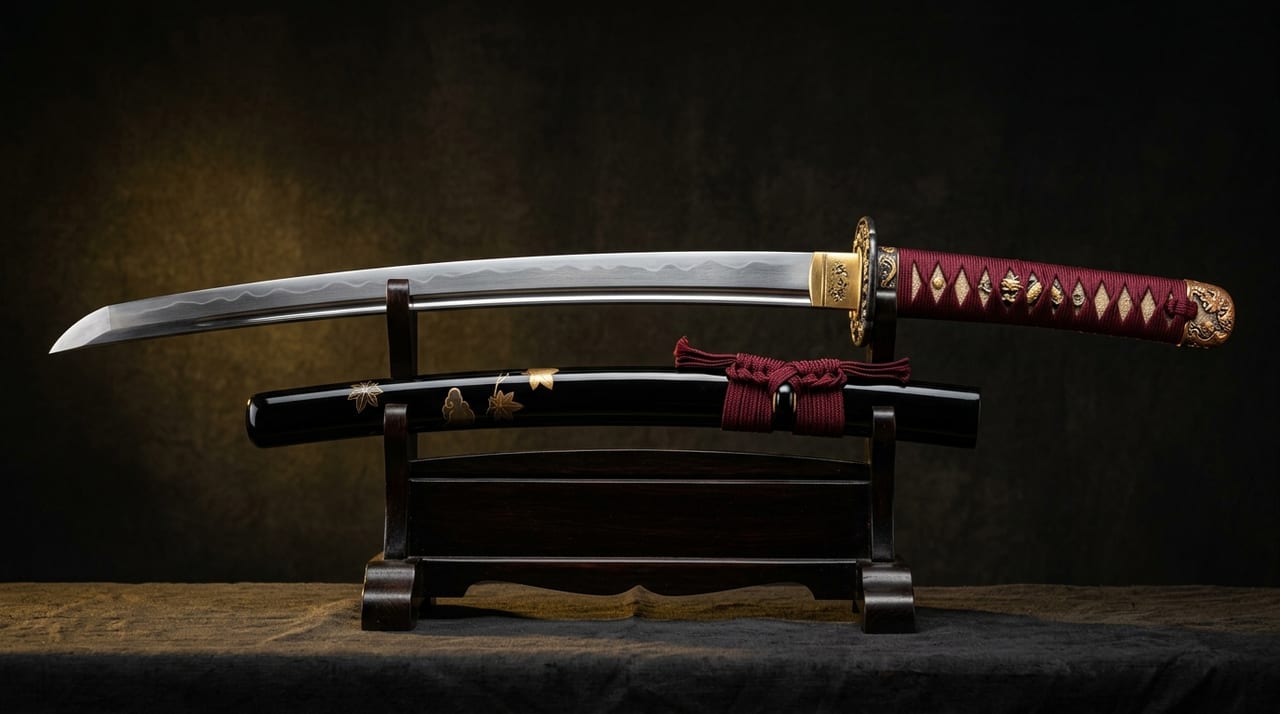
With the establishment of the Edo Shogunate, Japan enjoyed more than two centuries of peace across the islands. Japanese swords, which had been forged with battlefield practicality in mind, gradually transformed in meaning. As the soul of the warrior and symbol of status, the sword became something to display and be proud of, and the fittings that adorned it—tsuba, menuki, fuchigashira, kozuka, and kogai—likewise established their own status as pure works of art.
Notably, a new type of connoisseur known as sukisha emerged—collectors who gathered and appreciated the fittings independently from the blade itself. This culture, parallel to the appreciation of tea ceremony utensils, was a product of Japan's unique aesthetic sensibility and continues to flow through to modern specialist collectors of sword fittings. The appeal of sword fittings transcends mere weapon accessories. Rather, it lies in the fact that the technical pinnacle of metal craftsmanship and the crystallization of Japanese aesthetic consciousness are condensed within them.
Types of Implements and Collection Targets
Among sword fittings, the following five items form the core of collections.
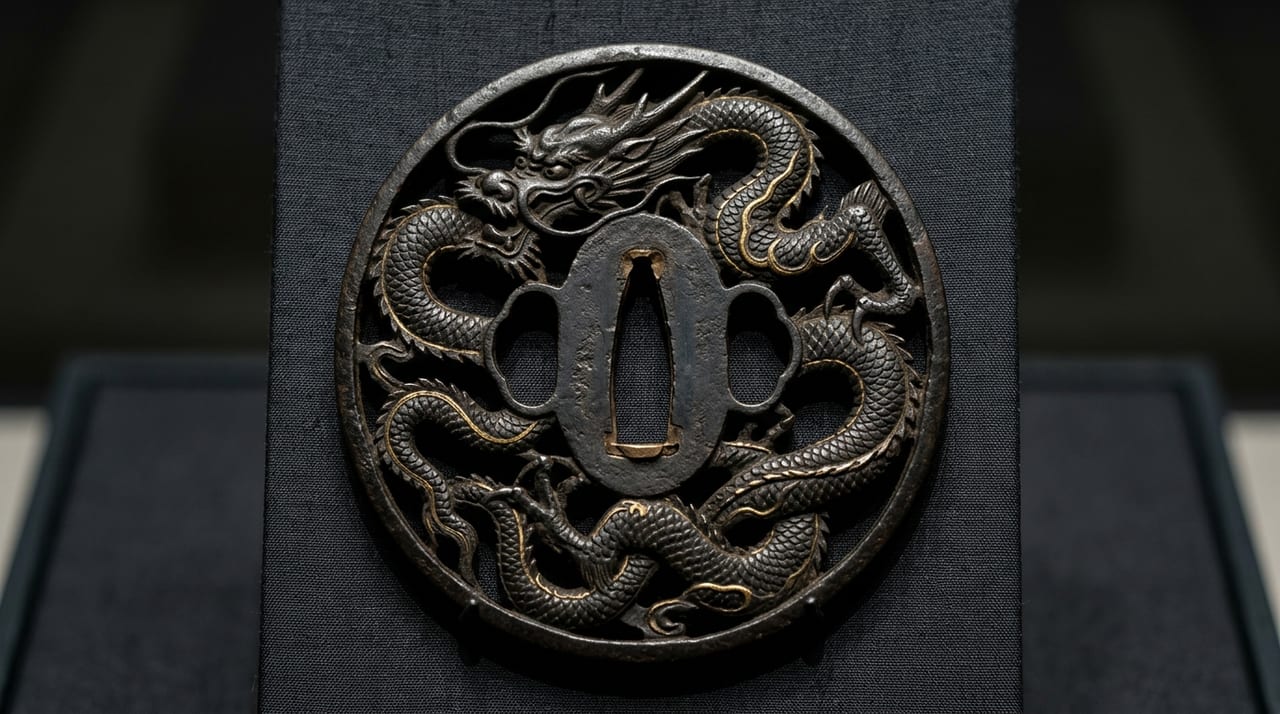
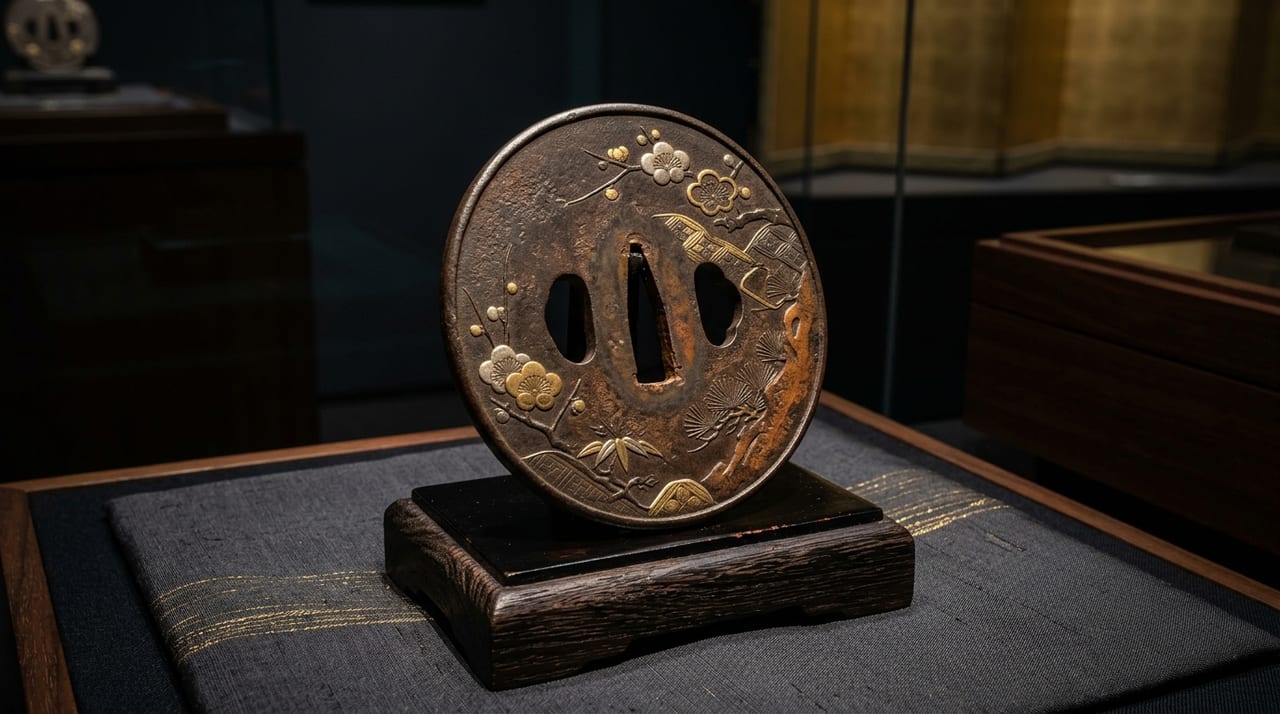
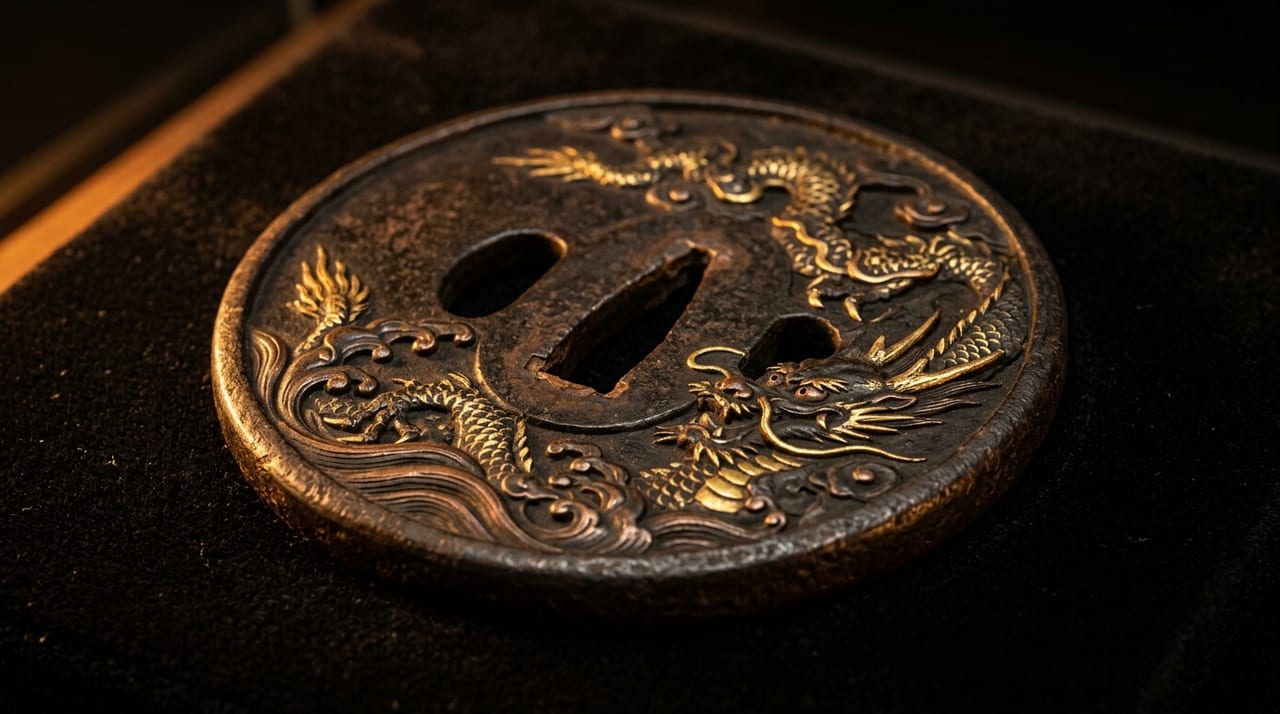
The tsuba is a hand guard fitted between blade and hilt, and due to its diverse shapes, materials, and techniques, it became the most widely collected fitting independently. Materials included iron, shakudo, shibuichi, brass, and gold and silver, while surfaces featured techniques such as chasing, zougan (inlay), and kiniroae (gilt designs). Collectors value not only the rarity of materials but also the refinement of design, the authority of the school, and the significance of provenance—who previously owned the piece.
Menuki are small metal ornaments inlaid into the hilt, serving both as grip aids and decorative elements. Designs frequently feature dragons, tigers, hawks, and plum blossoms, with remarkable forms compressed into just a few centimeters.
Mitokoro-mono refers to matching sets of menuki, fuchigashira, and kozuka created by master metal workers with a unified theme, earning particularly high value in the collector's market for their cohesive design and technical mastery. Sets by master craftsmen currently trade from hundreds of thousands to millions of yen, with the completeness of the set being a major determining factor in value.
Major Sword Fitting Schools of the Edo Period
Several schools are indispensable when discussing Edo-period sword fitting metalworking. Each established its own aesthetic and techniques, and they continue to be cherished by collectors today.
The Goto family is the most prestigious lineage of sword fitting craftsmen, continuing from the Muromachi period and serving successive generations as official metalworkers for the shogun and daimyo. "Goto metalwork" was regarded as the highest standard of sword fittings, strictly preserving unique designs called kahou (house rules)—including dragons and tigers, pine-bamboo-plum, and arabesque patterns. Sets of three by the Goto family held a status apart even in the Edo period, easily obtainable only by daimyo.
The Nara school, active from the early to mid-Edo period, was led by three masters known as the "Three Creators of Nara"—Nara Toshinaga, Tsuchiya Yasuchika, and Sugiura Jōi—who became known as "townspeople's metalworkers," spreading widely through free designs unbounded by Goto-family conventions and superior craftsmanship. Valued by both samurai and wealthy merchants, they were key figures in expanding the appeal of sword fitting culture.
The Yokoya school, founded by Yokoya Sōmin, realized expression distinct from both Goto and Nara schools through realistic natural depiction—fish, birds, and flowers—combined with precise takabori (high-relief) technique. Records show that Sōmin served as an official craftsman for the Tokugawa shogunate, and his works command high prices even today.
The Hirata school actively incorporated shippoyaki (cloisonné enamel) into tsuba and fuchigashira, bringing fresh color to the late-Edo market. It is positioned as an innovative school that introduced the beauty of colored designs to a world previously dominated solely by metal chasing.
Connoisseurship Culture Nurtured by Daimyo and Merchant Collectors
Edo-period fitting collection spread through upper society as "suki" (connoisseurship)—deep immersion and exploration of particular aesthetic objects. The practitioners were divided into two principal tiers.
For daimyo houses, assembling premier pieces such as Goto metalwork was proof of authority. Daimyo traveling between Edo and their home domains under the sankin-kotai system regularly visited Edo fitting merchants and often formed collections numbering from dozens to hundreds of pieces. Houses such as the Maeda family of Kaga Domain and the Tokugawa family of Kii Domain were known as particularly enthusiastic collectors, and their former holdings remain treasured in museums and art galleries today.
Meanwhile, during the late Edo period when Bunka-Bunsei culture flourished, wealthy merchants and literati also joined in fitting collection. Merchants turned the restriction that only samurai could wear swords to their advantage, arguing that "metalwork can be collected regardless of status," and poured their passion for beauty into sword fittings. Among Edo wholesalers and Osaka money changers, some kept fine sword fittings alongside tea utensils and held appreciation gatherings among their circles. This private connoisseurship culture expanded demand for sword fittings and became the foundation for nurturing emerging metalworkers like the Nara and Yokoya schools, who valued individuality over formality.
Appraisal, Documentation, and the Culture of "Meibutsuchō"
As connoisseurship culture matured in the Edo period, efforts to systematize the appraisal and documentation of sword fittings emerged. Records called kadensho (house chronicles) documenting the works of craftsman families including the Goto, and meibutsuchō (ledgers of notable pieces) compiled by enthusiasts recording the provenance and characteristics of their collections, survive in various locations.
Most important among these is the existence of "Goto-family origami"—certificates of appraisal. Whether the Goto house head had issued such a certificate directly determined a piece's grade. This corresponds to the modern art market concept of "provenance," demonstrating that the Edo fitting market was already highly institutionalized. Merely adding a note such as "formerly owned by [renowned connoisseur]" could dramatically change the appraisal of an identical piece—this structure carries forward into today's sword fitting market.
The Modern Sword Fitting Collector Market
Today, sword fittings form a robust independent market as collecting objects separate from sword blades themselves. One reason sword fitting collection is widely appreciated is that beginners can start with more affordable price ranges compared to sword blades.
- General tsuba (unsigned, period pieces): ¥tens of thousands to over ¥100,000
- School-marked pieces (signed): approximately ¥200,000 to ¥1 million
- Mitokoro-mono sets (by renowned metalworkers): ¥hundreds of thousands to several million yen
- Goto family mitokoro-mono sets (complete with certificate): ¥several million to over ¥10 million
International collectors also show strong interest, and it has become common to see Western and East Asian enthusiasts actively bidding at auctions. However, the export of sword fittings designated as Important Cultural Properties or National Treasures is legally prohibited, and applications to the Agency for Cultural Affairs may be required for certain exports. The sword fitting market, where domestic and international demand intersect, also reflects the global appreciation of Japanese decorative arts.
Conclusion—A Universe in the Palm of the Hand
The essential appeal of sword fitting collections is captured in this truth: "infinite art dwells within small objects." Within a few centimeters of tsuba or menuki surface lie the techniques refined throughout master metalworkers' lifetimes, condensed together with Japanese perspectives on nature, cosmos, and narrative. Holding such a piece and enjoying its play of light from different angles is nothing less than sharing the same emotion with Edo-period connoisseurs across centuries.
It may be worthwhile to begin exploring sword fittings as an entry point into the world of Japanese swords. With a more modest budget than acquiring a sword blade, one can touch the pinnacle of Japanese metalcraft—sword fittings are truly such a "universe in the palm," rich with possibility.