Dōchū-zashi and Naga-wakizashi: The Oversized Wakizashi Carried by Edo-Period Travelers and Gamblers
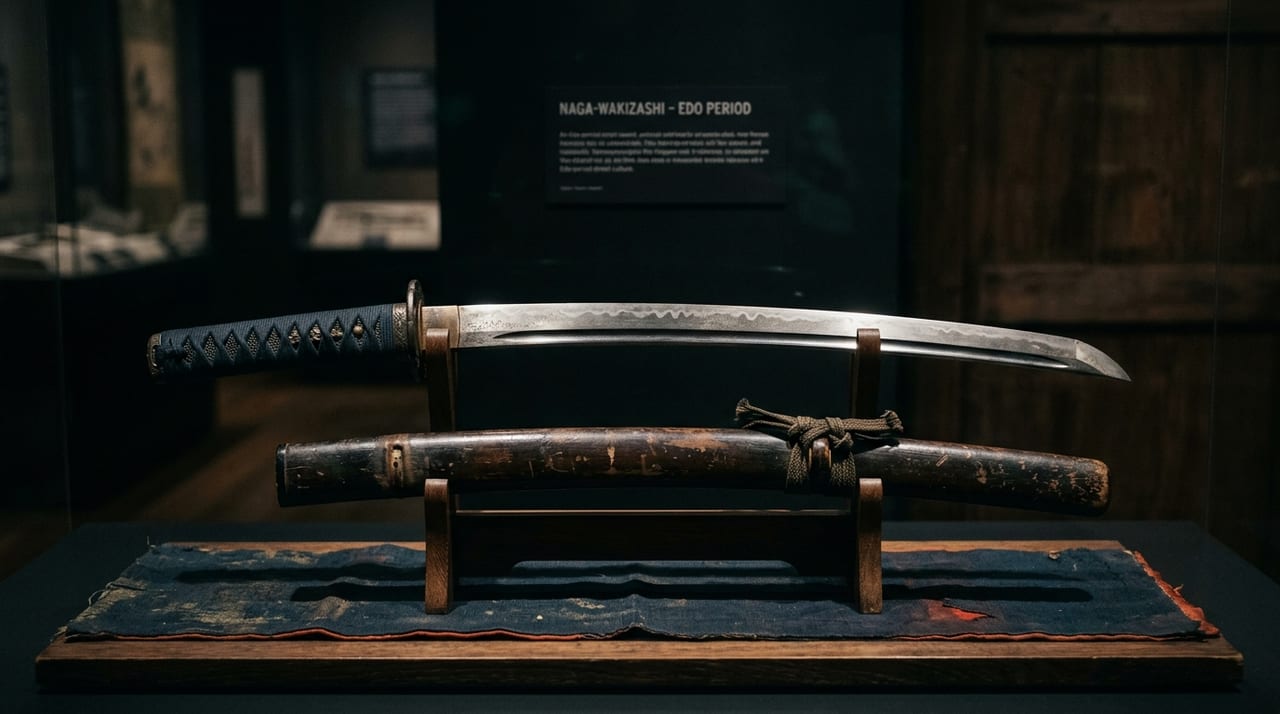 * Image is for illustrative purposes only.
Table of Contents
What Are Dōchūzashi and Nagawakizashi?
During the Edo period, samurai customarily wore two swords (a katana and a wakizashi), but commoners and peasants were generally prohibited from carrying weapons. However, because travel posed dangers from bandits and highwaymen, there were many instances in which carrying a blade for self-defense while traveling (dōchū—along the road) was tacitly permitted. Such wakizashi carried for travel purposes were called dōchūzashi. Those with longer blade lengths than standard wakizashi were called nagawakizashi, and these became favored among gamblers and itinerant adventurers as the late Edo period progressed.
The Bakufu's Restrictions on Sword-Bearing and "Travel" as an Exception
To maintain social hierarchy, the Edo Bakufu distinguished between those permitted to carry swords and those who were not, and repeatedly subjected wakizashi dimensions to regulation. While non-samurai sword-bearing was originally strictly restricted, it is said that certain regions and periods allowed some flexibility in travel contexts due to the necessity of self-defense. Using this "exception" as a foothold, wakizashi exceeding regulated dimensions are said to have spread in rural areas and along highways. The effectiveness of enforcement varied by era and region, and it has been noted that as the late Edo period approached, enforcement of size regulations became increasingly hollow.
Nagawakizashi and Gambler and Itinerant Culture
Nagawakizashi are particularly well-known for their association with gambler and itinerant culture from the late Edo through the end of the Edo period. Itinerant adventurers traveling along highways and way-stations frequently wore nagawakizashi both for self-defense and to display their standing and prestige as figures of influence. While later accounts in storytelling and theater include considerable exaggeration and embellishment in depicting these rogue figures, the nagawakizashi itself was a genuine form of blade that circulated in practice, and examples both signed and unsigned from the late Edo period still survive.
Practical Design as Seen in Koshirae and Dimensions
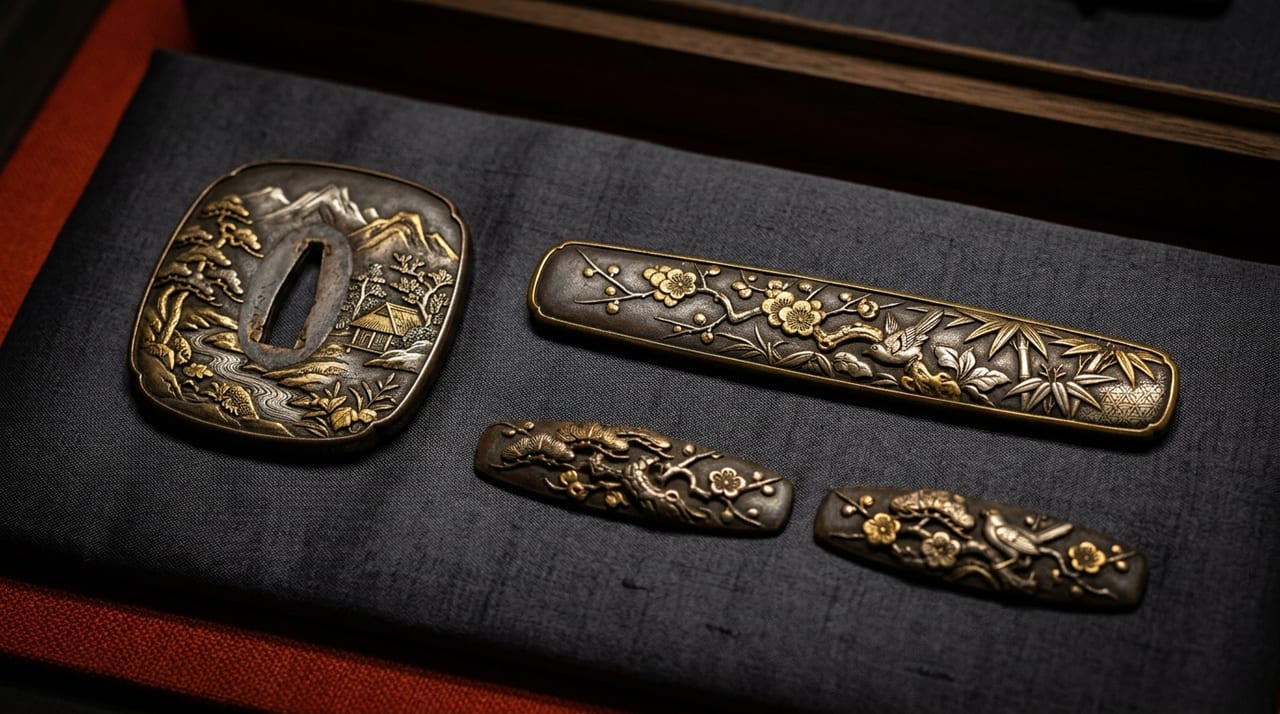
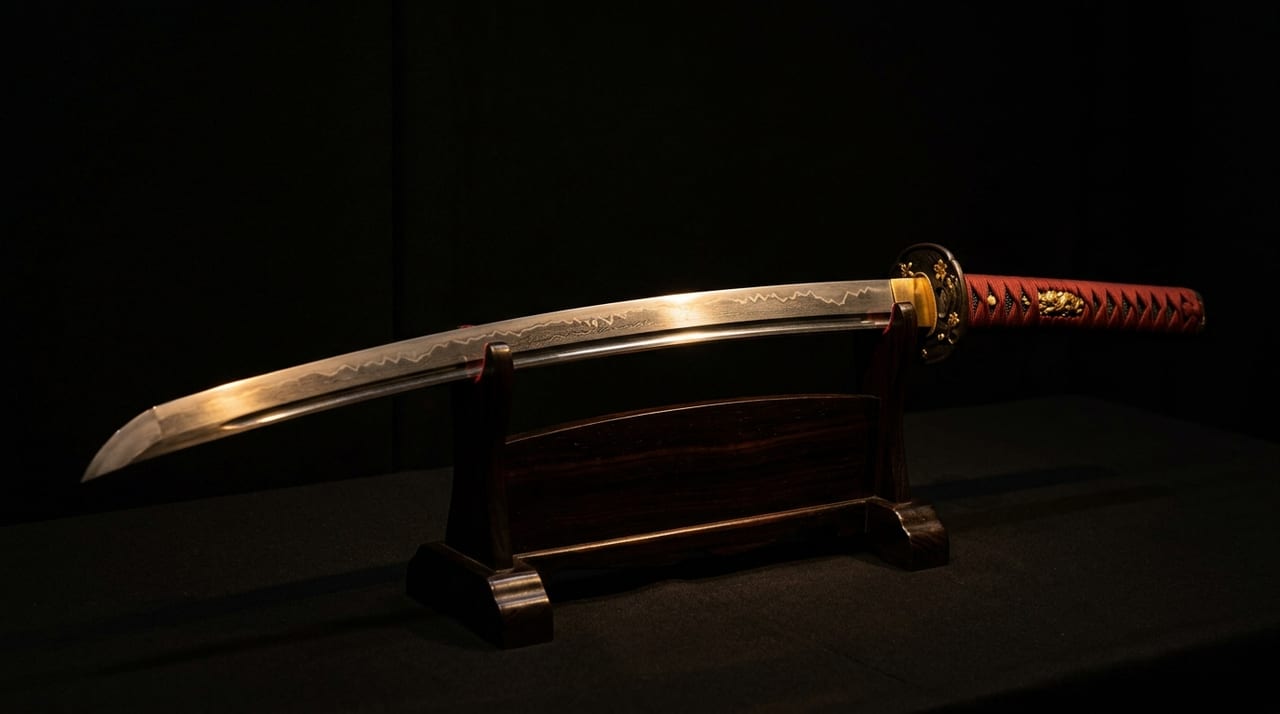
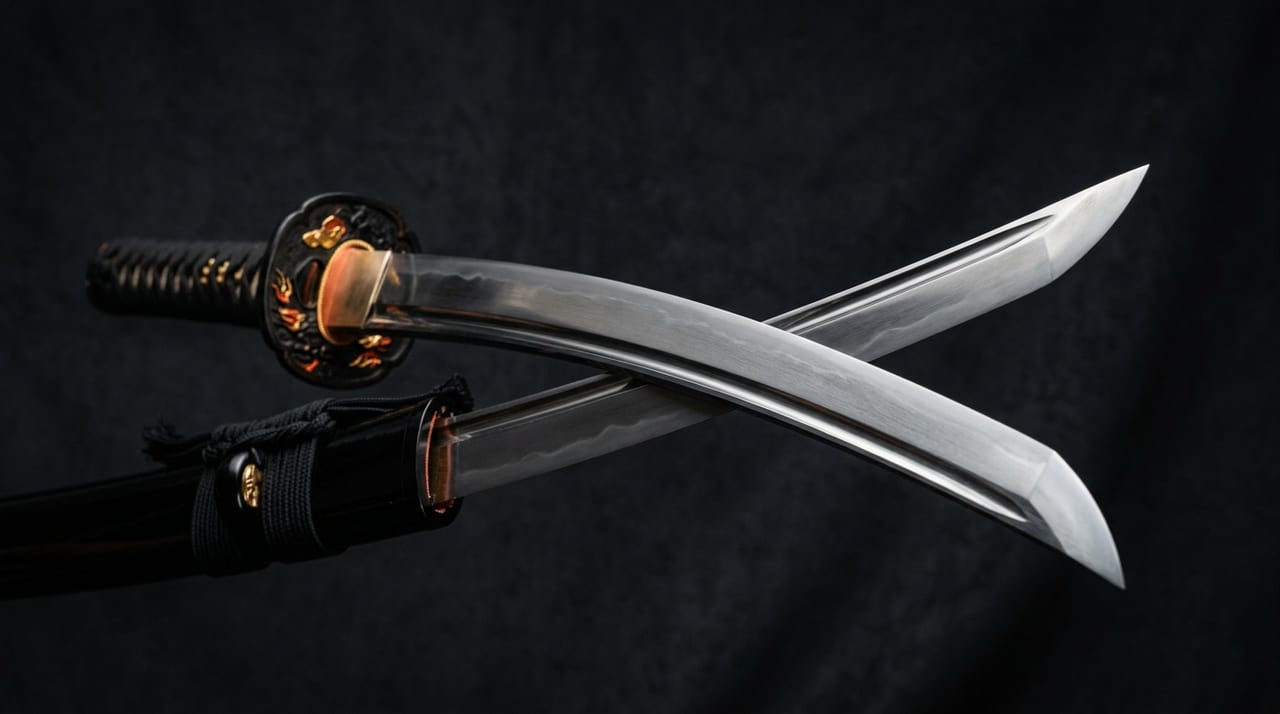
The koshirae of dōchūzashi and nagawakizashi were typically simple, prioritizing utility in contrast to the formal fittings of daimyo swords. It is said that fittings typically emphasized ease of handling while traveling, with restrained decoration on the scabbard and handle. Japanese blades are generally classified as wakizashi if their blade length is between one shaku (approximately 30 cm) and two shaku (approximately 60 cm), but nagawakizashi are characterized by being made at dimensions near or approaching the upper limit of this range. Overall trends can be summarized as follows.
- Blade lengths exceed those of standard wakizashi, with some approaching katana dimensions
- Koshirae typically feature restrained, practical design with minimal fittings
- Curvature and blade width reflect practical design prioritizing portability
- Unsigned blades are common, including mass-produced examples by provincial smiths
Distinguishing Characteristics in Authentication and Extant Examples
When authenticating dōchūzashi and nagawakizashi, one must consider not only dimensional characteristics such as blade length and width but also the construction of the koshirae and the shaping of the nakago. Unlike wakizashi made as formal swords for samurai use, many examples show mass-production tendencies in the quality of jigane and hamon, as design prioritized utility and portability. Nevertheless, some fine examples by skilled provincial smiths exist, making overall evaluation difficult. As records attesting to the spread of sword culture in the late Edo period, a significant number still survive today.
Position in Modern Context
Dōchūzashi and nagawakizashi are blades that emerged from a different context than formal samurai swords, making them fascinating documents of common people and travelers' lives in the Edo period, as well as the tensions between law enforcement and regulation. Today they are appreciated and collected as a category within historical blades, and reading their historical context from the blade's form and koshirae deepens our appreciation of Japanese swords. Comparing various swords of different eras and styles in online catalogs is one way to deepen such contextual knowledge.
The Nagawakizashi as Depicted in Historical Fiction and Period Dramas
Stories of late-Edo gamblers like Shimizu Jirōchō became widely familiar through oral storytelling, ballad recitation, and later films and period dramas. The depictions of nagawakizashi in these narratives contain considerable exaggeration and embellishment, and cannot be taken as historical fact. Nevertheless, it is true that such narratives have kept the nagawakizashi's existence widely remembered to the present day, and we must approach the subject by comparing fiction with historical records to uncover the reality. By reconsidering the nagawakizashi not as a tool for dramatic spectacle but as a real blade produced by late-Edo highway society, its historical significance becomes clearer.
Relationship to Modern Blade Classification
Today, Japanese blades are typically classified through registration certificates as tachi, katana, wakizashi, and tanto. While dōchūzashi and nagawakizashi are typically classified as "wakizashi" in modern taxonomy, their origins and koshirae style emerge from a different context than wakizashi made as formal samurai weapons, which makes them interesting to appreciate. Even though they fall within the same "wakizashi" category, understanding who carried them, for what purpose, and in what circumstances reveals the diversity within the category of Japanese swords.