What Is Mamorigatana — Swords as Talismans Passed Down in the Rites of Birth and Death
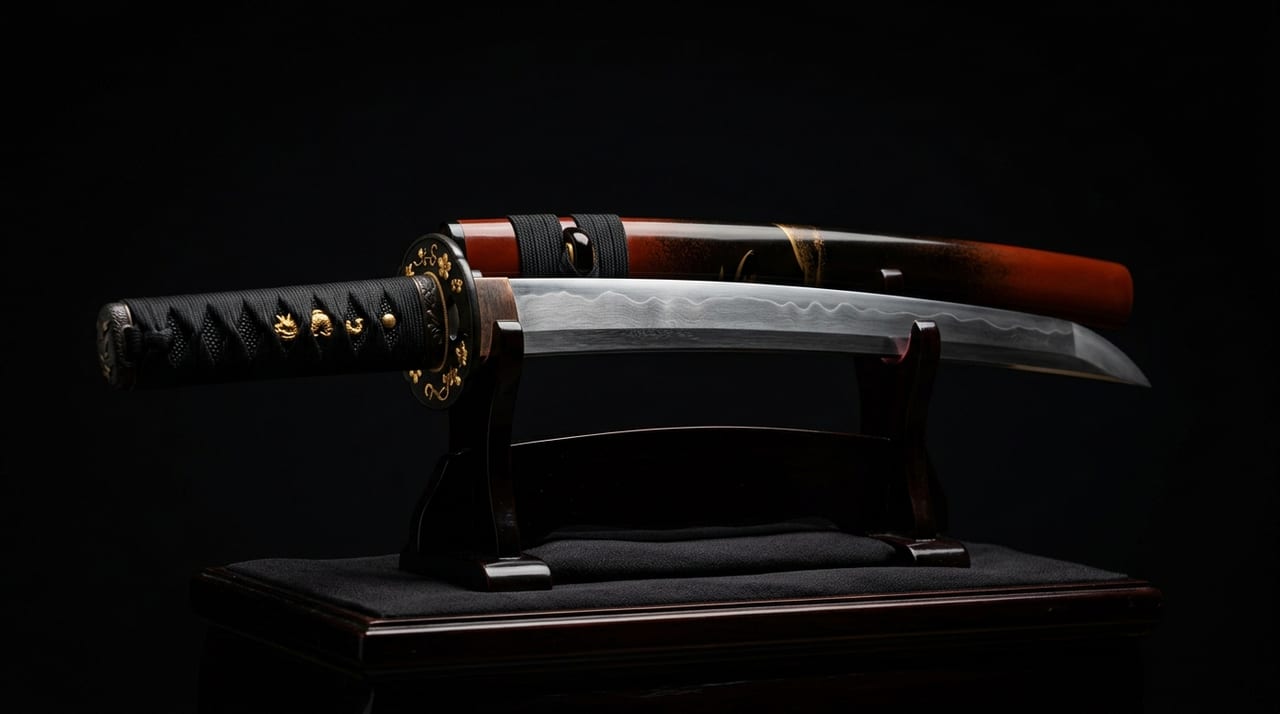
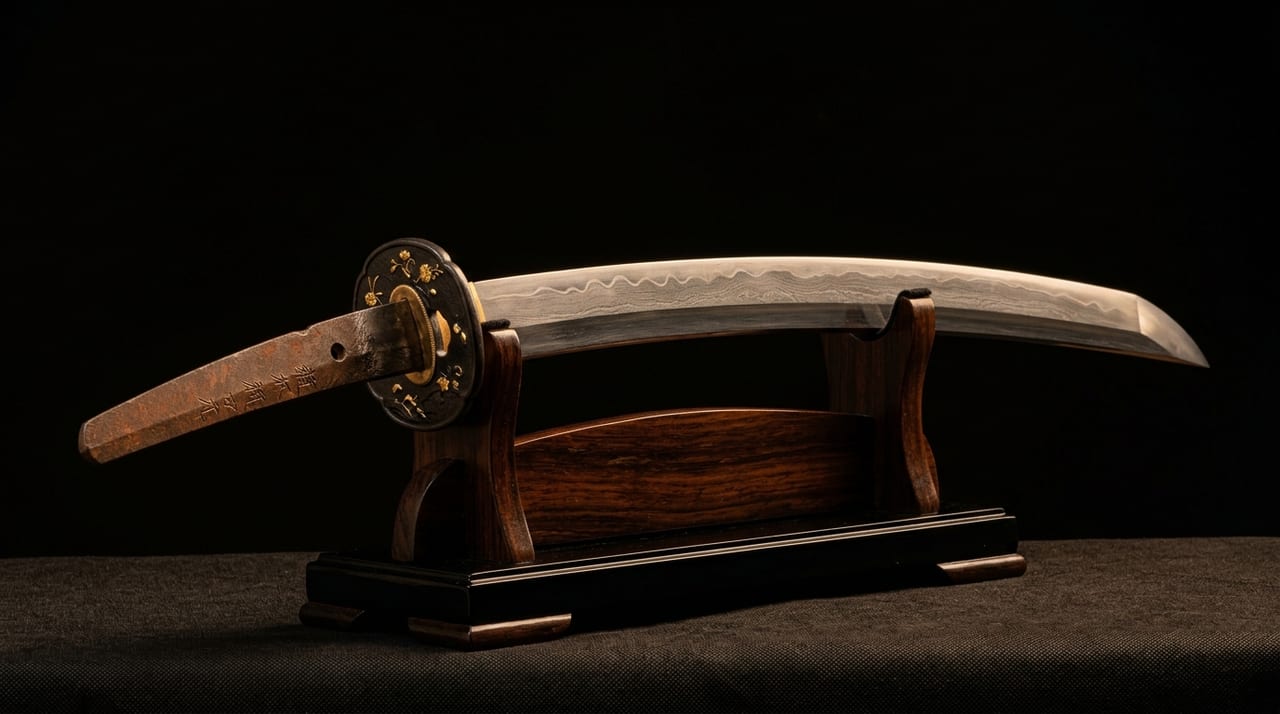
 * Image is for illustrative purposes only.
Table of Contents
What Is Mamorigatana
Mamorigatana is the general term for bladed objects placed near a person with the intent to ward off evil and protect them. The defining characteristic is that they have been used less as practical weapons than in a religious context, drawing on the supernatural properties that bladed objects are believed to possess — the power to sever malevolent energy and keep evil spirits at bay.
In Japan, there are two primary occasions on which the mamorigatana carries meaning: the moment of "birth," when a new life comes into the world, and the occasion of "funerary rites," after a life has come to its end. The fact that the same act of "placing a sword" appears in these two seemingly opposite situations stems from the Japanese view of life and death, which holds that both are "moments when the boundary between this world and the next grows thin." It has long been believed that when the boundary dissolves, a person is most vulnerable to spiritual interference — and this is precisely why bladed objects came to function as talismans.
| Occasion | Placement | Primary Purpose |
|---|---|---|
| Birth | Beside the pillow, near the infant's clothing | Protecting the newborn from malevolent energy and evil spirits |
| Death | On the chest, beside the pillow, or inside the coffin | Preventing evil from entering the body of the deceased |
As this table shows, even within the category of mamorigatana, the placement and significance differ between birth and funerary contexts. Let us examine each in turn.
Mamorigatana at Birth
A newly born child was often regarded as an unstable being whose soul had not yet settled into its body. Folk customs from across Japan preserve the practice of placing a bladed object beside a newborn to dispel malevolent energy. The specific type of bladed object used — a sword, a small knife, scissors, and so on — varies by region, but the common underlying idea is that "a sharp blade cuts away evil from the outside world."
The giver was often a grandparent or relative, and the custom of presenting a mamorigatana alongside gifts celebrating a birth is said to have spread primarily among families of the warrior class. In warrior society, actual tantō or kaiken were sometimes used, but today the following forms have become common.
- Decorative replica swords: Ceremonial pieces with dulled or entirely absent blades, made from a range of materials including wood, aluminum, and brass.
- Miniature wakizashi- or tantō-shaped craft pieces: Objects made in the traditional form with tsuka and saya, crafted from materials that present no legal issues.
- A small knife wrapped in cloth: Following local custom, carefully wrapped in Japanese paper or white cloth and placed beside the pillow.
Some families keep the gifted mamorigatana until the Shichi-Go-San ceremony or the coming-of-age rite, passing down the story of its origins from parent to child at each milestone. Even as a ceremonial object, the cultural weight of the mamorigatana lies in the fact that it is passed down across generations as a katashiro — a ritual substitute that carries the prayers and memories of the family.
Mamorigatana in Funerary Rites
The bladed object placed on the chest or beside the pillow of the deceased — from the wake through to the laying in the coffin — is also called a mamorigatana. Its purpose is to prevent spiritual entities from attaching themselves to the body of the deceased and disturbing the peaceful departure of the soul.
A widely known folk belief holds that "if a cat leaps over a corpse, the dead will rise." This belief arose from the combination of the supernatural power attributed to cats and the fear surrounding the period during which the soul of the deceased is unstable; underlying such narratives is the same pervasive idea that "the space of funerary rites is susceptible to evil." The mamorigatana has functioned as a visible ritual barrier against that belief.
In modern funerals, replica swords prepared in advance by the funeral home are used in most cases. When a real sword is placed in the coffin, a tantō registered as an art sword may be used, but this belongs to the category of exceptional cases.
The following are traditional rules of handling passed down from antiquity.
- Do not point the tip toward the face or head of the deceased (the tip should face toward the feet or outward)
- Do not leave the blade bare (either sheath it in its saya or wrap it in white cloth)
- When the funeral concludes and the body is laid in the coffin, either place it inside the coffin or set it in a designated location
These practices vary by region, sect, and family lineage, so it cannot be said categorically that "this is the correct way." What matters is not strict adherence to form, but rather the spirit of showing respect for the deceased and wishing peace for their soul.
Why Iron and Bladed Objects Were Chosen
Why did bladed objects come to take on the role of talismans? The answer can be found in the "supernatural power of iron" in Japanese folk belief.
Iron has been regarded as a special material since ancient times. Smelting iron requires advanced skill and enormous labor, and kaji were sometimes treated as sacred practitioners. The custom of tōshō conducting their work under Shinto purification and abstinence aligns with the cultural background that positions swords as something more than mere weapons.
Moreover, sharpness itself was seen as a symbol of "cutting," and the blade was believed to possess the power to "sever" illness, defilement, and malevolent energy. This can be seen not only in the mamorigatana but also in the fact that bladed objects have been used as purification tools in ground-breaking ceremonies for new construction and in Shinto rituals. The custom of placing a bladed object beside the pillow after the newborn's first bath, and the practice of carrying a small knife as a protective charm when heading out for mountain or fishing work, also belong to the same lineage of belief.
This layered nature — the fact that swords have functioned not merely as weapons of war but as vessels housing divine spirits and as ritual implements for dispelling evil — is an indispensable perspective for understanding Japanese sword culture. Behind the immaculately refined hamon and the texture of the jigane that are prized in nihontō as works of art, this religious weight is also layered.
Changes in Materials and Forms of Mamorigatana
The possession of swords and bladed objects is subject to regulation under current law — the Act for Controlling the Possession of Firearms or Swords and Other Such Weapons (Jūtōhō) — and possession of swords and bladed objects without a registration certificate is in principle not permitted. For this reason, replica items and craft pieces that do not require registration have become the mainstream form of mamorigatana in the modern era.
The options for materials and forms have diversified, and the most representative are listed below.
- Wooden or bamboo katashiro: Pure symbolic objects without a blade, many of which can be obtained at shrines or Buddhist supply shops.
- Replica swords in shirasaya form: Objects that retain the traditional outward appearance with saya and tsuka, while the blade — even if metal — has been processed in a legally unproblematic way.
- Tantō or wakizashi with registration certificates: Cases in which a genuine nihontō officially registered as an art sword is kept as a family heirloom and brought out for ceremonial occasions. Seen in old families of the warrior class.
Even as materials change, the essence of the mamorigatana — the prayer to protect the lives and souls of one's family — remains unchanged. The function as a katashiro can be fulfilled even by something that is not a finely forged sword. On the other hand, if one has inherited a tantō with a registration certificate passed down from one's ancestors as a mamorigatana, it is advisable to check the condition of the blade regularly, along with proper storage and handling practices.
A Key to Understanding the Deeper Layers of Sword Culture
The mamorigatana offers a perspective from which to view swords outside the binary opposition of "weapon of war" and "work of art." What is prized in nihontō as an object of appreciation are formal elements such as the texture of the jigane, the variation of the hamon, and the form of the kissaki. But what the mamorigatana reveals is one answer to the more fundamental question of why swords have been treated as "things that possess special power" in the first place.
The fact that the same bladed object has been placed at both ends of a human life — birth and death — speaks to the long-held recognition of swords not merely as "tools that cut," but as presences that guard the boundaries of life. For those who have developed an interest in swords through the folkloric aspect of mamorigatana and wish to extend that interest to the forms and history of genuine nihontō, The History and Beauty of Tantō is also worth consulting.
For those who wish to deepen their understanding of blade forms, makers, and historical background, entering through the folkloric aspect of swords as mamorigatana, browsing the catalog is recommended.