Nakagojiri Shape Classification — How to Distinguish Kurijiri, Kengyō, Ichimonji, Iriyamagata, and Furisodegata
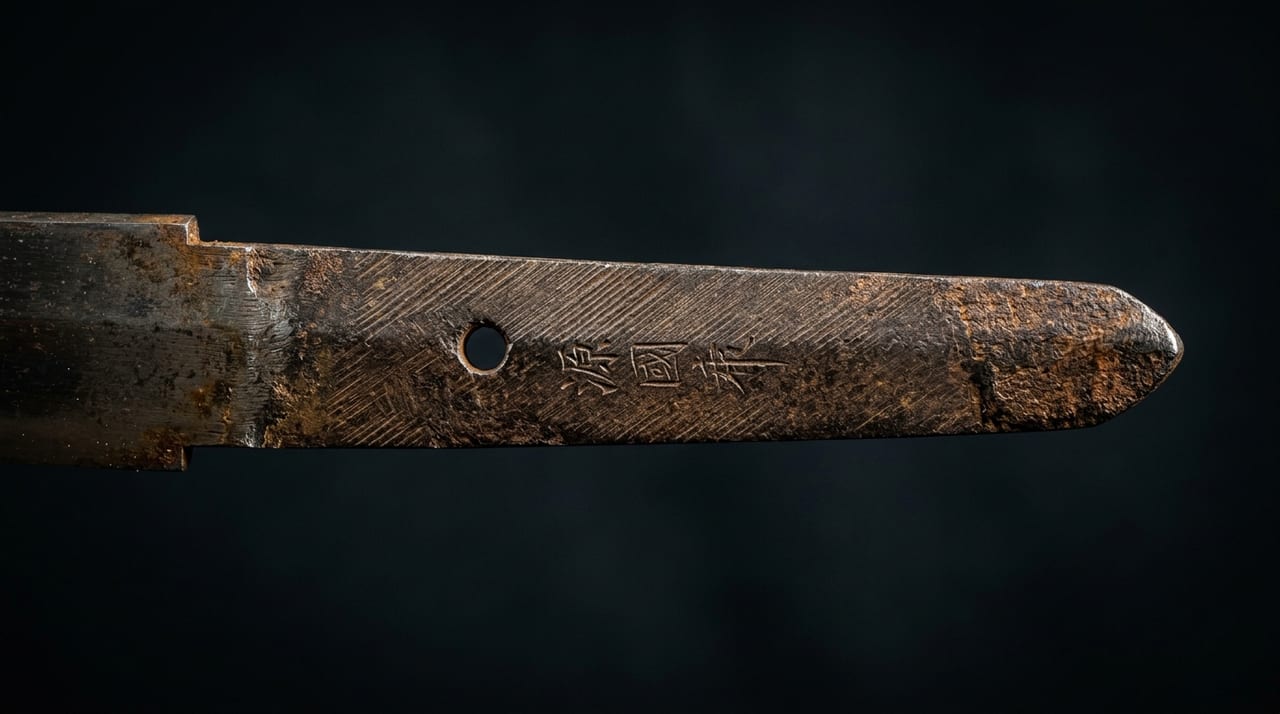 * Image is for illustrative purposes only.
Table of Contents
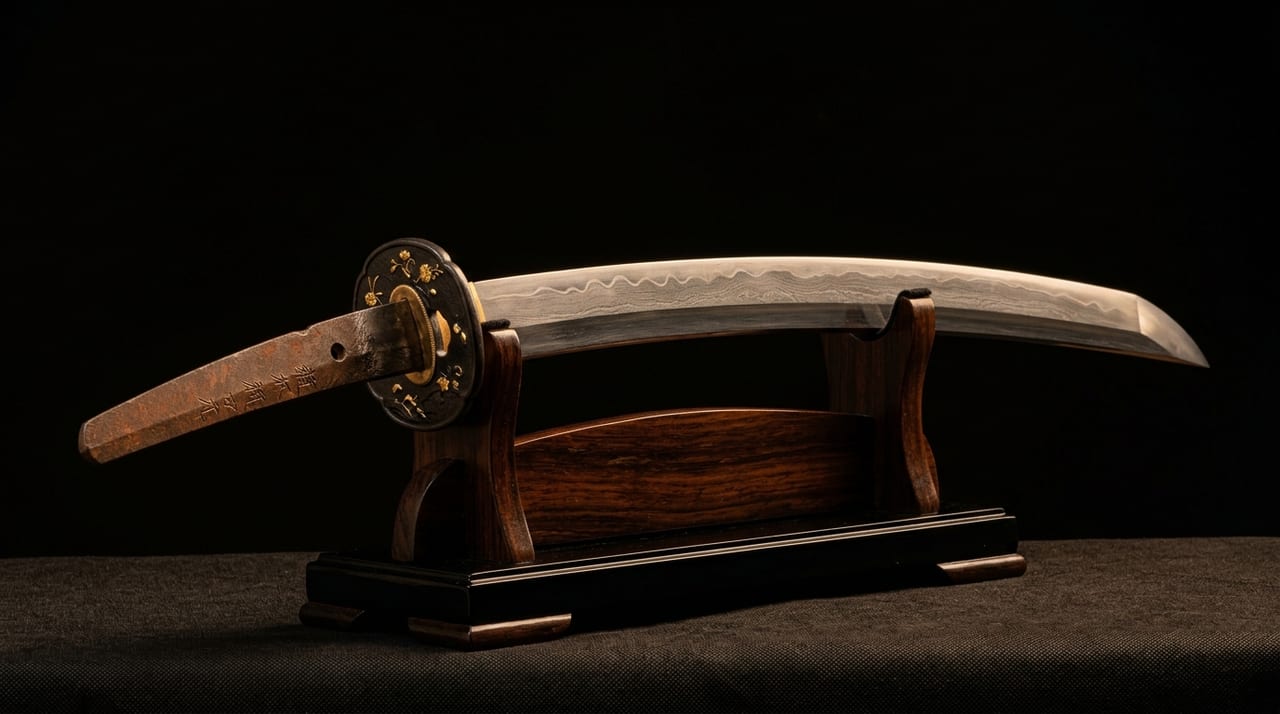
When appreciating nihontō, attention tends to go to the hamon and the overall shape, but the nakago — the portion housed inside the tsuka — also holds a great deal of information. Among its features, the shape of the nakagojiri, the terminal end of the nakago, is systematically classified, and it is foundational knowledge one should have in hand for reading a blade.
What Is the Nakagojiri
The nakago is the portion of the blade that fits inside the tsuka; it bears the mei, yasurime, mekugi holes, and other markings. Its tip is called the nakagojiri. The nakagojiri is the last area finished by the tōkō, and its shape tends to reflect the conventions of a school, a period, or an individual smith. Because the shape of the nakagojiri can also serve as a clue for judging whether suriage has been performed, it is noted in both appreciation and appraisal.
The main nakagojiri shapes are organized below.
Main Types of Nakagojiri
- Kurijiri is shaped like the base of a chestnut, with a gentle roundness; it is the most commonly seen nakagojiri. Used on many blades, it may be considered the standard form.
- Haagari kurijiri is a variant of kurijiri in which the contour on the ha side rises high, giving a slightly asymmetric roundness. It is widely seen alongside kurijiri, and many blades fall somewhere between the two.
- Kengyō has both sides tapering symmetrically to a point in a mountain shape, resembling the tip of a sword; it conveys a crisp, taut impression.
- Ichimonji is the form in which the nakagojiri is cut straight across in a horizontal line, severed horizontally like the character for "one."
- Iriyamagata comes to a point at the tip, with that tip offset toward the mune side, creating an asymmetric taper. The contour on the ha side is longer and the mune side shorter, so the two sides differ in height. When both sides taper symmetrically to a point, it is called kengyō and distinguished accordingly.
It should be noted that the term "furisodegata" does not refer to a nakagojiri shape but rather to a category describing how the nakago itself curves in a large arc — like the sleeve of a furisode kimono — and it belongs to a different dimension of classification from the nakagojiri shapes listed above.
What the Shape Reveals
The shape of the nakagojiri mirrors the habitual style of a tōkō or school, making it one clue for considering the lineage of a piece. For example, furisodegata is said to be seen in old tantō, and certain connections between shape and period or blade type have been pointed out. That said, it is not possible to determine the maker or date from the nakagojiri alone; the standard approach is to judge it in combination with other elements such as the mei, yasurime, jigane, and hamon.
Furthermore, when a long tachi has been refashioned to a shorter length through suriage, the nakagojiri may be remade. By examining the relationship between the shape of the nakagojiri and the position of the mei, one can also estimate whether suriage has been performed.
The Relationship Between Suriage and the Nakagojiri
Suriage refers to the process of shortening a long blade to a more manageable length by cutting it down from the nakago side. Since the nakagojiri end is trimmed and a new nakagojiri is fashioned, the original nakagojiri shape is lost. If the cut goes deeper than the position of the mei, the mei is lost as well, resulting in what is known as ō-suriage mumei.
A nakago that has undergone suriage often retains traces such as a change midway in the yasurime pattern or multiple mekugi holes. By examining both the nakagojiri's finish and these traces together, it is possible to estimate the history a given blade has passed through. Suriage was widely performed in response to the practical demands of the age, and there is no need to conclude simply that its presence diminishes value.
Reading the Nakago Together with Yasurime
Alongside the nakagojiri, the yasurime are another important feature of the nakago to observe. Yasurime are the file marks applied to prevent the nakago from slipping inside the tsuka; they come in many types, including the horizontal "kiri," the diagonal "katte-sagari," and "sujikai," and conventions differ by school and tōkō. By looking at the nakagojiri shape and the yasurime type in combination, one gains still more clues for considering lineage.
The color of the nakago's rust is also valuable information. The principle is to leave the nakago as is without polishing it, and the deep rust color that has developed over many years becomes a material for estimating the age. This is precisely why stripping or polishing the nakago rust is strictly forbidden. Polishing the nakago with good intentions erases the very information that attests to its age.
A Guide to Observation
To observe the nakagojiri, first grasp broadly whether the overall contour is round, pointed, or flat. Then, by checking whether it is symmetric or asymmetric and whether it bears a curve, the type becomes easier to identify. The nakago is ordinarily hidden inside the tsuka, but it is an indispensable source of information for understanding a blade's character.
Some of the information concerning the nakago is also recorded on the jūhō tōkenrui tōrokushō (firearms and swords registration certificate). Since the certificate records the nagasa, sori, number of mekugi holes, and other details, making a habit of cross-referencing the blade in hand with what is written on the certificate creates a natural opportunity to observe the nakago carefully. It is customary to count mekugi holes including old ones that have been plugged.
When observing the nakago in online images, it is advisable to check in order: the contour of the nakagojiri, the number of mekugi holes, the direction of the yasurime, and the position of the mei. Depending on the angle of photography, the symmetry or asymmetry of the contour can be difficult to read, so having photographs of both the front and back is even better.