Shinobigatana — Verifying the Reality and Popular Myths of Swords Said to Have Been Used by Ninja
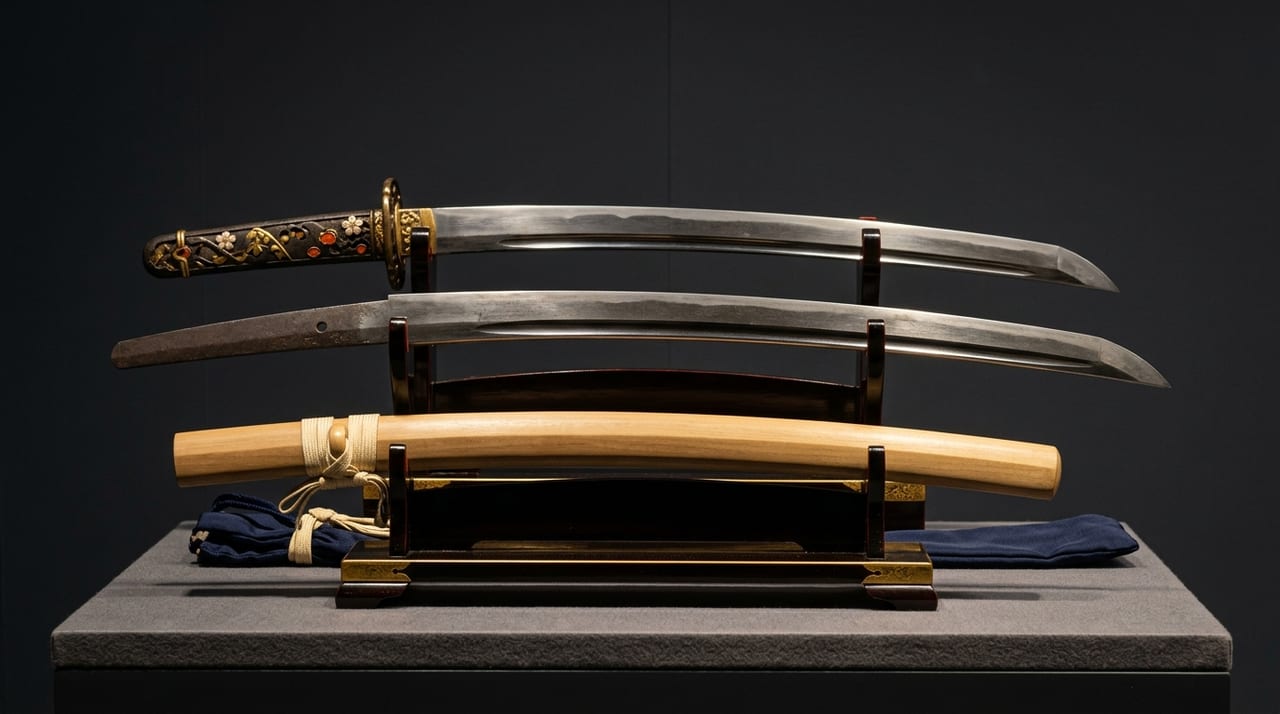 * Image is for illustrative purposes only.
Table of Contents
The Birth of the "Ninja Sword" Image
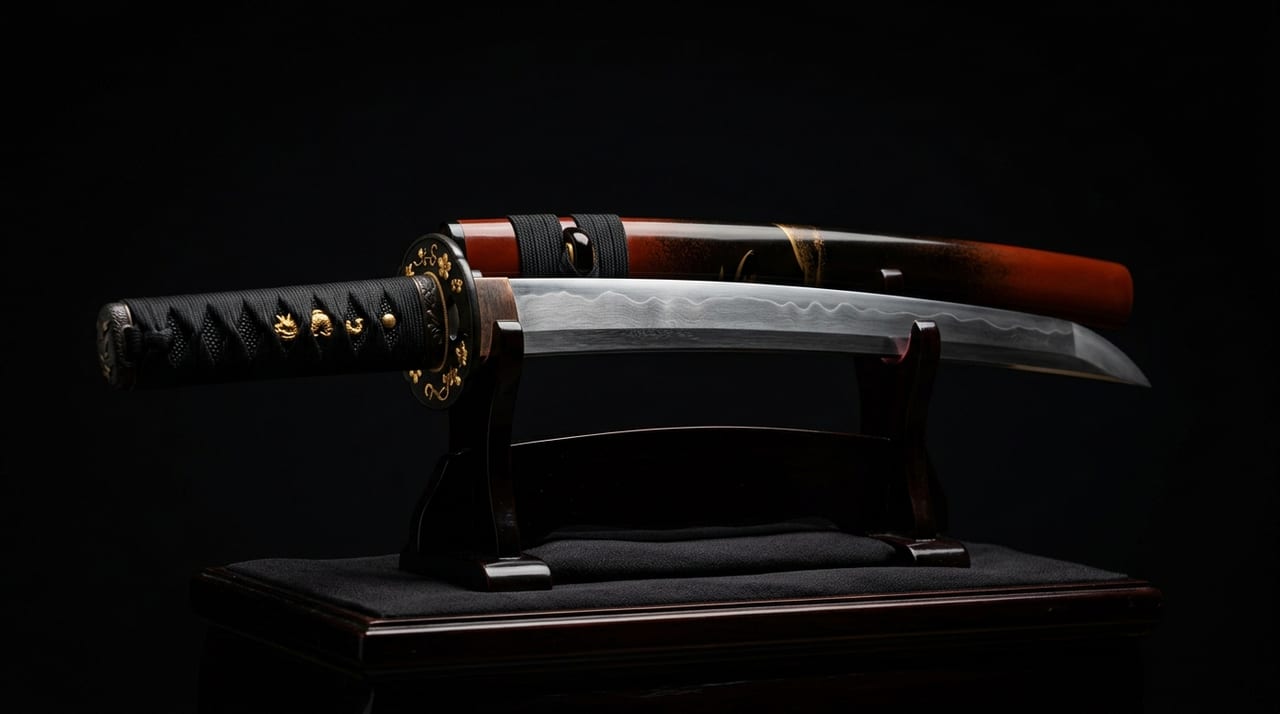
Ninja in modern pop culture are almost always depicted with a distinctive short sword. A short-bladed sword with suguha, carried on the back rather than at the waist, housed in a black saya — this is the style widely known as the "shinobigatana." However, much of this image was created by twentieth-century popular entertainment (period dramas, manga, and games) and is not substantiated by Sengoku-period historical sources.
This article attempts to examine "what swords ninja actually used" from the perspectives of historical sources, folklore, and sword studies, and to separate myth from reality. Ninja sword culture occupies a side branch of Japanese sword history, but it offers an interesting perspective for understanding the weapons system of a covert-operations group. This critical approach to sources is indispensable for sword collectors and researchers alike.
What Historical Sources Say About Ninja Arms — Descriptions of Swords
The most famous text recording the system of ninjutsu is the "Bansenshūkai" (compiled in Enpō 4, 1676), completed in the early Edo period. Also known as the "Complete Manual of Ninjutsu," it is said to systematically compile the ninjutsu of Iga and Kōka. Manuscript copies survive at institutions such as the Mie Prefectural Library, and analysis by researchers continues to this day.
Looking at the passages on weapons in the Bansenshūkai, swords do occupy an important place in ninja armament. However, their description differs from the modern "shinobigatana" image. The swords of ninja described in the text are referred to by names such as "shinobigatana" and "kage katana," and are given the following characteristics:
- The blade length is relatively short (approximately wakizashi to tantō length)
- The hamon is suguha or shallow (said to suppress reflection of light during nighttime activities)
- The saya is wooden with little ornamentation
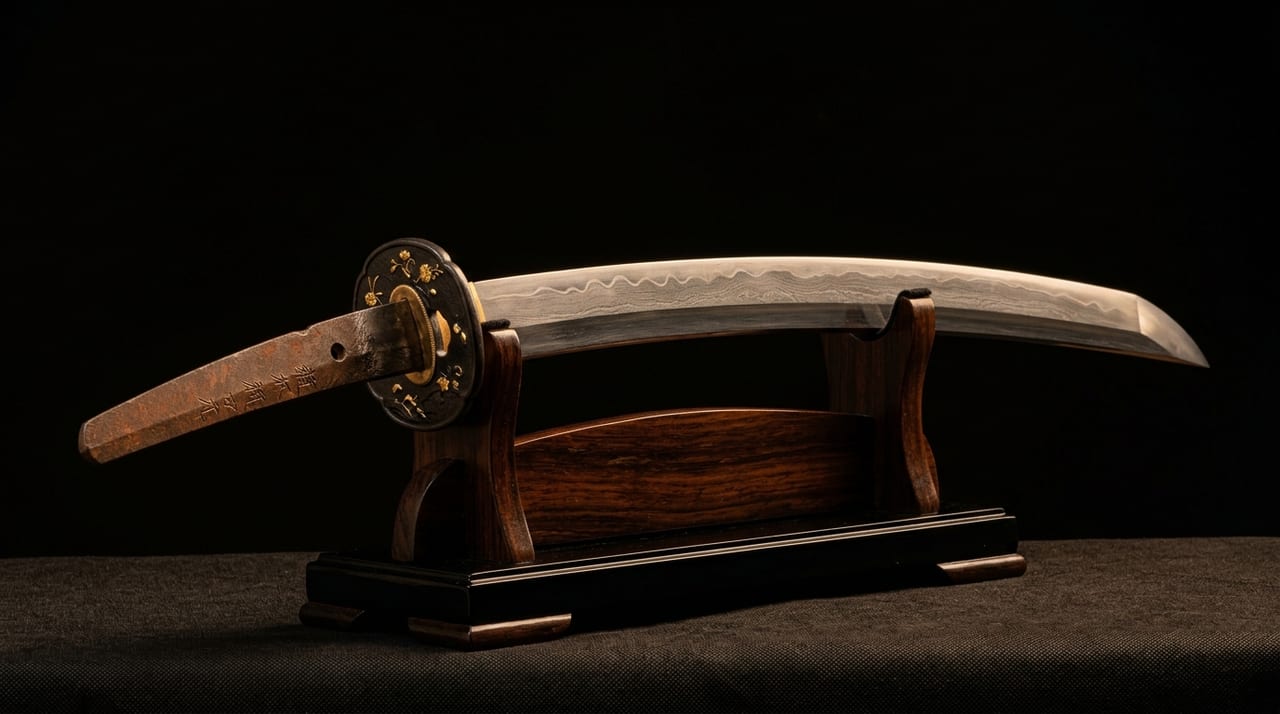
- The tsuba is large and nearly square in shape (the basis for the popular theory that it could be used as a ladder rung)
Nevertheless, doubts remain as to whether the Bansenshūkai actually contains a description of using the tsuba and saya as ladder rungs. Many ninjutsu texts do describe leaning a sword against a wall to use as a foothold. However, evidence that this connects directly to the shape of the tsuba is scant.
The Debate Over the "Shape of the Shinobigatana" — Grounds for Suguha and Square Tsuba
The defining feature of the modern shinobigatana image is suguha. While an ordinary uchigatana has a wavy hamon such as midare-ba or gunome, the received view holds that the shinobigatana has a straight hamon. The reason usually given is a functional one: "so that the diffuse reflection of the hamon is not conspicuous during nighttime activities."
However, this involves a technical contradiction. The hamon is formed by the temperature of yaki-ire and the pattern of tsuchioki. Suguha itself is a standard hamon found in certain schools of sword-making (Yamato-den and some smiths of the shintō period), and was not made "for nighttime use." In the first place, it is questionable whether combat was conducted in situations where the blade was exposed enough for reflection from the hamon to be a problem. Moreover, reflection is also greatly affected by the polished state of the blade (the sheen of the jigane), making it difficult to discuss reflection solely in terms of the shape of the hamon.
The same applies to the "square tsuba." Square tsuba are certainly found among surviving tōsōgu. However, they were most likely not a form exclusive to ninja but simply a straightforward design with low manufacturing costs. The relationship between the shape of the tsuba and its function as a ladder rung does not go beyond the realm of folkloristic "storytelling."
The Actual Weapons System of Sengoku Ninja
The reality of Sengoku-period "shinobi" as seen in historical sources differs greatly from the modern image of the ninja. The ninja of Iga and Kōka (called in some regions "rappa," "suppa," and the like) were primarily "operatives" tasked with intelligence gathering, infiltration, and small-scale sabotage — not specialists in hand-to-hand combat.
For that reason, the center of gravity of their weapons system lay with firearms, chemical agents, and small concealed weapons rather than swords. Before firearms became widespread, hōroku-biya (incendiary bombs) were the mainstay; afterward, small firearms (improved versions of the tanegashima) became the primary weapons. Swords were close to a "last resort" for self-defense, and there was little reason to specially manufacture or procure a "sword exclusive to ninja."
In most cases, the swords ninja used are thought to have been tantō and wakizashi that were common at the time. It is easy to imagine that they preferred shorter blades for the practical reason that "a long uchigatana is unsuitable to carry," but this was not a tendency unique to ninja — it was common to all combatants who needed to move quickly in light equipment. For ninja who disguised themselves as farmers or merchants, carrying a tantō concealed was effective, and it could be said that an inconspicuous, plain sword mounting was the most "practical."
Modern "Shinobigatana" and Their Cultural Position
Most of the swords sold today under the name "shinobigatana" (iai practice swords and decorative pieces) are made based on the image established by twentieth-century period dramas, manga, and games. The design of black saya, short blade, suguha, and square tsuba is a style popularized by television period dramas of the 1960s and 70s (such as "Kakushi Metsuke Sanjō" and "Ninja Butai Gekkō").
These "fictional shinobigatana" are products of pop culture detached from historical fact, but they have their own cultural value. The appeal of the ninja character and their weapons in spreading Japanese sword culture internationally cannot be ignored. The shinobigatana concept has been widely accepted by martial arts enthusiasts and fans of Japanese culture overseas, and it also functions as a gateway to Japanese swords. In fact, quite a few overseas collectors entered the world of Japanese swords through ninja culture.
The "plain reality" of the swords used by ninja in historical fact, and the "cool shinobigatana" produced by pop culture — knowing this gap helps one understand the history of Japanese swords in a more three-dimensional way. To keep a critical eye on sources while also enjoying the shinobigatana as a cultural creation — that kind of balanced approach is called for in this sword genre. By valuing both the historical reality and cultural interpretation, one's understanding of Japanese swords will become all the richer.