The Design Art of Nikuoki — How Cross-Sectional Material Distribution Affects Cutting Performance, Rigidity, and Weight Balance
 * Image is for illustrative purposes only.
Table of Contents
What Is Nikuoki — The "Niku" of the Nihontō's Cross-Section
The blade of a nihontō may appear, from its finished exterior, to be a smooth metal plate, but in reality its cross-section is shaped through complex curved-surface design. The design of this cross-sectional form — particularly the judgment of where and how much to leave the thick portions called "niku" (material) — is known as "nikuoki."
The cross-section of a nihontō, cut laterally, is roughly a left-right symmetrical diamond shape: it tapers from the shinogi (the ridge line at the center of the blade) toward the hassaki (cutting edge), while sloping differently toward the mune (back of the blade). The surface from the shinogi toward the cutting edge is divided into the shinogi-ji and the hira-ji, and the "material thickness (also called kasane)" and "curvature of the curved surface" of each are the objects of nikuoki design.
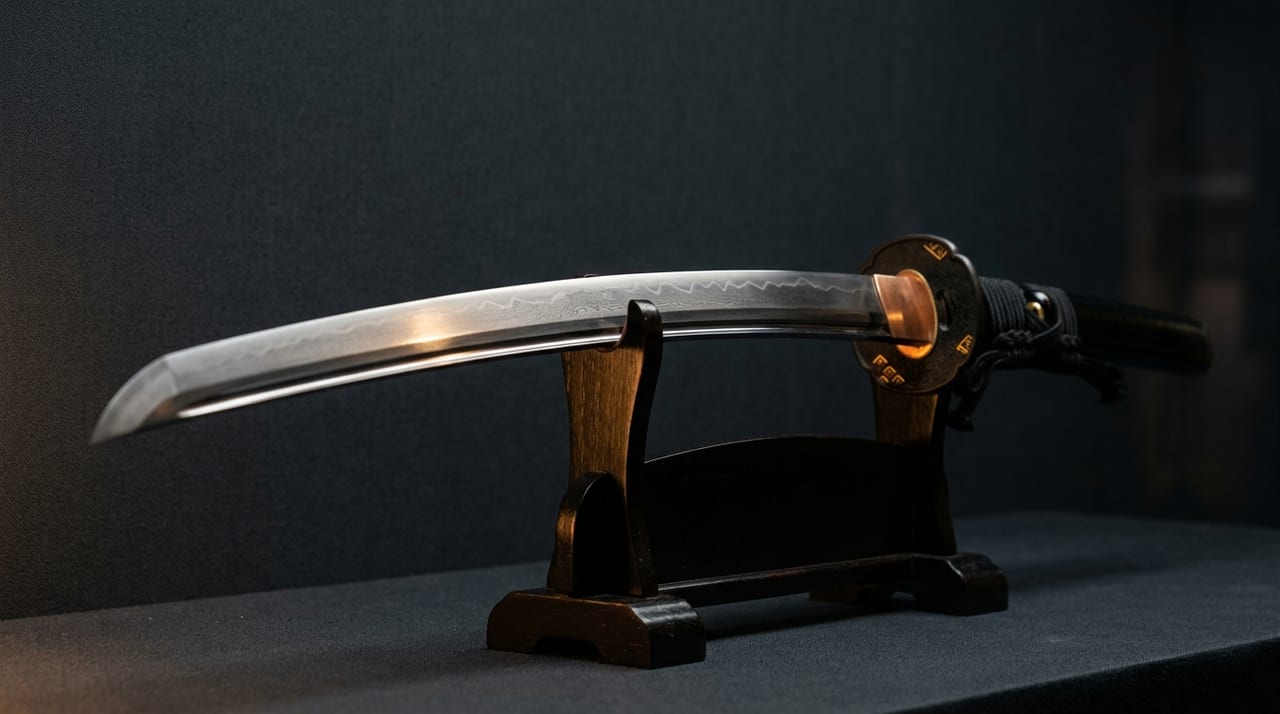
The quality of nikuoki can be felt the moment one picks up the blade — as its "weight," "position of the center of gravity," and "sensation when swung (te no uchi)." To an expert eye, it is also visible as the yokobikari — the band of light that appears on the hira-ji when the blade is tilted. The basic nikuoki design also changes depending on the type of construction (shinogi-zukuri, hira-zukuri, etc.), and it is worth noting that even among swords all called "katana," different constructions call for different philosophies of cross-sectional design.
Three Characteristics Affected by Nikuoki
1. Effect on Cutting Performance
The thickness of nikuoki toward the cutting edge determines the character of the blade's cutting performance as follows.
| Nikuoki | Characteristics | Preference |
|---|---|---|
| Ha-usu (thin nikuoki toward the cutting edge) | Good initial bite; low resistance and smooth "cutting entry." If too thin, the edge becomes fragile and ha kobore (edge chipping) occurs easily when striking hard objects. | Often valued for display and iai use |
| Atsuha (thick material left near the cutting edge) | Resistant to ha kobore and highly durable, but "cutting entry" requires more force. | Tends to be preferred for blades intended for actual combat |
The tōshō designs this balance based on the intended use and the strength of the material. When tamahagane with high carbon content is hard, thin nikuoki can withstand use; when carbon content is lower, the judgment becomes to use thick nikuoki to ensure durability.
2. Effect on Rigidity (Bending Strength)
The thickness of nikuoki directly determines the rigidity of the blade. When more material is left near the shinogi, the "moment of resistance" of the cross-section increases, making the blade less prone to flexing when subjected to bending forces.
Conversely, if the material is shaved away excessively overall, the blade becomes prone to deflecting under ha-atsu (the lateral pressure applied to the blade when cutting). When this deflection becomes excessive, it adversely affects the hamon and, in the worst case, leads to blade fracture.
The balance of strength and flexibility in a nihontō is determined by three elements:
- sori (curvature)
- nikuoki
- number of orikaeshi tanren (folding) iterations
A skilled tōshō makes integrated judgments across all of these to finish the blade.
3. Effect on Weight and Center of Gravity
The thickness of nikuoki changes the overall weight and the position of the center of gravity of the entire sword.
When more material is present in the monouchi (the striking zone — roughly the area spanning one-third from the tip), the center of gravity shifts toward the tip, producing a sensation of "force building in the downswing." This suits a style that prioritizes cutting downstrokes.
On the other hand, the more material is retained near the shinogi or the tsuba-moto (hilt end near the hand), the closer the center of gravity is to the hand, producing speed in the swing and ease of handling. For uses that prioritize quick draws, such as iaidō, a hand-side center of gravity is sometimes preferred.
How to Read Nikuoki — Points for Appreciation
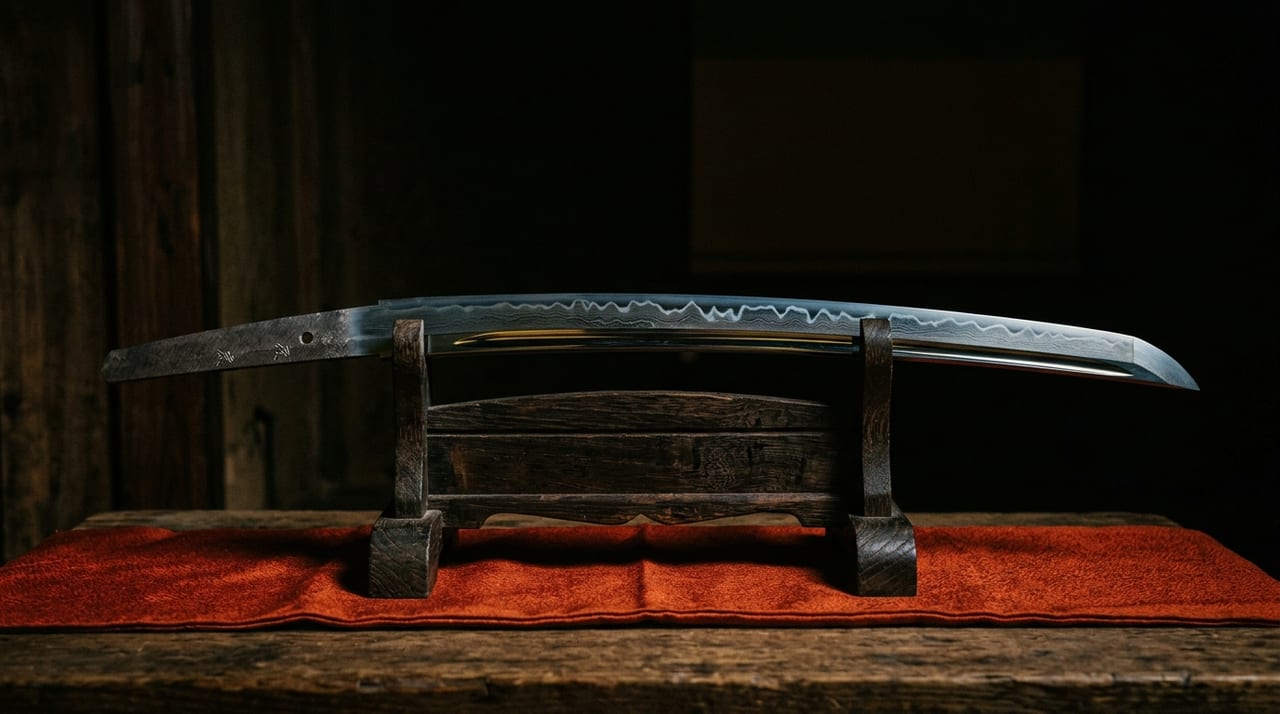
The yokobikari is one way to read nikuoki when appreciating a sword. When the blade is tilted at a shallow angle toward fluorescent light or sunlight, a lateral band of reflected light appears on the hira-ji. The width, shape, and smoothness of this band indicate the quality of the nikuoki.
A band that is uniform, wide, and fades naturally at its edges is evaluated as "abundant nikuoki." Conversely, a band that is narrow and uneven, with edges that disappear abruptly, is seen as "poor nikuoki" or "uneven nikuoki."
Tachi from the kotō period (Kamakura through the Sengoku period) often show abundant nikuoki, which gives the blade a sense of presence. By contrast, swords from the shintō period (early Edo period) onward tend toward thinner nikuoki overall; the background is thought to be a shift in design consciousness away from actual combat and toward display and ceremonial dress. It follows that the fashions and changes in demand of each era influenced even the invisible cross-sectional design.
The Process of Creating Nikuoki — Final Adjustment in Polishing
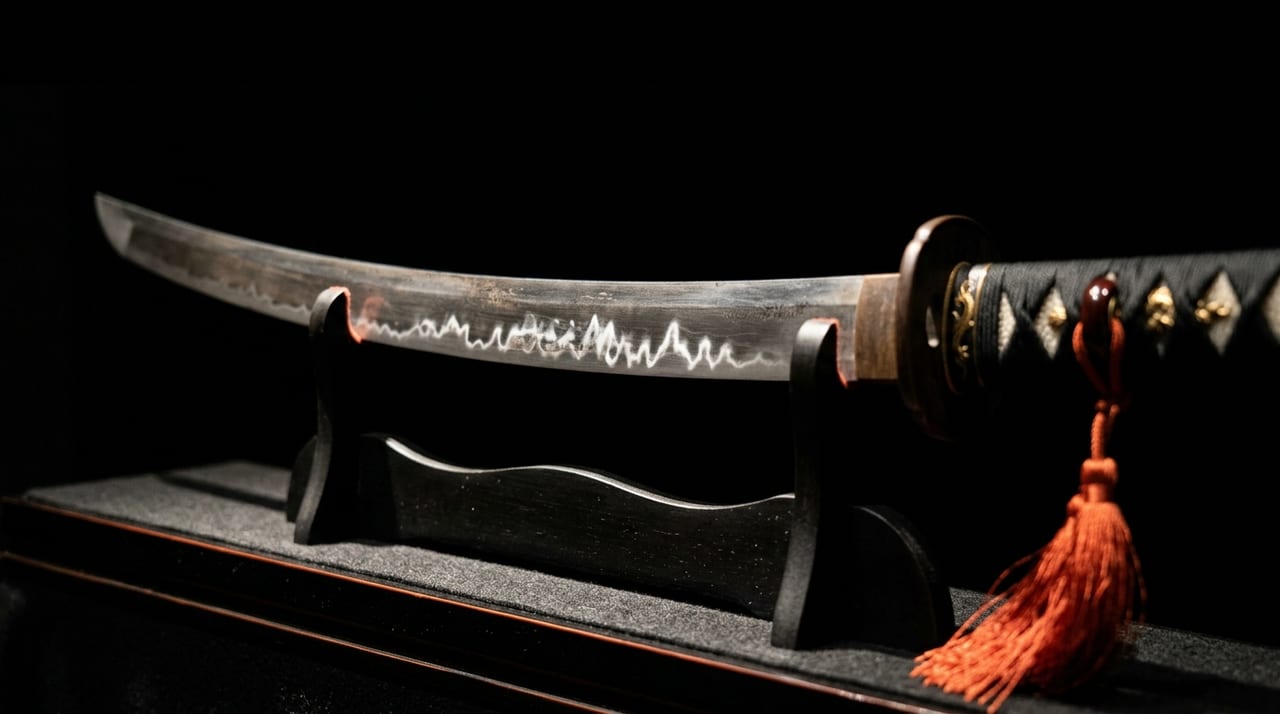
Nikuoki is determined to a degree at the forging and shaping stages, but the final form is adjusted in the togi (polishing) process. Using whetstones while polishing the surface of the blade, the togishi draws out the nikuoki design intended by the tōshō and evens out the curvature of the hira-ji.
A skilled togishi reads "what nikuoki did this tōshō intend?" and performs polishing that brings it out to the fullest. For this reason, it is said that even with the same sword, "the feel of the nikuoki changes depending on the togishi." The collaboration between tōshō and togishi is a vital factor that determines the final quality of nikuoki. If one understands polishing not merely as a process of making the blade shine but as the final step that completes the cross-sectional design itself, the way a freshly polished sword looks will change.
Conclusion — Invisible Design Makes a Fine Sword
Nikuoki is a technique that is difficult to see from the outside, but it is the source of the sensation that makes one feel "something is different" the moment the sword is picked up. This judgment — concerning cutting performance, strength, and weight balance alike — can be said to be a design decision in which the tōkō's experience and aesthetic sense are concentrated. What fine swords have in common is that this invisible design perfectly matches the intent of the wielder.