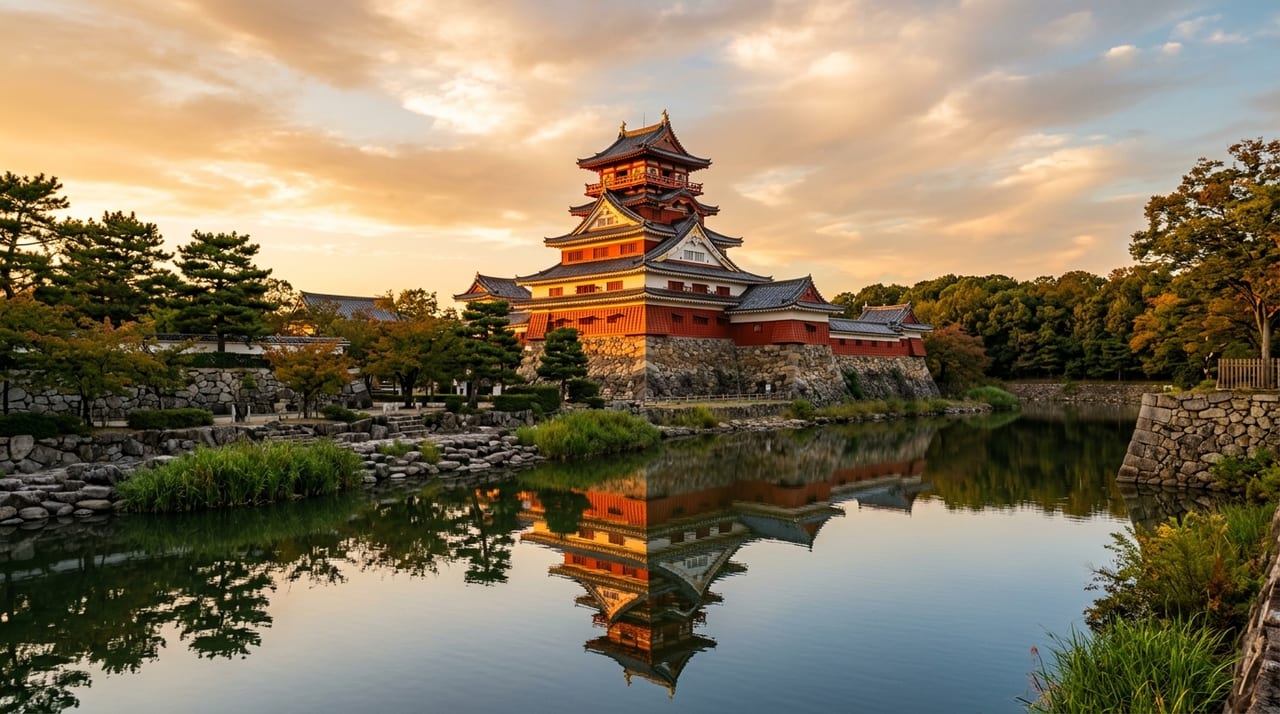
 * Image is for illustrative purposes only.
Masuyama Castle
増山城
Masuyama Castle is a historic castle in the Chūbu region (Nanboku-chō period (built in 1363); abolished in 1615 under the one-castle-per-domain edict). Its lord was The Momonoi clan (founders); the Shiba clan; the Jinbō clan (including Jinbō Nagamoto); Uesugi Kenshin (after capturing the castle); Sassa Narimasa; the Maeda clan (castellans including Nakagawa Mitsushige).
Overview
Founding
Masuyama Castle is a mountain fortress traditionally said to have been built in 1363 amid the strife of the Nanboku-chō wars by forces loyal to Momonoi Naotsune, initially known also as "Wada Castle." It was later captured by shogunate forces, passed under the control of the Shiba clan, and in the Sengoku period became an important stronghold of the Jinbō clan, powerful local lords of Etchū Province.
Succession of Lords
In 1560, after Uesugi Kenshin captured Toyama Castle, Jinbō Nagamoto took refuge at Masuyama Castle. Kenshin himself described it in a letter as "an inherently difficult and rugged place" (元来嶮難之地), attesting to its formidable defenses. Kenshin captured the castle in 1576 and installed Yoshie Munenobu as castellan; it fell to Oda forces in 1581, after which Sassa Narimasa stationed senior retainers to hold it. Under Maeda rule, castellans including Nakagawa Mitsushige administered the castle, but it was abolished in 1615 under the one-castle-per-domain edict.
Structure
A renkaku-shiki (linked-bailey) mountain castle with no main keep, it retains baileys, turret platforms, cut cliffs (kirigishi), vertical moats (tategori), cut-throughs (horikiri), stone walls, earthworks, and a well. Together with Matsukura and Moriyama castles, it is counted among the "Three Great Mountain Castles of Etchū."
Present State
The site was developed as Masuyama Castle Ruins Park in 1976, where volunteer guides now offer tours. It was designated a National Historic Site in 2009 and, in 2017, selected among the Continuation of Japan's Top 100 Castles (No. 135). The rakugo performer Shunputei Shota serves as the castle's honorary lord.
Connection to Swords
Highlights
- One of the "Three Great Mountain Castles of Etchū," described by Uesugi Kenshin himself as inherently rugged terrain
- Passed rapidly among the Jinbō, Uesugi, Sassa, and Maeda clans
- Well-preserved mountain-castle remains including baileys, vertical moats, cut-throughs, and stone walls
- Designated a National Historic Site in 2009; selected among the Continuation of Japan's Top 100 Castles (No. 135) in 2017
* Opening hours and admission fees are subject to change. Please check the official website before visiting.