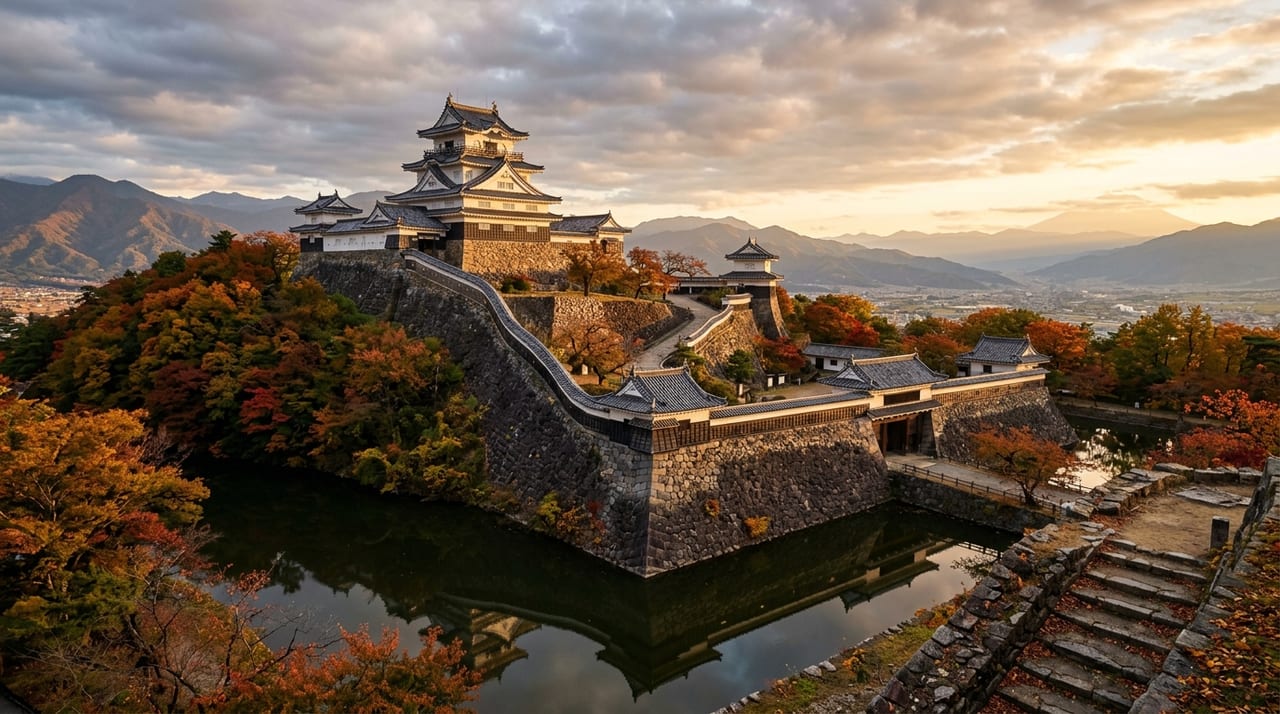
 * Image is for illustrative purposes only.
Kōfu Castle (Maizuru Castle)
甲府城(舞鶴城)
Kōfu Castle (Maizuru Castle) is a historic castle in the Chūbu region (Built around 1592 (Bunroku 1)). Its lord was Hashiba Hidekatsu / Tokugawa Yoshinao.
Overview
About the Castle
Kōfu Castle (also called Maizuru Castle) is an early modern castle that was built around Bunroku 1 (1592) by Katō Mitsuyasu, Asano Nagamasa and other retainers of Toyotomi Hideyoshi, in the northern part of the Kōfu Basin. The main bailey was built on Ichijō Hill, and the castle was a formidable structure defended by multiple baileys and deep moats. Why is Kōfu Castle so remarkable? Above all, it stands just a short distance from Tsutsujigasaki-kan, the headquarters of Takeda Shingen, and was built on land that inherited the spiritual legacy of the Takeda clan.
The Takeda Clan's Legacy
Tsutsujigasaki-kan, which served as Takeda Shingen's principal residence (now within the grounds of Takeda Shrine), is located to the north of Kōfu Castle. The Takeda founded a castle town centered on Tsutsujigasaki-kan in the time of Nobutora, and Shingen further developed it. After Shingen's death, in Tenshō 10 (1582), the Takeda clan was destroyed during Oda Nobunaga's Kōshū Campaign, and Tokugawa Ieyasu took control of Kai Province. After Ieyasu was transferred to the Kantō region, from Tenshō 18 (1590) onward, Kai was given to daimyo of the Toyotomi camp, and Kōfu Castle was built during the Bunroku period.
Kōshū Gold and the Sword Industry
During the Sengoku period, Kai Province was known as a source of Kōshū gold, which greatly supported the Takeda clan's finances. Revenues from the gold mines were used for military equipment, castles, and the purchase and manufacture of swords, contributing to the high standard of equipment for Takeda forces. The Takeda handed down the armor "Tatenashi," regarded as a family treasure of the Kai Genji; it is now a National Treasure held by Kanda Tenjin Shrine in Kōshū City, demonstrating the deep connection between the Takeda clan and armor culture.
Tokugawa Rule and Castle Development
From Keichō 6 (1601) onward, after the Battle of Sekigahara, Kōfu Castle was managed as a direct holding of the Tokugawa house. There were periods when the shogun's sons served as daimyo of Kōfu, and the castle was maintained and developed as one of the Tokugawa house's important strongholds. In the middle of the Edo period, Yanagisawa Yoshiyasu served as chamberlain (sobayōnin) to the fifth shogun, Tokugawa Tsunayoshi, and as daimyo of Kōfu worked to develop the castle town. The cultural endeavors of the Yanagisawa family also contributed to the advancement of education and culture in Kōfu.
Modern Kōfu Castle
Today, the ruins of Kōfu Castle are developed as Maizuru Castle Park, with structures such as the Inari Bailey, Inari Turret, Kurogane Gate, and stone walls restored and preserved. The Yamanashi Prefectural Museum and Takeda Shrine (the site of the Takeda clan headquarters) are essential destinations for understanding the history of Kōfu Castle. In modern times, Kōfu is internationally known as a producer of wine and fruit, and has become an attractive tourist destination where the history of its castle town merges with abundant natural beauty.
Connection to Swords
Kai Province (present-day Yamanashi Prefecture), where Kofu Castle stands, was the power base of Takeda Shingen, one of the greatest generals of the Sengoku period — making it one of Japan's most vital centers of sword culture. "Tatenashi," the emblematic suit of armor of the Takeda clan, is a National Treasure (small cherry blossom leather-laced great armor with helmet and large sleeves) said to descend from Shinra Saburo Yoshimitsu (Minamoto Yoshimitsu) and is currently preserved at Kanda Tenjin Shrine in Koshu City. Shingen fought as a frontline warrior in numerous battles, including the Battle of Kawanakajima (1553–1564) against Uesugi Kenshin, and through this experience cultivated his practical acumen in selecting combat blades. Following the Takeda clan's destruction, Kai Province came under Tokugawa Ieyasu; after his relocation to the Kanto region it was given to daimyo of the Toyotomi camp, and after the Battle of Sekigahara it came under Tokugawa rule. Yanagisawa Yoshiyasu, daimyo of Kofu during the Edo period, never visited Kai, but had his retainers develop Kofu Castle and its castle town, bringing prosperity to the town. The Yamanashi Prefectural Museum houses an extensive collection of swords, armor, and historical documents related to the Takeda clan, serving as an essential institution for understanding Takeda Shingen's military culture and the sword history of Kai Province. The spirit of the Takeda army — symbolized by the "Fūrin Kazan" standard, Wind Forest Fire Mountain — is inseparable from Shingen's strategic military philosophy, which regarded the sword not as a mere weapon but as an emblem of strategic will; Kofu Castle stands as the sacred sanctuary of sword culture where the Takeda spirit eternally dwells.
Highlights
- Maizuru Castle Park — restored turret, Inari-kuruwa enclosure, and Iron Gate adjacent to Kōfu Station
- Yamanashi Prefectural Museum — collections conveying the history of Kai, including Takeda-related materials
- Takeda Shrine (Tsutsujigasaki-kan ruins) — Shingen's former headquarters; the treasure hall holds the tachi "Yoshioka Ichimonji" (Important Cultural Property) and Shingen's war fan
- Erin-ji Temple — Takeda clan temple; site of the famous 'extinguish heart and head' burning episode
- Kōshū wine and fruit orchards — Japan's premier wine region surrounding the castle town
* Opening hours and admission fees are subject to change. Please check the official website before visiting.