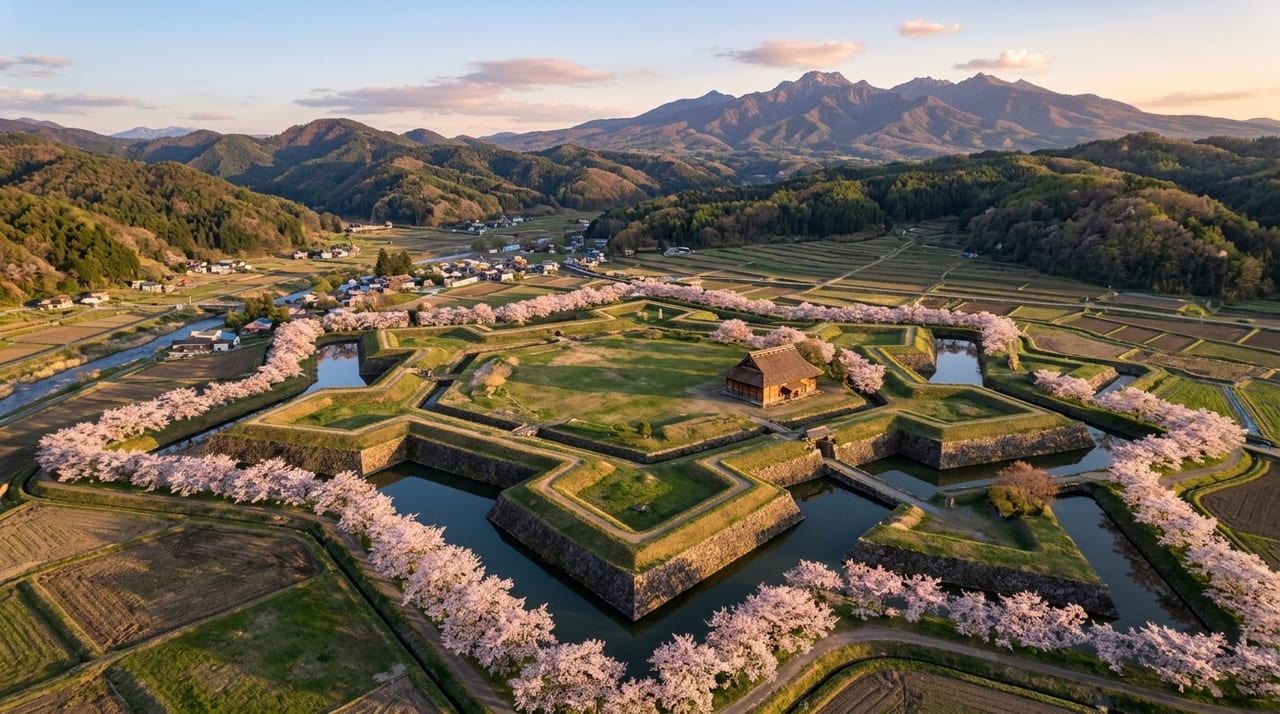
 * Image is for illustrative purposes only.
Isshiki Castle (Chita)
一色城(知多)
Isshiki Castle (Chita) is a historic castle in the Chūbu region (Medieval (dates of construction and abandonment unknown)). Its lord was Isshiki clan (traditional attribution).
Overview
Overview
Isshiki Castle (Chita) was a medieval mountain castle located in Utsumi, Minamichita Town, Chita District, Aichi Prefecture. It was built on the mountain behind Senzōin temple (Chita Shikoku Pilgrimage) in Utsumi, in the southern part of the Chita Peninsula. It is traditionally held to have been the castle of the Isshiki clan, who became shugo of Chita District in Owari Province during the Muromachi period, but there are few reliable historical records showing who built it or when it was built.
History and Background of Construction
As a branch of the Ashikaga shogunal family, the Isshiki clan wielded enormous power from the Nanboku-chō period into the early Muromachi period, and held senior posts in the bakufu such as Kyūshū tandai and head of the Samurai-dokoro. Isshiki Akinori was appointed shugo of Wakasa and Mikawa, as well as of the two districts of Chita and Kaitō in Owari, and the Isshiki clan took part in shogunal government as one of the shishiki (the four houses). The castle stands on hills in the southern part of the Chita Peninsula, but detailed records of its construction and abandonment are scarce.
Structure and Location
It was a mountain castle built on the hilltop at the tip of a ridge, and is presumed to have been a defensive installation consisting mainly of earthen ramparts. Detailed excavation records are scarce, and the area around the castle site corresponds to the present-day Utsumi district of Minamichita Town. Records of excavation surveys are limited, and much of what is known about the castle's detailed structure is estimated from documents and analysis of place names and topography.
Rise and Fall of the Isshiki Clan
Isshiki Yoshitsura (Yoshinori) came into conflict with the shogun Ashikaga Yoshinori, and in Eikyō 12 (1440) he was attacked and took his own life in Yamato Province. As a result, the Isshiki clan lost its shugo posts in Mikawa and Wakasa and its power temporarily shrank, but in Chita the Chita Isshiki branch family continued.
Connection to Swords
The Isshiki clan had close kinship ties with the Ashikaga shogunal family and was directly under the influence of the shogunate's warrior culture and sword culture.
Access and Current Status
Today the mountain behind Senzōin temple is regarded as the castle site, and an information board on the spot identifies it as a castle of the Isshiki clan. The nearest station is Utsumi Station on the Meitetsu Chita New Line.
Connection to Swords
Traditionally held to be the castle of the Isshiki clan, a branch of the Ashikaga shogunal family.
Highlights
- Mountain castle ruins in the southern Chita Peninsula, traditionally held to be the castle of the Isshiki clan, a branch of the Ashikaga shogunal family
- Hilltop location overlooking Utsumi Bay
- Located behind Senzōin temple (Chita Shikoku Pilgrimage), with an information board on site
* Opening hours and admission fees are subject to change. Please check the official website before visiting.