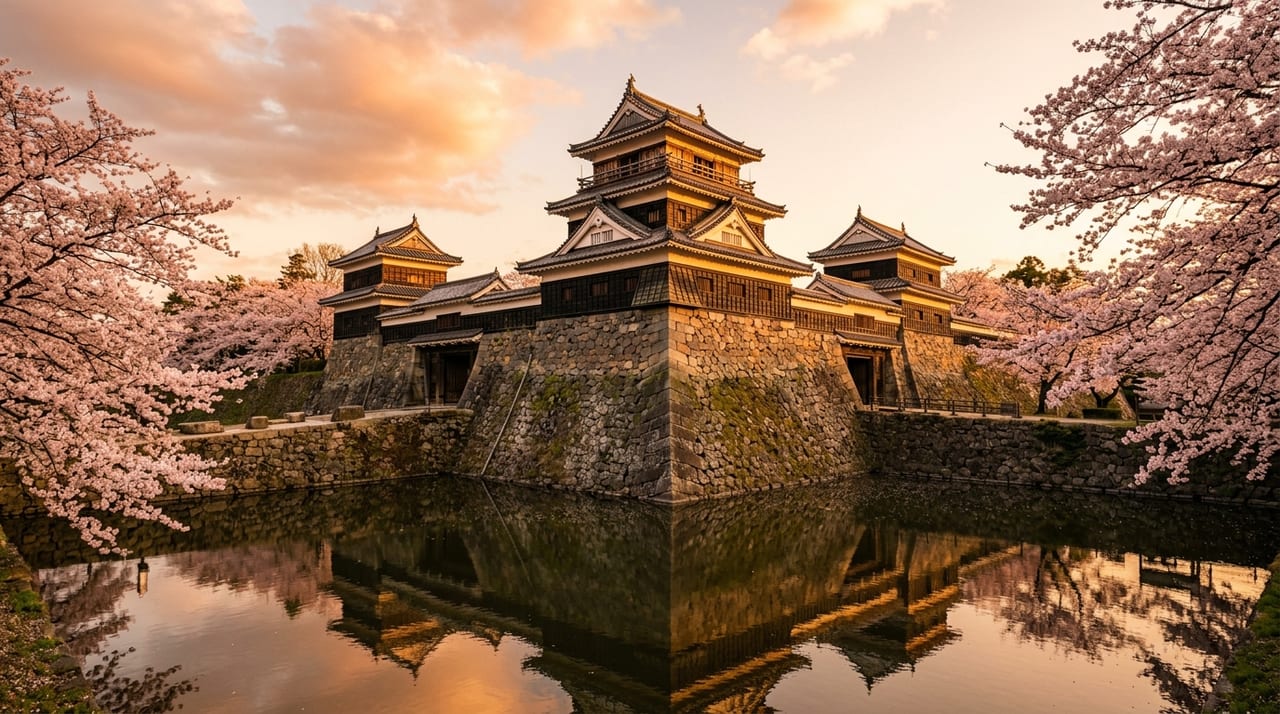
 * Image is for illustrative purposes only.
Ueda Castle
上田城
Ueda Castle is a historic castle in the Chūbu region (Built in 1583 (Tenshō 11)). Its lord was Sanada Masayuki / Sanada clan.
Overview
About the Castle
Ueda Castle was built in Tenshō 11 (1583) by Sanada Masayuki, a wise commander whom Toyotomi Hideyoshi described as a hyōri hikyō no mono (a cunning strategist who could not be easily managed). It is a castle that shines brilliantly in Japanese castle history as the 'Castle That Never Fell', which twice repelled large Tokugawa armies. In the First Battle of Ueda (Tenshō 13 (1585)), Masayuki used only about 1,200 troops to outmaneuver roughly 7,000 soldiers sent by Tokugawa Ieyasu, using skillful traps and ambushes, inflicting devastating blows and forcing them to withdraw. The tactics that made use of the terrain of the Chikuma River, and the 'Sanada strategy' of luring enemies into the castle town and attacking from all sides, were vividly displayed in this battle.
Battles and Campaigns
In the Second Battle of Ueda (Keichō 5 (1600)), Tokugawa Hidetada's roughly 38,000-strong main force of the Eastern Army, marching toward the Battle of Sekigahara, was held up, and Hidetada's army failed to arrive in time for the decisive battle at Sekigahara. This blunder was serious for the Tokugawa family, and Hidetada is said to have incurred the wrath of his father, Ieyasu. Masayuki's strategy, which held up a 38,000-strong army with a small force, is passed down as one of the most masterful defensive battles in Japanese military history. After Sekigahara, because Masayuki had sided with the Western Army, he was exiled to Mount Kōya (later Kudoyama), where he died.
Present Day
The wisdom and valor of the Sanada family were passed down to later generations in different forms: the eldest son, Nobuyuki, as lord of the Ueda domain, and the second son, Nobushige (Yukimura), through his fierce charge in the Summer Campaign of Ōsaka. Sanada Shrine is enshrined in the present-day Ueda Castle Ruins Park, and it has gained popularity as a guardian deity for examinees, named after the 'Castle That Never Falls'. In spring, about 1,000 cherry trees color the castle ruins, and in autumn the Ueda Castle Autumn Leaves Festival is held. Since the broadcast of the 2016 taiga drama Sanadamaru, it has welcomed many visitors from across the country as a pilgrimage site for Sanada fans.
Sightseeing and Experiences
The Sanada family's rokumonsen crest represents the fare for crossing the Sanzu River, symbolizing the resolve to face battle always prepared to die. This 'unwavering resolve' is the source of Sanada's strength, and that spirit still lives on at Ueda Castle. Ueda is a place connected to the Sanada family and is also a city rich in travel pleasures, such as Bessho Onsen and the soba culture of Shinshū. A journey spent soaking in hot springs and savoring soba while reflecting on Sanada's strategies is a luxury unique to Shinshū.
Connection to Swords
The Sanada family was a warrior house representative of the Sengoku period, and its experience of surviving numerous real battles nurtured a deep understanding of swords. Sanada Masayuki served Takeda Shingen and Katsuyori, and afterward survived as an independent daimyō by making full use of his strategic wisdom. At the Summer Campaign of Ōsaka, Masayuki's second son Nobushige (Yukimura) led akazonae (red-armored corps) cavalry in a fierce charge that pressed toward Tokugawa Ieyasu's headquarters, and he was hailed as 'the finest warrior in Japan (tsuwamono)'. This charge is one of the most dramatic scenes in Japan's military history, and the sword Nobushige wielded is passed down as a symbol embodying a warrior's resolve and loyalty. The Ueda City Museum holds materials connected to the Sanada clan, including swords said to have been used by Nobushige and Nobuyuki, and together with the Sanada rokumonsen banner, it conveys the spirit of martial valor. The Sanada akazonae (red-armored corps) — an elite unit unified in red armor inherited from the Takeda family — used its visual impact to break the enemy's fighting spirit and inspire its allies' morale. The red armor and the swords they carried were inseparable elements of the Sanada family's aesthetic of martial valor. By choosing the most conspicuous color on the battlefield, the Sanada family's red military dress displayed to friend and foe the resolve 'We will not flee.' This bold and daring spirit also connects, in the world of swords, to an attitude that pursues 'the genuine article that can be used in actual battle.' Nobushige's final moments at the Summer Campaign of Ōsaka — routing the guards of Ieyasu's headquarters and toppling a horse standard (umajirushi) — were an unprecedented feat that showed the extreme limit of a warrior's battle with a sword in hand. Every sword stroke Nobushige wielded carried a fierce resolve to make the Sanada name resound through later generations.
Highlights
- Sanada Shrine — guardian of the 'Castle That Never Falls', a deity of victory also popular with examinees
- West, South, and North Turrets — turrets rebuilt by Sengoku Tadamasa during the Kan'ei era; the South and North Turrets were once moved outside the castle, then relocated and restored to their original sites
- Ueda City Museum — houses materials on Ueda Castle and its successive lords, including swords connected to the Sanada clan
- Zelkova-lined promenade — a seasonal walking path developed along the former Ninomaru moat
- Cherry blossoms and autumn foliage at Ueda Castle Ruins Park — about 1,000 cherry trees; the Autumn Leaves Festival is held in autumn
- Sanada clan main castle ruins and Toishi Castle ruins — a Sengoku-era hiking course visiting the birthplace of the Sanada family
* Opening hours and admission fees are subject to change. Please check the official website before visiting.