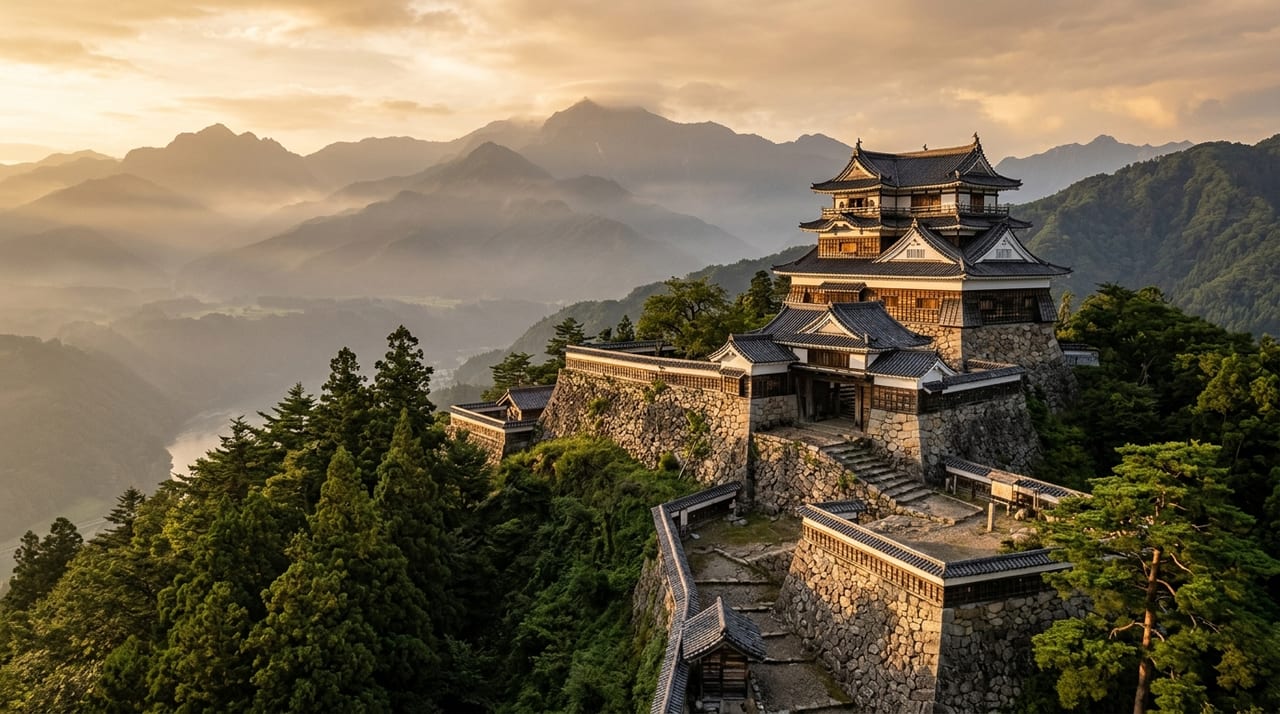
 * Image is for illustrative purposes only.
Torigoe Castle
鳥越城
Torigoe Castle is a historic castle in the Chūbu region (Built around the early Tenshō era (c. 1573), fell to Oda forces in the 8th year of Tensho (1580)). Its lord was Suzuki Dewa no Kami / Ikko Ikki forces.
Overview
Torigoe Castle is a mountain fortress located in Hakusan City, Ishikawa Prefecture, and is a castle that etched its name into Sengoku history as the final stronghold of the Kaga Ikko Ikki. It was built as a formidable fortification on the tip of a hill at the confluence of the Tedori and Dainichi rivers.
The Kaga Ikko Ikki was an autonomous organization composed primarily of adherents of Jodo Shinshu (Pure Land True Buddhism) along with peasants and local warlords (kokujin), and it ruled Kaga Province for approximately 100 years beginning in the 2nd year of Chokyo (1488). The Ikko Ikki's rule, also known as 'a country held by peasants,' remains highly regarded as an exceptionally unique form of autonomous power in Japanese history.
Shibata Katsuie, a vassal of Oda Nobunaga, invaded Kaga, gradually conquering the various fortresses of the Ikko Ikki. Torigoe Castle fell to Shibata Katsuie's army in the 8th year of Tensho (1580), and its lord Suzuki Dewa no Kami and the Suzuki clan were destroyed. The adherents of the Hakusan foothills continued to resist, but in the 3rd month of Tensho 10 (1582) they were suppressed by Sakuma Morimasa and more than 300 people were crucified, bringing the Ikko Ikki's 100-year rule to an end.
The castle ruins are currently designated as a National Historic Site under the designation 'Torigoe Castle Ruins,' and the gate and stone walls have been restored based on archaeological excavations. The panoramic view of the Hakusan mountain range and the Tedori River gorge from the summit emphasizes the historical significance of this place. The ruins of Futoge Castle, across the Dainichi River, are included in the National Historic Site 'Torigoe Castle Ruins, with Futoge Castle Ruins,' and the site is visited by many history enthusiasts as the place of the Ikko Ikki's final resistance.
Connection to Swords
The relationship between Torigoe Castle and swords is deeply connected to the unique historical existence of the Kaga Ikko Ikki. The members of the Ikko Ikki consisted of a mix of peasants, monks, and local warlords, and the weapons they used were equally diverse. In addition to traditional weapons such as swords, spears, naginata, and bows and arrows, tanegashima (matchlock firearms) became a primary weapon of the Ikko Ikki forces.
In the 8th year of Tensho (1580), Shibata Katsuie lured Wakabayashi Nagato no Kami, lord of Futoge Castle, and his sons—who had offered to submit in exchange for keeping their lands—to his headquarters and killed them by treachery; together with the heads of the Suzuki father and sons of Torigoe Castle, likewise slain by deception, their heads were sent to Oda Nobunaga at Azuchi.
Highlights
- Restored Gate and Stone Walls — Rebuilt based on excavations, conveying the former appearance of Torigoe Castle
- Panoramic Views of the Hakusan Mountain Range — Views of the sacred peak of Hakusan from the summit
- Views of the Tedori River Gorge — Spectacular scenery of the Tedori River, a natural fortification that served the castle's defense
- Futoge Castle Ruins (Across the Dainichi River) — Designated as a historic site alongside Torigoe Castle as twin fortresses of the Ikko Ikki
- History of the Kaga Ikko Ikki — Historical significance as the final stronghold of a century of popular self-governance
- Nature of Hakusan City, Ishikawa Prefecture — Hiking in the rich natural environment at the foot of Hakusan
* Opening hours and admission fees are subject to change. Please check the official website before visiting.