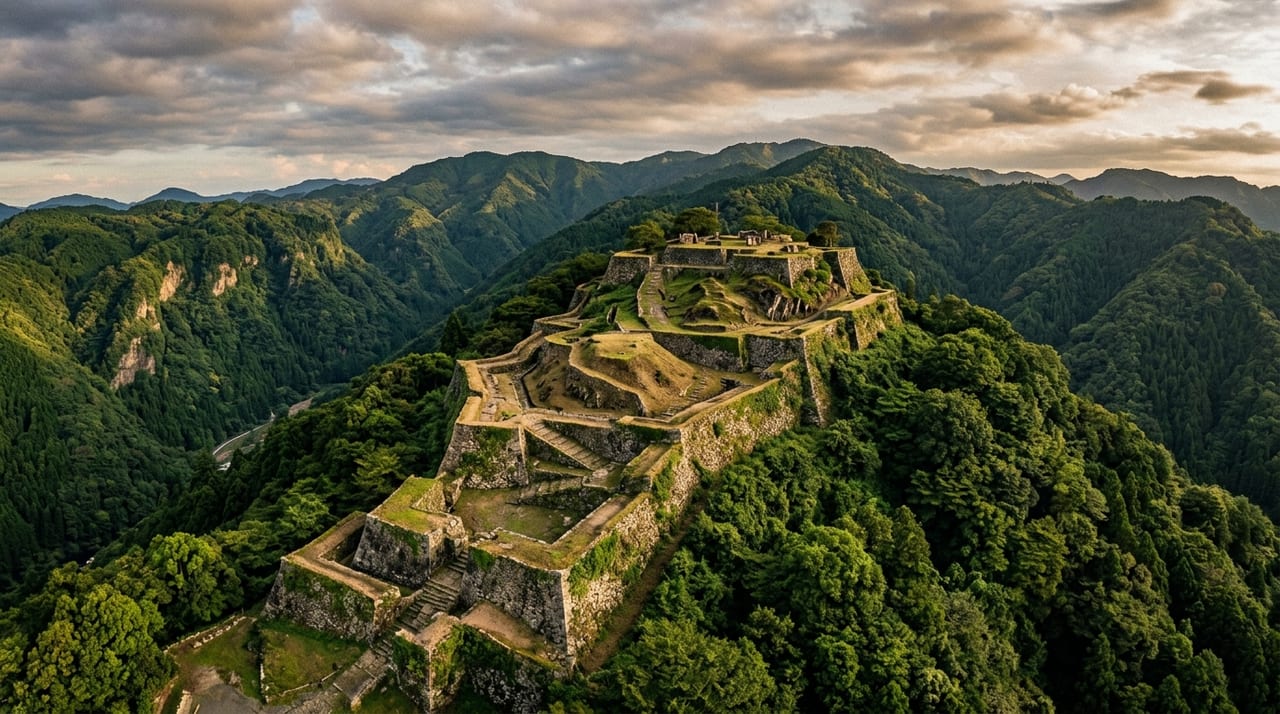
 * Image is for illustrative purposes only.
Takatenjin Castle
高天神城
Takatenjin Castle is a historic castle in the Chūbu region (Year of construction unknown (appears in records as a castle of the Imagawa clan in the early 16th century); fell in Tenshō 9 (1581)). Its lord was Ogasawara clan / Takeda clan / Tokugawa clan.
Overview
Takatenjin Castle is a mountain castle located in Kakegawa City, Shizuoka Prefecture, and was a key strategic point in Tōtōmi, where it was said that “whoever controls Takatenjin controls Enshū.” Its layout, which skillfully used the terrain of Mount Kakuō (132 m above sea level), was feared by Sengoku warlords as an impregnable fortress protected by natural steep cliffs and deep valleys.
In Tenshō 2 (1574), Takeda Katsuyori, successor to Takeda Shingen, led a large army to capture Takatenjin Castle and used it as a foothold for advancing into Tōtōmi. In response, Tokugawa Ieyasu built forts around the castle to tighten the pressure, and from Tenshō 8 (1580) he besieged the castle. The castellan Okabe Motonobu, whose provisions had run out and whose reinforcements never arrived, carried out a tragic charge in Tenshō 9 (1581) and was destroyed in a suicidal last stand (gyokusai).
The fall of Takatenjin Castle was an important historical event that became one of the causes of the downfall of the Takeda clan. Because Katsuyori was unable to send reinforcements, his prestige fell greatly, and it is said that the following year the Kiso clan and others defected, leading to the destruction of the Takeda clan.
The castle site is a mountain castle without stone walls. Today, many earthen ramparts, ridge-cutting ditches (horikiri) and enclosure remains survive in good condition, and numerous artifacts have been unearthed in archaeological excavations. The castle ruins, spread across the steep mountaintop, are also popular as a hiking course accessible via the mountain trail.
Connection to Swords
The connection between Takatenjin Castle and swords is condensed into the formidable military culture of the Takeda clan and the symbolic significance of the site as the embodiment of its downfall.
In the 3rd month of Tenshō 9 (1581), while their provisions were exhausted and, under Nobunaga's orders, their surrender was not accepted, the castellan Okabe Motonobu and the castle garrison made a final charge and died in battle.
Highlights
- Honmaru ruins — Remains of the honmaru enclosure and earthen ramparts on the summit of the eastern peak
- Well enclosure — Remains of the water source that supported the defense during the siege
- Takatenjin Shrine — An ancient shrine enshrining the guardian deity worshipped within the castle grounds
- Steep hiking course — Experience today the mountain path that Sengoku warriors charged up
* Opening hours and admission fees are subject to change. Please check the official website before visiting.