 * Image is for illustrative purposes only.
Ichijōdani Castle (Asakura Clan Castle Ruins)
一乗谷城(朝倉氏城跡)
Ichijōdani Castle (Asakura Clan Castle Ruins) is a historic castle in the Chūbu region (Developed as Asakura clan headquarters from c. 1471; destroyed by fire in 1573). Its lord was Asakura clan (Asakura Takakage to Asakura Yoshikage).
Overview
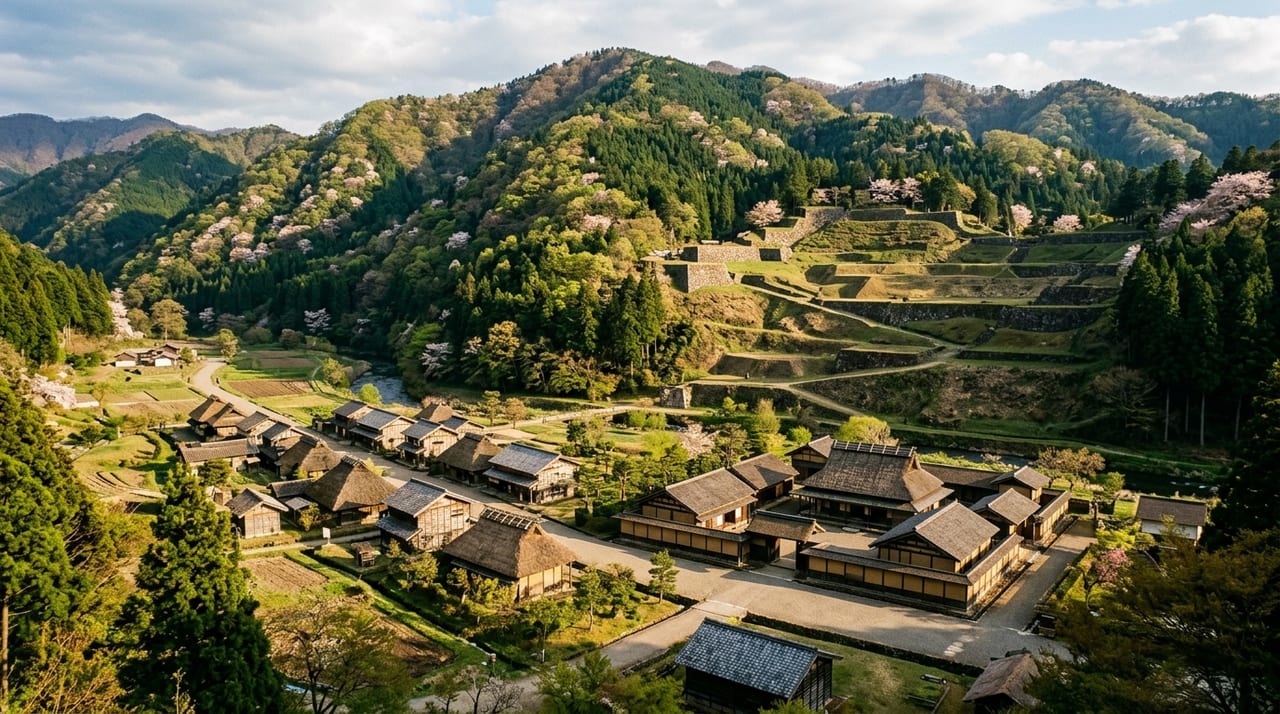
The Ichijōdani Castle Ruins are located in Ichijōdani in Fukui City, Fukui Prefecture. They are the remains of a castle town that the Sengoku daimyō Asakura clan used as its base for about 100 years. With the mountain castle Ichijōdani Castle at its core and the castle town spreading at its foot, the layout is a typical example of a Sengoku-period daimyō castle town, and the site is one of Japan's foremost Sengoku-era ruins, designated by the national government as a Special Historic Site and a Special Place of Scenic Beauty.
The Asakura clan actively adopted Kyoto culture and built in the Echizen region a highly cultured city known as “Little Kyoto.” At its peak, the castle town, estimated to have had about 10,000 residents, saw many court nobles, monks, and cultural figures who had fled the wars of Kyoto settle there, and it flourished as a center of arts, learning, and industry. Ashikaga Yoshiaki also took refuge in this castle town, and Ichijōdani was an important base in the cultural history of the Sengoku period.
In Tenshō 1 (1573), Asakura Yoshikage took his own life in an attack by Oda Nobunaga, and the castle town was set ablaze. The ruins, which came to be preserved underground as a result of this burning, made it possible, through excavations since 1967, to restore almost completely the appearance of the Sengoku-period castle town. Today, a townscape of samurai residences and merchant houses has been restored at full scale over about 200 meters, the Asakura Palace ruins and other sites have been developed, and they convey the life and culture of the Sengoku period to the present day.
The Asakura Clan Ruins Museum (opened 2022) displays a vast collection, including excavated artifacts, weapons and armor, and everyday objects, and explains in detail the cultural richness of Ichijōdani and its tragic fall at the end of the Sengoku period.
Connection to Swords
The relationship between Ichijōdani and Japanese swords is rooted in the richness of the warrior culture of the Asakura clan, which actively adopted Kyoto culture. The Asakura family precepts, the Asakura Takakage Jōjō (Articles of Asakura Takakage), contain a clause that discourages excessive preference for famous swords and short swords and instead urges that, rather than a single sword worth 10,000 hiki, one should equip a hundred spears worth 100 hiki each, reflecting a stance that valued practicality.
Echizen (Fukui) has been known since ancient times as a center of blacksmithing, and the production of swords, farm tools, sickles, and forged edged tools flourished there. Among the remains of the castle town, there are also residence sites where a group of artifacts related to matchlock gun manufacturing was discovered.
Asakura Yoshikage was a cultured daimyō who held waka poetry gatherings and others, and he welcomed Ashikaga Yoshiaki, who had taken refuge in Ichijōdani.
Excavations have also unearthed earthenware pattern molds for making sword fittings, as well as crucibles, suggesting that metalworkers who produced sword fittings were active in Ichijōdani. The Ichijōdani Asakura Clan Ruins Museum displays these artifacts unearthed at Ichijōdani.
Highlights
- Ichijōdani Asakura Clan Ruins Museum (opened 2022) — A museum exhibiting artifacts unearthed in archaeological excavations
- Reconstructed Townscape — Samurai residences and merchant houses reconstructed at full scale over a stretch of about 200 m
- Asakura Palace Ruins — A historic site where the foundation stones of Asakura Yoshikage's residence remain
- Karamon Gate — The gate of Shōun-in temple, built to pray for the repose of Asakura Yoshikage's soul; a magnificent gate symbolizing Ichijōdani, rebuilt in the mid-Edo period
- Ichijōdani Asakura Clan Gardens (Special Place of Scenic Beauty) — Four gardens that convey the garden culture of the Sengoku period
- Grave of Lord Yoshikage and Memorial Cemetery — A serene place where the ill-fated warlord Asakura Yoshikage rests
* Opening hours and admission fees are subject to change. Please check the official website before visiting.