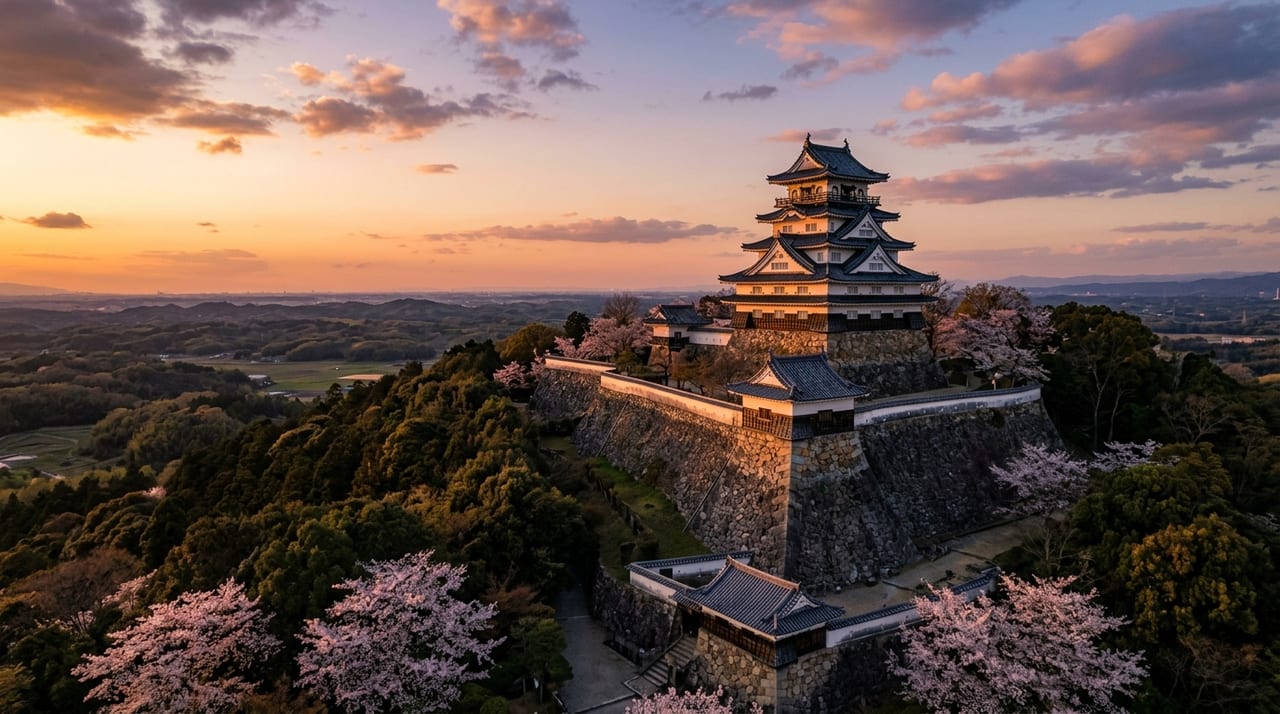
 * Image is for illustrative purposes only.
Kano Castle
加納城
Kano Castle is a historic castle in the Chūbu region (Construction begun in 1602 (Keichō 7); some sources give 1601 (Keichō 6); in use until the end of the Edo period). Its lord was Okudaira Nobumasa (first lord); the Nagai clan from 1756.
Overview
Overview
Kano Castle was a flatland castle in Kanomaru-uchi, Gifu City, Gifu Prefecture. After the Battle of Sekigahara (1600), Tokugawa Ieyasu rebuilt and enlarged it. It has a main, second, third and south enclosure, surrounded by rivers and moats. It was designated a National Historic Site in 1983.
Predecessor and Rebuilding
The earlier castle was built by Saitō Toshinaga, a deputy (shikken) of the Toki shugo of Mino. Gifu City records that Ieyasu ordered Honda Tadakatsu to build the castle, and that tenshu and other structures were moved from the abandoned Gifu Castle. Construction began in 1602 (Keichō 7) and was completed three years later. Some sources give 1601 (Keichō 6) as the start year.
Lords
The first lord was Okudaira Nobumasa, son-in-law of Ieyasu's daughter Kame-hime. In 1756 (Hōreki 6) the Nagai clan was enfeoffed and held the castle until the end of the Edo period.
Structure
The main enclosure, moats, stone walls and earthworks are well preserved. Gifu City's description highlights partition walls (horishōji) built into the bottom of the water moats.
Present Condition
The site is a historic site managed by Gifu City.
Connection to Swords
Not applicable
Highlights
- Its predecessor was built by Saitō Toshinaga, a deputy of the Toki shugo of Mino
- An early modern flatland castle rebuilt and enlarged by Tokugawa Ieyasu after Sekigahara
- Main, second, third and south enclosures surrounded by rivers and moats
- High stone walls and horizontal partitions in the moats survive
- National Historic Site since 1983
* Opening hours and admission fees are subject to change. Please check the official website before visiting.