 * Image is for illustrative purposes only.
Odani Castle
小谷城
Odani Castle is a historic castle in the Kansai region (Built around Daiei 3–4 (1523–1524)). Its lord was Azai Sukemasa / Azai Hisamasa / Azai Nagamasa.
Overview
About the Castle
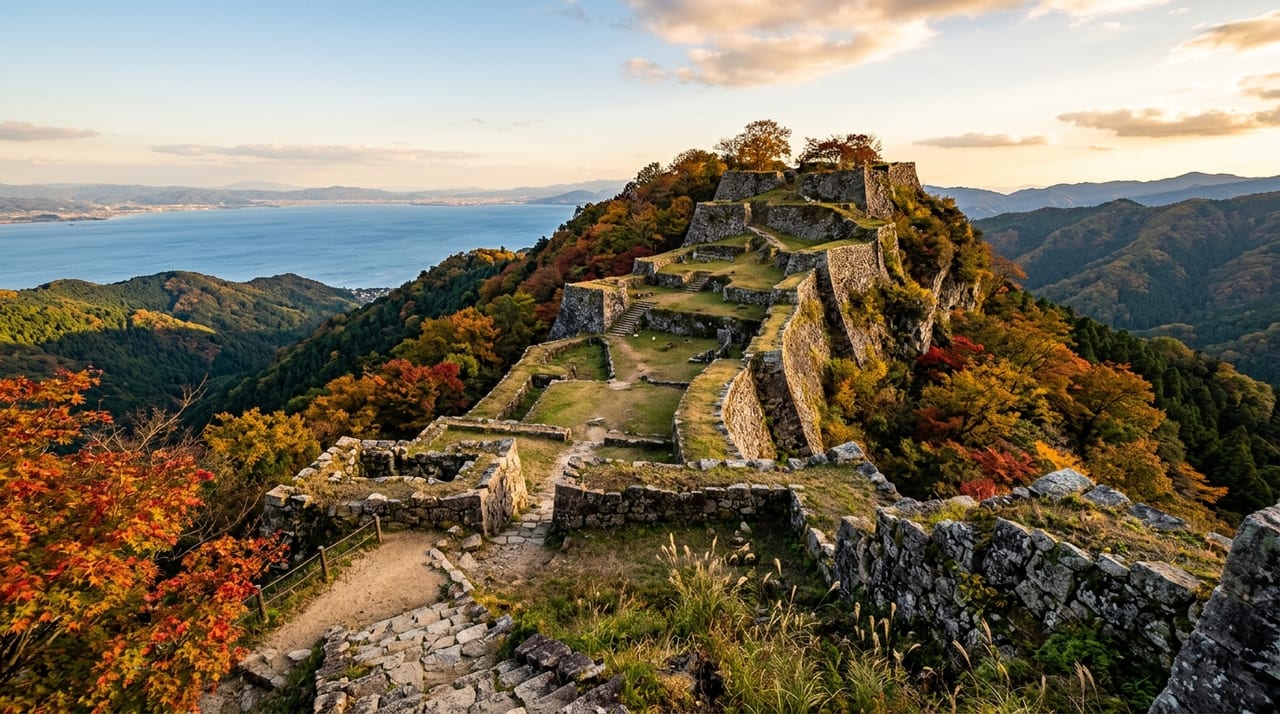
Odani Castle is a Sengoku-period mountain castle built on Mount Odani (elevation approximately 495 m) in Nagahama, Shiga Prefecture. As the seat of the three generations of the Azai clan who ruled Northern Ōmi, and as the stage for the tragic love of Azai Nagamasa and Lady Oichi, it is a famous castle that will be remembered forever in Japanese history. Said to have been built around Daiei 3–4 (1523–1524) by the first generation, Azai Sukemasa, Odani Castle was located at a key point on the north shore of Lake Biwa. It was a strategically important castle that commanded the key junctions of the Hokurikudō and Nakasendō roads.
The Glory of the Azai Clan
The Azai clan grew into a powerful daimyo of Northern Ōmi, based at Odani Castle. Under the second generation, Azai Hisamasa, the clan temporarily submitted to the Rokkaku clan, but when the third generation, Azai Nagamasa, succeeded to the family headship, he defeated the Rokkaku clan at the Battle of Norada and regained independence. In Eiroku 10 (1567), Azai Nagamasa made a political marriage with Lady Oichi, younger sister of Oda Nobunaga, forming an alliance between Oda and Azai. Although the marriage was strategic, it is said that deep affection grew between the two, and they had three daughters: Chacha (later Yodo-dono), Hatsu, and Gō. The three sisters became, respectively, the mother of Toyotomi Hideyori, the wife of Kyōgoku Takatsugu, and the wife of Tokugawa Hidetada. Known as the 'Three Sengoku Sisters,' they lived through the turbulent age from the Sengoku period to the Edo period and continue to be told about today.
Betrayal and Downfall
In Genki 1 (1570), Azai Nagamasa betrayed Nobunaga, despite their alliance, in order to uphold the obligations of their old alliance by supporting Asakura Yoshikage. This decision is praised as an act that honored the samurai code of righteousness, but it ultimately triggered the downfall of the Azai family. In Genki 1 (1570), at the Battle of Anegawa, the combined Oda and Tokugawa forces clashed with the combined Azai and Asakura forces, and Nagamasa was defeated. In Tenshō 1 (1573), Nobunaga's large army besieged Odani Castle. After Nagamasa's father, Azai Hisamasa, took his own life, Nagamasa also committed seppuku at the age of twenty-nine after the castle fell.
Lady Oichi and the Three Sisters
Lady Oichi escaped the castle with her three young daughters and later remarried Shibata Katsuie. When Katsuie was defeated at the Battle of Shizugatake in Tenshō 11 (1583), she took her own life together with Katsuie at Kitanoshō Castle in Echizen. The tragic fates of Nagamasa and Oichi continue to move people across the generations as 'a warlord who lived by righteousness and a lady who upheld her loyalty,' and Odani Castle holds a special historical sentiment as the stage for their story.
Remains and the Castle Today
After it was abandoned, Odani Castle was dismantled to supply building materials for Nagahama Castle, so most of its remains have been lost. However, the main enclosure sites, including the Honmaru, Ōhiroma, and Akao residence, are protected as national historic sites. Hiking trails to the castle ruins have been developed, and from the summit, a magnificent view of Lake Biwa spreads out. The season when autumn foliage adorns the stone-wall remains is especially beautiful. Hiking the mountain castle while contemplating the rise and fall of the Azai clan is one of the best ways to feel the history of the Sengoku period firsthand.
Connection to Swords
The sword culture surrounding Azai Nagamasa and Odani Castle cannot be considered separately from the characteristics of Ōmi as a region. At a banquet in the New Year following the fall of Odani Castle, Oda Nobunaga reportedly displayed the heads of Azai Nagamasa, his father Hisamasa, and Asakura Yoshikage, lacquered and decorated with gold leaf (hakudami). After the fall of Odani Castle, Nobunaga entrusted the management of the site to Hashiba Hideyoshi, who built Nagahama Castle on the shore of Lake Biwa. At the Nagahama Castle History Museum, located near the Odani Castle ruins, weapons and materials associated with the Azai and Toyotomi clans are displayed, making it a hub for learning about the sword culture of Sengoku Ōmi.
Highlights
- Climbing the Odani Castle ruins — a historical hike along the main enclosure sites such as the Honmaru, Ōhiroma, and Akao residence
- Stunning view of Lake Biwa from the summit — take in the mountains and rivers of Ōmi that Azai Nagamasa saw
- Odani Castle Sengoku History Museum — a museum conveying the history of the three generations of the Azai clan and Odani Castle
- Nagahama Castle History Museum — displays weapons and materials associated with the Azai and Toyotomi clans
- Shizugatake — the battlefield of Tenshō 11 (1583), where Shibata Katsuie was defeated by Hashiba Hideyoshi, a historic site close to central Nagahama
* Opening hours and admission fees are subject to change. Please check the official website before visiting.