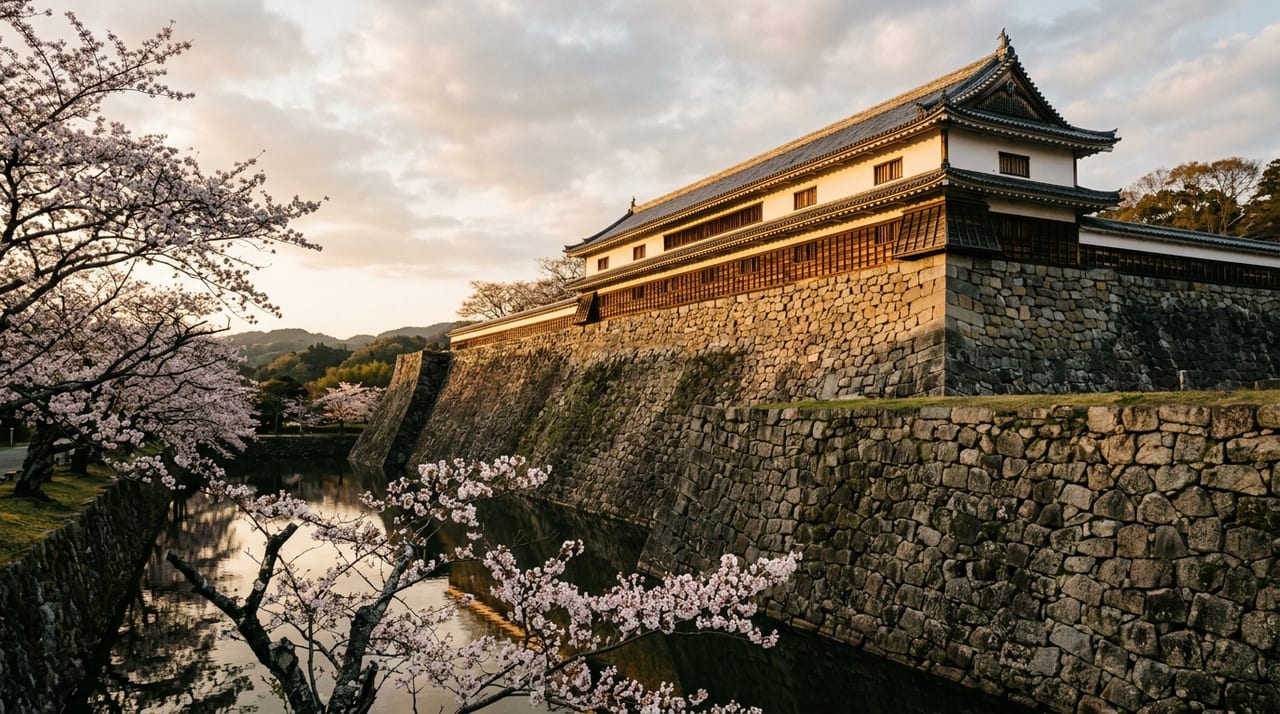
 * Image is for illustrative purposes only.
Kameyama Castle (Ise Kameyama)
亀山城(伊勢亀山城)
Kameyama Castle (Ise Kameyama) is a historic castle in the Kansai region (Founded by Seki Sanetada around 1265 (Bunei 2); organized in the Edo period). Its lord was Seki clan, Okamoto Yoshikatsu, Honda Toshitsugu and other successive lords of the Kameyama domain.
Overview
Strategic Point on the Tōkaidō
Kameyama Castle is an early modern hirayama-jō (flatland-hill castle) located in Kameyama City, Mie Prefecture, and was built at a strategic point on the Tōkaidō. Kameyama-juku, a post station on the Tōkaidō, was established in the castle town, and it prospered with travelers and merchants passing along the highway. Today the Tamon Yagura still survives as a Mie Prefecture designated historic site, and as the only castle building remaining in Mie Prefecture it is a valuable presence.
From the Seki Clan's Castle to the Domain Government Seat
The origins of Kameyama Castle trace back to a castle built in Bun'ei 2 (1265) in the Kamakura period by Seki Sanetada in Wakayama, Suzuka District, Ise Province. The Seki clan was a kokujin (local lord) who ruled northern Ise, and throughout the medieval period it extended its power with Kameyama Castle as its base. Following Oda Nobunaga's conquest of Ise (1568–69), the Seki clan surrendered and submitted. After a change of castle lord under the Toyotomi regime, when the Edo period began the castle came to function as the government seat of the Kameyama domain. During the Edo period, shogunate-affiliated fudai daimyo such as the Honda, Ishikawa, Itakura and Matsudaira families succeeded one another as castle lords, and its administrative importance as a strategic point governing the Tōkaidō was maintained.
Tamon Yagura and Surviving Remains
The greatest highlight of Kameyama Castle is the Tamon Yagura, built in the early Edo period (first half of the 17th century). The Tamon Yagura is a nagaya-type building erected atop the castle's stone walls, a practical structure that served both to store weapons and ammunition and for defense. The Kameyama Castle Tamon Yagura remains atop the high stone walls of the honmaru known as the tenshudai, and as a valuable structure that preserves the style of early Edo-period castle architecture, it has been designated a Mie Prefecture historic site together with its stone walls. The castle site retains remains such as stone walls, moats and earthen ramparts, and the ni-no-maru obi-guruwa and other areas have been developed.
Ise Province and the Culture of Kameyama's Castle Town
As a post town on the Tōkaidō, Kameyama became a place where many travelers came and went throughout the Edo period.
Connection to Swords
The Seki Clan and Kameyama Castle
The Seki clan, which built the predecessor of Kameyama Castle, is said to descend from the Ise Taira clan. As the main house of the five Seki houses, whose residences were Kanbe, Kokufu, Kabuto, Mine and Kameyama castles, it was a kokujin lord that extended its power across northern Ise.
Swordsmiths of Ise Province
In Ise Province, where Kameyama Castle stood, during the Muromachi period Muramasa and his school were active in Kuwana in the north, leaving their name as representative swordsmiths of Ise.
Highlights
- Tamon Yagura (Mie Prefecture designated historic site) — the only castle building surviving in Mie Prefecture, preserving early Edo-period castle architecture
- Kameyama Castle site — early modern castle remains such as stone walls, moats and earthen ramparts survive
- Kameyama-juku on the Tōkaidō — retains traces of its historic highway culture and castle-town character
* Opening hours and admission fees are subject to change. Please check the official website before visiting.