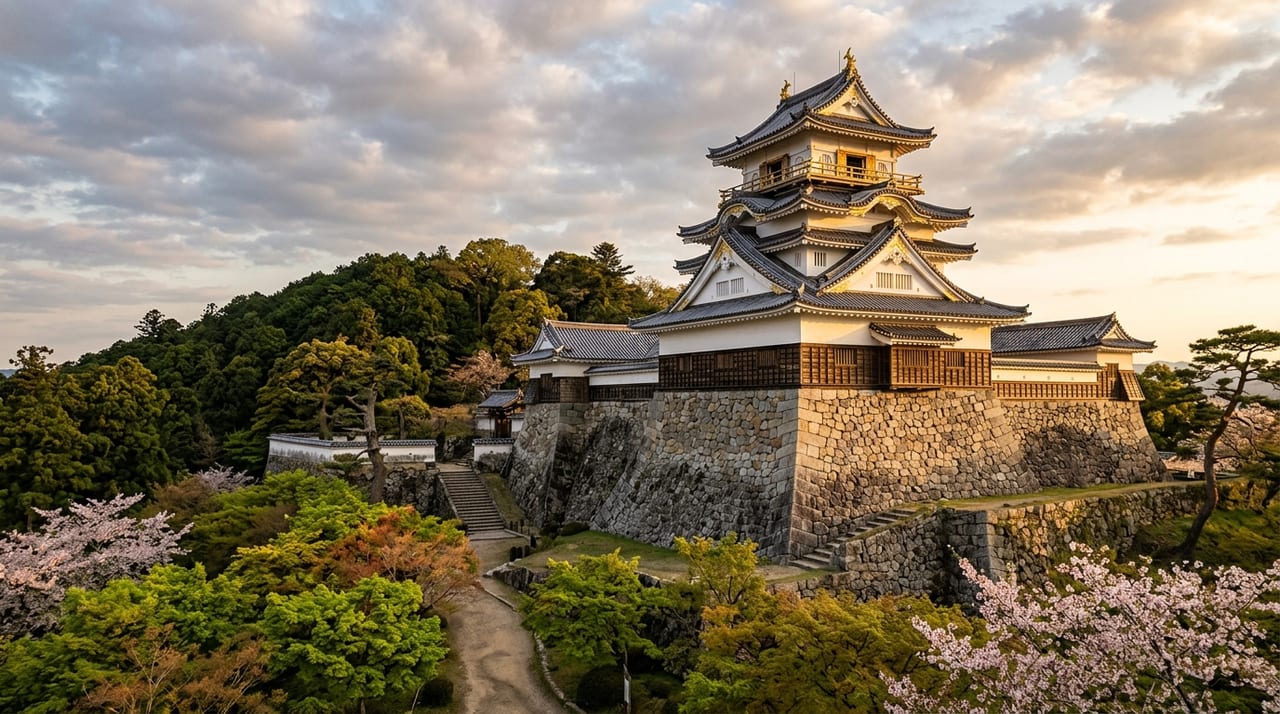
 * Image is for illustrative purposes only.
Matsusaka Castle
松阪城
Matsusaka Castle is a historic castle in the Kansai region (Built in 1588 (Tenshō 16) by Gamo Ujisato). Its lord was Gamo Ujisato / Furuta Shigekatsu / Kishū domain (castle wardens).
Overview
Matsusaka Castle is a hirayamajiro (castle built on a low hill) located in Matsusaka City, Mie Prefecture, and was built in 1588 (Tenshō 16) by Gamō Ujisato. Ujisato was the son-in-law of Oda Nobunaga and, after Nobunaga's death, served Toyotomi Hideyoshi as a distinguished military commander and cultural figure. As a renowned tea master, Ujisato was numbered among the Seven Sages of Rikyu and fully demonstrated his cultural sensibility in the development of the castle town.
What Ujisato focused most intently on when building Matsusaka Castle was the development of the castle town itself. He summoned merchants from Hino in his former domain of Ōmi and wealthy merchants from the port of Ōminato in Ise to the castle town, and established free markets (rakuichi rakuza) to promote commerce. This policy led to the rise of "Matsusaka merchants," and during the Edo period, Japan's foremost merchant families—including the Mitsui family (the source of Mitsukoshi and the Mitsui corporate group)—would emerge from Matsusaka. Ujisato's philosophy of castle-town administration—"valuing merchants"—remains eternally inscribed in Matsusaka's history.
The castle is a hirayamajiro built on a hill called Yoihonomori, with a layout comprising the main gate (ōtemon), rear gate (karamete-mon), honmaru, ninomaru, and sannomaru. Today, the tenshu (main tower) has been lost, but the nozura-zumi stone walls of the honmaru and other enclosures survive, transmitting the stone-stacking techniques of the Azuchi-Momoyama era to the present day. In particular, the stone walls of the tenshu platform are regarded as a masterwork exemplifying Ujisato's aesthetic sensibility.
Matsusaka is also a place of significance to Motoori Norinaga. The city of Matsusaka, where the Edo-period nativist scholar Norinaga spent most of his life, is known as a distinctive cultural city where learning and commerce coexist, and the Motoori Norinaga Memorial Museum stands today alongside Matsusaka beef as a representative tourist attraction of the city.
Connection to Swords
The relationship between Matsusaka Castle and swords can be found in the multifaceted cultural and martial practice of Gamo Ujisato. As one of Sen no Rikyu's Seven Sages, Gamo Ujisato was a cultivated person deeply versed in the tea ceremony, while simultaneously serving as an outstanding military commander under Nobunaga and Hideyoshi. Tea and the sword formed the dual pillars of samurai spiritual culture; Ujisato possessed both the eye of a tea master for appraising fine bowls and the eye of a military commander for appraising fine blades.
Today, the Matsusaka Municipal History and Folk Museum (housed in the former Iinan District Library building) displays materials relating to Matsusaka Castle and its first castellan Gamo Ujisato, as well as documents on Matsusaka cotton textiles and the Ise Sangu Road merchant houses, allowing visitors to learn of Matsusaka's history from the age of Gamo Ujisato through the Edo period.
Highlights
- Honmaru nozurazumi stone walls — masterwork of Azuchi-Momoyama-era stonework, embodying Gamo Ujisato's aesthetic
- Tenshu-dai (main tower base) — the most celebrated section of Matsusaka's distinctive stonework
- Motoori Norinaga Old Residence and Memorial Hall — preserved home and archives of the Edo-period nativist scholar
- Matsusaka Merchant's House (Former Ozu Seizaemon Residence) — Edo merchant lifestyle preserved
- Matsusaka beef — one of Japan's 'Three Great Wagyu,' available throughout the castle town
- Ujisato Festival — warrior procession and cultural events honoring Gamo Ujisato
* Opening hours and admission fees are subject to change. Please check the official website before visiting.