 * Image is for illustrative purposes only.
Iga Ueno Castle
伊賀上野城
Iga Ueno Castle is a historic castle in the Kansai region (Renovated 1611 (Keichō 16)). Its lord was Tōdō Takatora.
Overview
About the Castle
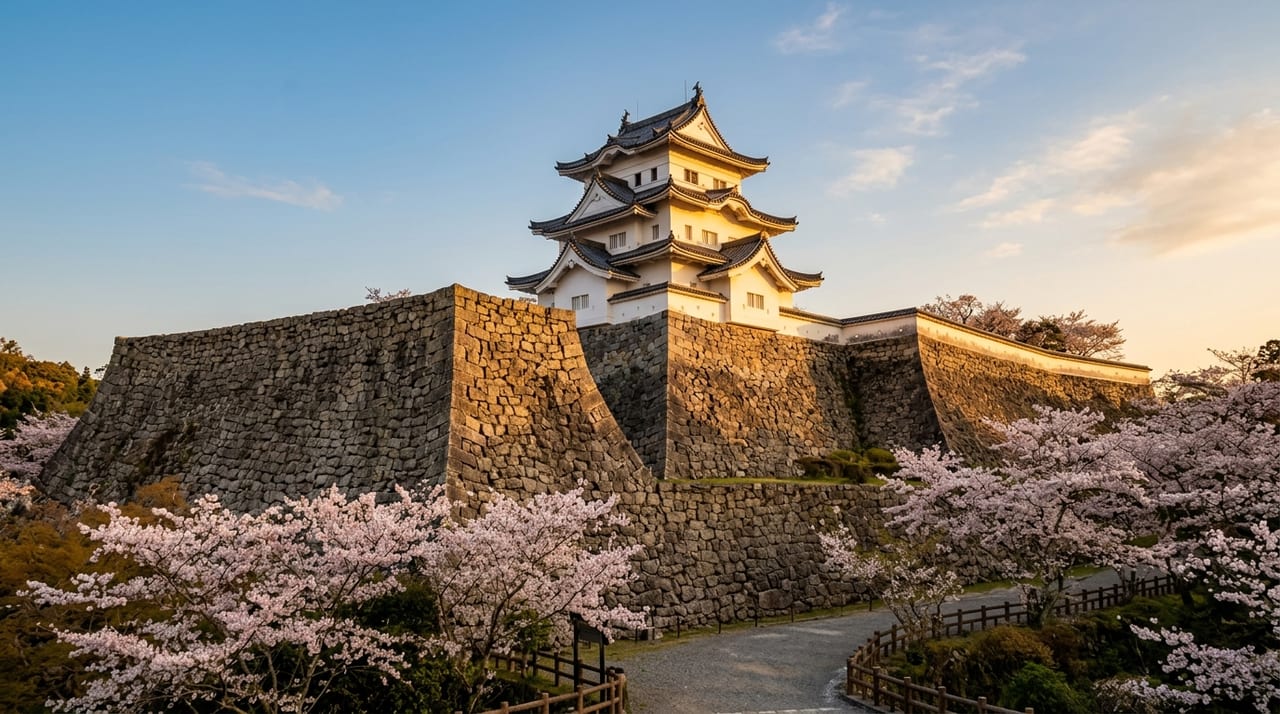
Iga Ueno Castle is a castle on a hill in the center of Iga City, Mie Prefecture, overlooking the Ueno Basin. Known as a symbol of Iga, the home of the ninja, the present tenshu is a replica that Kawasaki Katsu, a local politician, rebuilt at his own expense in 1935 (Shōwa 10). Its white form, about 23 meters tall, rises majestically over the Iga Basin and is also known by the alternate name “Hakuhō-jō.” The castle was first built in earnest on this site by Tōdō Takatora, renowned as a “master of castle construction.” Takatora began large-scale renovation work in 1611 (Keichō 16) and built high stone walls unrivaled under heaven.
Tōdō Takatora and Japan's Tallest Stone Walls
Tōdō Takatora was a castle architect representative of the Sengoku and early Edo periods, a castle-building genius who designed many famous castles, including Imabari, Tsu and Sasayama castles. The stone walls built around the main keep of Iga Ueno Castle reach about 30 meters in height and were known as the tallest stone walls in Japan at the time (they still rank among the highest in the country today). Built with the uchikomi-hagi technique, these walls are a masterpiece that could be called the culmination of Takatora's castle-building skill. Their beauty and power overwhelm visitors, and castle enthusiasts rate them very highly as a showpiece. In 1612 (Keichō 17), a tragedy occurred when the five-story main tenshu, nearly complete, collapsed in a windstorm, and the tenshu was never rebuilt afterward.
The Ninja Castle and Iga's Culture
Iga, together with Kōga, is Japan's greatest home of ninja. Iga ninja excelled at intelligence gathering, strategy and infiltration, and in the Sengoku period they served various daimyō. Around Iga Ueno Castle is the Iga-ryū Ninja Museum, which features ninja house mechanisms, displays of ninja tools and ninja shows. Ueno, Iga, also the birthplace of the haiku master Matsuo Bashō, is a unique historic city where ninja culture and haiku culture coexist. Strolling through Ueno Park, which includes the Bashō-ō Memorial Museum and the Haiseiden, lets you experience the three faces of Iga, castle, ninja and haiku, all at once.
Reconstruction of the Tenshu and Kawasaki Katsu
The present wooden tenshu was built in 1935 (Shōwa 10). Kawasaki Katsu, a local politician and businessman, built it with his private fortune out of a long-held wish for the “revival of an old castle.” The interior is a museum displaying Iga's historical materials, armor and weapons, including the tōkan-nari kabuto (Chinese-cap-shaped helmet) used by Tōdō Takatora, which is designated as a Mie Prefecture Designated Cultural Property. Known as a wooden replica tenshu of the Shōwa era, the building itself has been designated as a tangible cultural property of Iga City.
Castle Town and Tourism
The castle site, developed as Ueno Park, draws many visitors in spring as a cherry blossom spot. It is within walking distance of Ueno-shi Station on the Iga Railway and offers good access as a base for sightseeing. The surrounding Ueno castle town is lined with ninja-themed souvenir shops and restaurants, and Iga beef shabu-shabu and Iga rice cuisine are among the pleasures of the trip. The atmosphere of the castle town, where haiku monuments by Bashō stand in many places, together with the power of Japan's tallest stone walls, leaves an unforgettable impression on everyone who visits Iga Ueno Castle.
Connection to Swords
The connection between Iga Ueno Castle and swords can be told along two axes: the sword appreciation of its builder, Tōdō Takatora, and the tradition of special weapons in ninja culture. Takatora was a rare warrior and castle architect who served Toyotomi Hidenaga, Toyotomi Hideyoshi and Tokugawa Ieyasu. As a keepsake from Toyotomi Hideyoshi, Takatora received the famous sword “Ō-Kanemitsu” (made by Bizen-no-kuni Kanemitsu, currently an Important Cultural Property). Inside the tenshu of Iga Ueno Castle, the tōkan-nari kabuto (Chinese-cap-shaped helmet) and other items used by Takatora are on display, conveying his aesthetic sense and his spirit as a warrior. Meanwhile, the weapon system of ninja culture developed a unique path apart from the Japanese sword. The shinobigatana said to have been used by ninja was shorter and less curved than an ordinary Japanese sword. It is said to have been used in many ways, such as stepping on its large, angular tsuba as a footstool, although some doubt that ninja actually used it. The Iga-ryū Ninja Museum displays shinobigatana along with various ninja tools, offering a view of the world of ninja practical weapons, in contrast to the elegance of the Japanese sword. Iga Ueno is a rare place where the world of Japanese sword beauty and the world of ninja practical weapons intersect, allowing visitors to experience the diversity of Japan's weapon culture.
Highlights
- Japan's tallest stone walls — The about 30 m stone walls of the main keep represent the pinnacle of Tōdō Takatora's castle-building skill. A must-see for stone wall enthusiasts
- Wooden replica tenshu — The wooden tenshu, built in 1935 (Shōwa 10), serves as a museum displaying Tōdō Takatora's tōkan-nari kabuto (Chinese-cap-shaped helmet) and other items
- Iga-ryū Ninja Museum — Ninja house mechanisms, displays of ninja tools and shinobigatana, and ninja shows are also held
- Haiseiden — Built in 1942 (Shōwa 17) to commemorate the 300th anniversary of Matsuo Bashō's birth, this hall (a national Important Cultural Property) stands within Ueno Park
- Ueno Park cherry blossoms — A spring hanami spot where the cherry blossoms adorn the castle ruins
- Iga beef gourmet — Iga beef shabu-shabu at restaurants in the castle town is the ultimate pleasure of the trip
* Opening hours and admission fees are subject to change. Please check the official website before visiting.