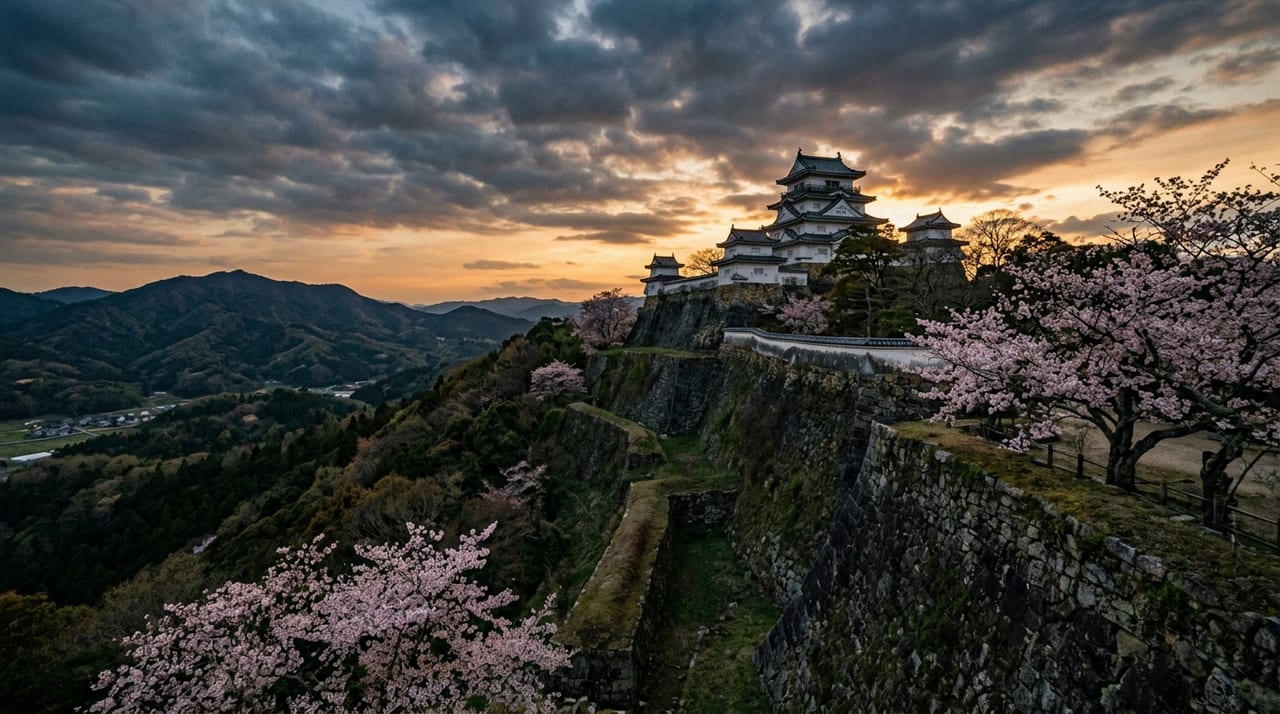
 * Image is for illustrative purposes only.
Miki Castle (Bessho Castle)
三木城(別所城)
Miki Castle (Bessho Castle) is a historic castle in the Kansai region (Said to have been built by Bessho Noriharu during the Meiō era (late 15th century) as the seat of the Bessho clan; fell to Hashiba Hideyoshi's siege and starvation tactics in the Miki Campaign (Miki no Hoshi-goroshi), Tenshō 6–8 (1578–80)). Its lord was Bessho Nagaharu (defender) → Hashiba Hideyoshi (besieging Oda forces).
Overview
Miki Castle (Bessho Castle) is a hirayama-style castle located in Miki City, Hyōgo Prefecture. It is known as the castle that fell in the 'Miki Campaign (Miki no Hoshi-goroshi)', one of the most notable siege-by-starvation campaigns in Japanese history, carried out by Hashiba Hideyoshi (later Toyotomi Hideyoshi). 'Hoshi-goroshi' (starvation-killing) is a tactic in which a castle is surrounded, all external supply of provisions is completely cut off, and the garrison and the townspeople of the castle town are forced to surrender through starvation.
Bessho Nagaharu held Miki Castle as a powerful local lord (kokujin ryōshu) of Harima Province (southern Hyōgo Prefecture). In the 5th year of Tenshō (1577), Hashiba Hideyoshi entered Harima on the orders of Oda Nobunaga. However, in the 2nd month of Tenshō 6 (1578), Nagaharu broke away from the Oda side together with the kokujin of eastern Harima and joined the Mōri side.
Hideyoshi chose a siege, starving the castle into submission, as his method for taking Miki Castle. He built countless subsidiary forts (tsukeshiro) around the castle to completely encircle it, cutting off its supply routes for provisions and materials. The siege lasted about two years (1578–80), and severe food shortages inside the castle caused many deaths. In the 1st month of Tenshō 8 (1580), Bessho Nagaharu requested the lives of the castle's garrison in exchange for his own and his clan's seppuku, and took his own life. The castle then surrendered. Nagaharu's end has been passed down as self-sacrifice to protect the people inside the castle, and he is still revered today as a 'tragic warrior' by many people.
The experience of the Miki siege became an important chapter in Hideyoshi's military strategy. Later, in the siege of Tottori Castle and the water-flooding siege of Bitchū Takamatsu Castle, the tactic of encircling a castle and cutting off its supply lines was repeated. The castle site is preserved as a National Historic Site, and the remains of the honmaru site, earthen ramparts (dorui), and dry moats (karabori) survive. Numerous monuments and statues honoring Bessho Nagaharu have been erected throughout Miki City, and he is still admired today as the most beloved warlord by the local community.
Connection to Swords
Miki Castle's connection to Japanese blades can be understood through the sword culture of Harima, the province where the castle stood, and the historical background of its lord, Bessho Nagaharu.
Harima Province (southern Hyōgo Prefecture) has long been a center of active smithing; the Harima Fudoki also records the smith deity Amenomahitotsu-no-mikoto. Miki City continues to be the center of the blade industry, known as 'Miki carpentry tools and edged metalwork', and the metalworking and smithing traditions from the medieval period have been passed on to modern and contemporary edged-tool production (Miki kanamono). After the Miki Campaign, when carpenters gathered from various places to rebuild from the war damage, demand for carpentry tools increased, and Miki is said to have developed further as a town of metal goods.
The Miki City Kanamono Museum is located in Kaminomaru Park on the site of Miki Castle, and at the adjacent Koshiki Tanren-jō (old-style forging ground), demonstrations of traditional old-style forging of metal goods are held.
Highlights
- Miki Castle main bailey (honmaru) site and earthen ramparts — National Historic Site; remains of the main enclosure that Bessho Nagaharu held to the end
- Bessho Nagaharu death-poem monument — a monument to the death poem he composed just before taking his own life, erected at the castle site
- Unryū-ji Temple (Bessho Nagaharu's grave) — the head mounds (kubizuka) of Nagaharu and his wife Teruko remain; the cherished belongings Nagaharu entrusted are preserved as temple treasures
- Miki carpentry tools and edged-tool industry — 'Banshū Miki uchihamono' has been designated a national Traditional Craft
- Tsukeshiro fort ruins — remains of the encircling subsidiary forts built by Hideyoshi survive at various locations throughout the city
* Opening hours and admission fees are subject to change. Please check the official website before visiting.