 * Image is for illustrative purposes only.
Hara Castle
原城
Hara Castle is a historic castle in the Kyūshū region (Developed in the Bunroku–Keichō era; site of the Shimabara Rebellion, 1637–38). Its lord was Arima Harunobu (original lord) / Amakusa Shirō (rebel leader in the Shimabara Rebellion).
Overview
A Castle of Tragedy and a World Heritage Site
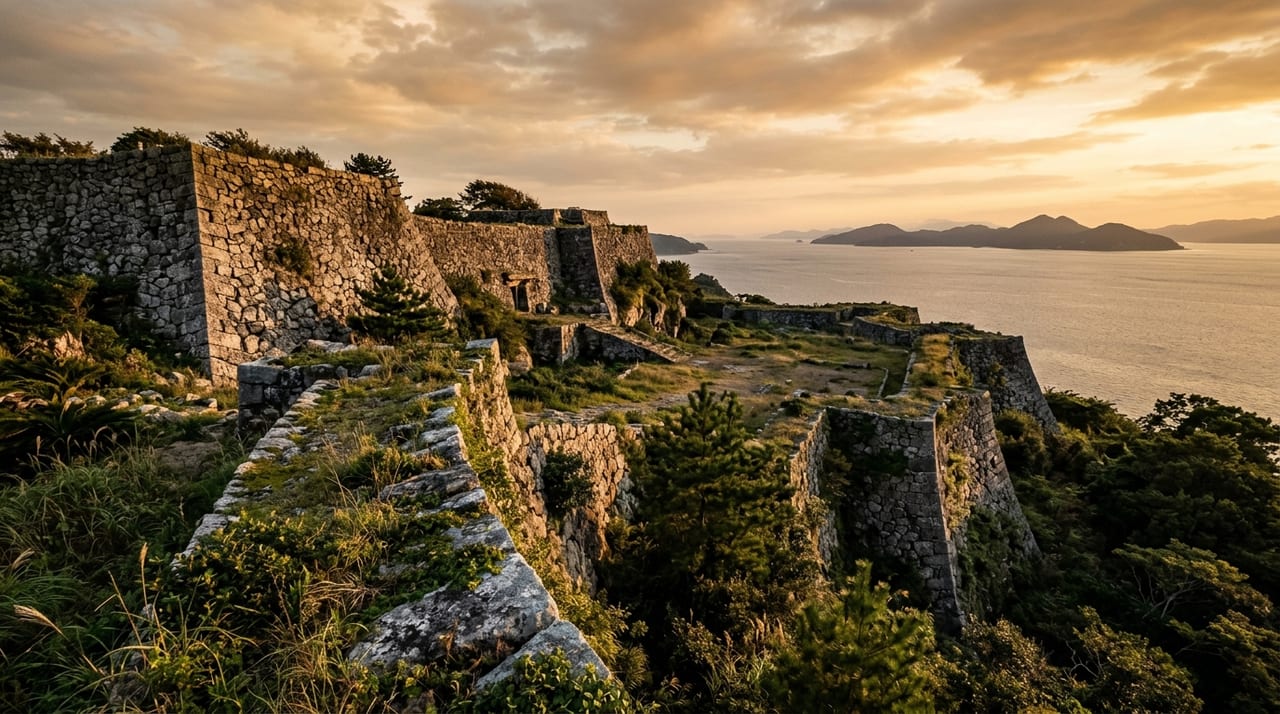
Hara Castle is a castle ruin located on a plateau jutting out into the Ariake Sea at the southern tip of the Shimabara Peninsula in Minami-Shimabara City, Nagasaki Prefecture. It is deeply etched in history as the site of the final battle of the Shimabara Rebellion (Amakusa-Shimabara Uprising) that broke out in the early Edo period. In 2018, it was inscribed as a UNESCO World Heritage Site as one of the component assets of 'Hidden Christian Sites in the Nagasaki and Amakusa Region.' From the castle ruins, sweeping views of the Ariake Sea and the Amakusa Islands spread out, and it is a special place where the tragic history overlaps with its beautiful vistas.
From Arima Clan Castle to Abandonment
Hara Castle was a branch castle developed in the Sengoku period by the Arima clan (lords of Hinoe Castle), and it was developed as a castle during the time of Arima Harunobu (1567–1612), known as a Kirishitan daimyō. Arima Harunobu governed the Shimabara Peninsula, where Catholic faith had spread since the missionary activities of Francis Xavier, and the Kirishitan culture of the castle town reached its peak. However, in Keichō 19 (1614), the Arima clan (Arima Naozumi) was transferred to Nobeoka in Hyūga, and Hara Castle was subsequently abandoned. Even after its abandonment, the Kirishitan faith continued secretly on the Shimabara Peninsula.
The Shimabara Rebellion and the Siege of Hara Castle
In Kan'ei 14 (1637), peasants and rōnin of Shimabara and Amakusa, who had suffered from heavy taxation and religious persecution, rose in rebellion (the Shimabara Rebellion). The rebels installed the Kirishitan boy Amakusa Shirō (Masuda Tokisada, aged 16) as their supreme commander and barricaded themselves in Hara Castle, which had been abandoned. The defenders numbered about 37,000, and after a prolonged siege by shogunate forces (over 120,000 men), the castle fell in Kan'ei 15 (1638). It is said that nearly all of the defenders were killed in battle or executed, and the death toll was among the largest of any domestic conflict in Japanese history. Following this rebellion, the shogunate intensified its suppression of Kirishitan and completed the sakoku isolation system.
The Castle Ruins and Remains
At the present Hara Castle ruins, stone wall remains of the Honmaru, Ninomaru, and Sannomaru survive, and archaeological excavations have unearthed large quantities of artifacts (cannonballs, bullets, human bones, and Kirishitan artifacts such as crucifixes and medals). The castle ruins present a vast grassland-like landscape, and the sight of stone walls lining the cliffs overlooking the Ariake Sea leaves a strong impression on visitors. With the World Heritage inscription as an opportunity, maintenance and interpretive facilities have been enhanced, and many visitors from Japan and abroad now come.
Connection to Swords
The Shimabara Rebellion and Swords
The siege of Hara Castle was one of the largest domestic uprisings in Japanese history, and it is a historical event that offers many insights from the perspective of swords as well. Among the 37,000 defenders were many rōnin, and they were survivors of samurai bands that had been active in the Sengoku period. Many of them were former retainers who had lost their lords due to the Arima transfer or the Konishi Yukinaga dispossession, and who had returned to farming in Shimabara and Amakusa.
Excavated Artifacts and Records of Battle
Archaeological excavations at the Hara Castle ruins have unearthed large quantities of musket balls (lead shot), which attest to the intensity of the siege, as well as human bones bearing sword wounds. These artifacts are now displayed at the Arima Christian Heritage Museum in Minami-Shimabara City, conveying the horror of the siege to the present day. Some of the excavated human bones bear sword wounds, and they are attracting attention as material evidence of the ferocity of hand-to-hand combat.
Arima Harunobu and Kirishitan Sword Culture
Arima Harunobu is known as a devout Kirishitan daimyō, and through his relations with Jesuit missionaries, he also came into contact with European goods and culture. The sword culture in the castle towns governed by Kirishitan daimyō presented a distinctive character where Eastern and Western cultures intersected, and Hara Castle bears the memory of such cross-cultural exchange.
Highlights
- UNESCO World Heritage Site — the final battlefield of the Shimabara Rebellion, inscribed as part of 'Hidden Christian Sites'
- Excavated artifacts — cannonballs, bullets, human bones, crucifixes, and medals that convey the realities of the siege
- Stone walls on cliffs overlooking the Ariake Sea — a special place where a magnificent landscape overlaps with a tragic history
- Arima Christian Heritage Museum in Minami-Shimabara City — exhibits artifacts from the Hara Castle ruins and explains the history of the Shimabara Rebellion and the hidden Kirishitan
- Places associated with Amakusa Shirō — a tragic story of intense faith at the end of the Sengoku period, with a 16-year-old boy as supreme commander
* Opening hours and admission fees are subject to change. Please check the official website before visiting.