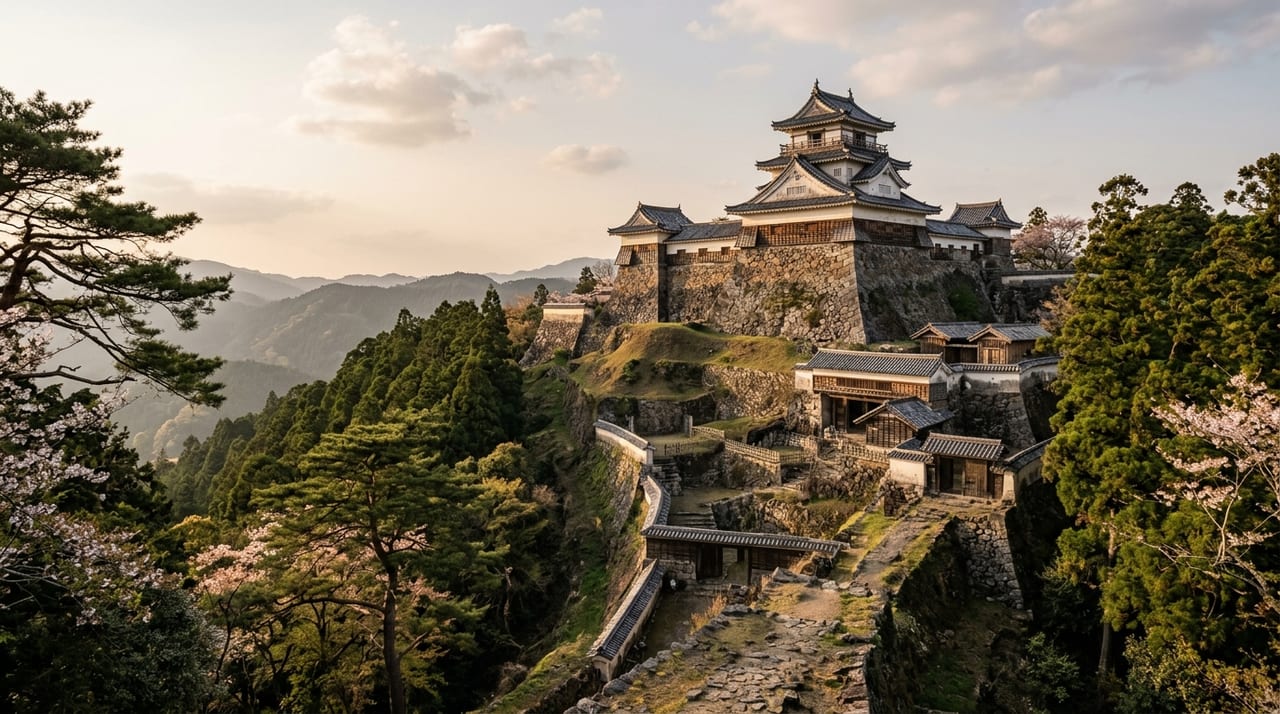
 * Image is for illustrative purposes only.
Chiran Castle
知覧城
Chiran Castle is a historic castle in the Kyūshū region (Construction date unknown. After Sata Tadamitsu was granted Chiran in Bunna 2 (1353), it served as the castle of the Sata clan (Chiran Shimazu clan)). Its lord was Shimazu clan (Sata / Chiran-Shimazu branch).
Overview
Chiran Castle is a mountain castle located in Minami-Kyushu City, Kagoshima Prefecture. It served as the stronghold of the Chiran Shimazu clan, a branch of the Shimazu clan that controlled the southern Satsuma Peninsula. The construction date is unknown, but after Sata Tadamitsu was granted Chiran in Bunna 2 (1353), it became the castle of the Sata clan and developed into a key defensive stronghold of Satsuma throughout the Muromachi and Sengoku periods. The castle makes skillful use of the steep cliffs of the Shirasu plateau, and its layout, which combines multiple enclosures (kuruwa) and dry moats, is highly regarded as one of Kyushu's finest mountain castle remains.
Chiran is widely known not only for its castle but also for its castle-town samurai residences. The Chiran Samurai Residences, developed in the Edo period, are a samurai settlement that grew around the jitō kariya (temporary residences of local stewards) placed at key points across the region under the Satsuma Domain's gojō (outer castle) system. Its landscape, a row of residences with gardens influenced by Okinawan culture, is known as the 'Little Kyoto of Satsuma' and has been designated as an Important Preservation District for Groups of Traditional Buildings by the national government.
Chiran is also known as a base for kamikaze special attack missions at the end of the Pacific War. The Chiran Kamikaze Peace Museum holds the belongings and farewell letters of Army special attack pilots who set out toward the Battle of Okinawa, and many visitors come to pass this tragic history on to future generations. As a place where two faces coexist, a medieval mountain castle and modern war remains, Chiran has become one of Kyushu's leading historical tourist destinations.
Connection to Swords
The connection between Chiran Castle and Japanese swords is best understood from the perspective of the Shimazu clan's swordsmanship and sword culture. From the Muromachi through the Sengoku period, the Shimazu clan ruled the three provinces of Satsuma, Ōsumi, and Hyūga and boasted considerable military strength aimed at the conquest of Kyushu. In the Edo-period Satsuma Domain, a distinctive swordsmanship school called Jigen-ryū, founded by Tōgō Chūi, was highly valued. Jigen-ryū overpowers opponents with the fierce force of its first strike using a wooden sword, and it became nationally known when Satsuma samurai who had mastered this swordsmanship fought in the Boshin War.
The Sata clan of Chiran played an important role as one branch of the Shimazu clan. Namihira is a sword-smith lineage representing Satsuma, considered one of the oldest sword-smithing groups in Kyushu, continuing without interruption since the late Heian period. It forged practical swords while preserving traditional styles. Satsuma samurai favored Namihira blades and proved their cutting ability on many battlefields.
In the area of the Chiran Samurai Residences Garden, designated as a National Place of Scenic Beauty, one can catch a glimpse of the traces of Satsuma's samurai culture. As a guardian point at the southern edge of the Shimazu clan's sword culture sphere, Chiran Castle is indispensable in any discussion of the history of Satsuma swords.
Highlights
- Chiran Castle Ruins (National Historic Site) — A representative example of a southern Kyushu-type medieval castle that uses the cliffs of the Shirasu plateau, with dry moats and earthen ramparts well preserved
- Chiran Samurai Residences (Important Preservation District for Groups of Traditional Buildings) — A samurai district of Satsuma with a row of gardens influenced by Okinawan culture
- Chiran Kamikaze Peace Museum — A facility for bearing witness to the Pacific War that holds the farewell letters and belongings of Army kamikaze pilots
- Southern Satsuma, home of the Namihira swordsmiths — A production area of the oldest school of Satsuma swords, continuing since the late Heian period
* Opening hours and admission fees are subject to change. Please check the official website before visiting.