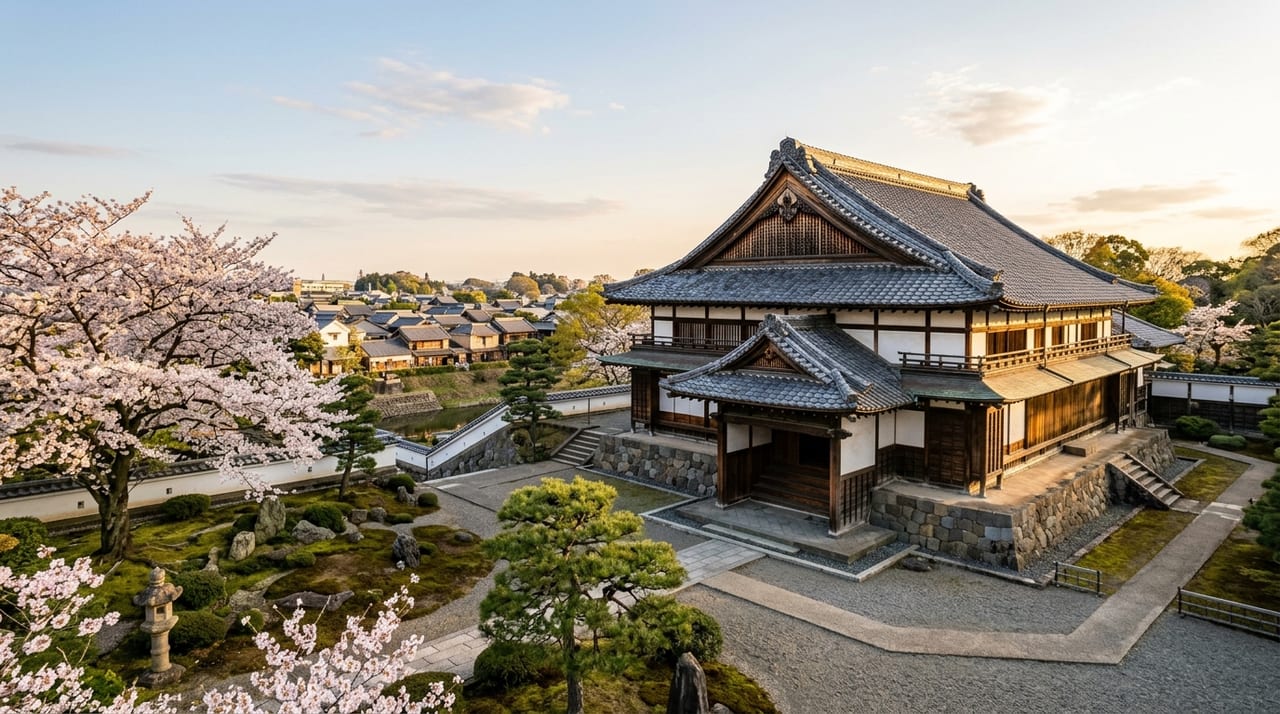
 * Image is for illustrative purposes only.
Kawagoe Castle
川越城(河越城)
Kawagoe Castle is a historic castle in the Kantō region (Built in 1457 (Chōroku 1); extensively developed in the Edo period). Its lord was Daidoji Masashige / Sakai clan / Matsudaira clan / Yanagisawa clan.
Overview
Kawagoe Castle is a hirayama-style castle (built on a low hill in a plain) located in Kawagoe City, Saitama Prefecture, built in Chōroku 1 (1457) by the father and son Ōta Dōshin and Ōta Dōkan, and is one of the famous castles of the Kanto region. As the political center of Kawagoe, a historic castle town known as 'Koedo' (Little Edo), it played an important role throughout the Edo period.
The reason Kawagoe Castle is counted among the 'Seven Famous Castles of Kanto' lies in its strategic and political importance. As a key strategic point for the northern defense of Edo (Tokyo), the Tokugawa shogunate stationed powerful fudai and shinpan daimyo at Kawagoe. In particular, powerful daimyo such as the Matsudaira clan, Matsudaira Nobutsuna, and the Akimoto clan served as castle lords, and until the mid-Edo period it was also called the 'castle of the rōjū (senior councillors)', an important stronghold.
Currently, the only major surviving building at Kawagoe Castle is the Honmaru Goten (Honmaru Palace). Built in Kaei 1 (1848), this palace is one of the few valuable surviving examples of palace architecture among extant early-modern castles, and its interiors, including the great hall, the karō's waiting room, and the entrance, can be viewed. As a building that conveys to the present day the dignity and way of life of late-Edo daimyo residences, it has become an important center for historical tourism in Saitama Prefecture.
The 'kura-zukuri townscape' (warehouse-style townscape) of the Kawagoe castle town is a streetscape where merchant houses built in kura-zukuri style lined up after the Great Kawagoe Fire of Meiji 26 (1893). As a townscape that retains the look of Edo, it is designated as an Important Preservation District for Groups of Traditional Buildings. The 'Toki no Kane' (Bell of Time) and the kura-zukuri townscape are symbols of Kawagoe tourism, and the area has become one of the leading tourist destinations in the Kanto region, visited by several million people each year.
Connection to Swords
The connection between Kawagoe Castle and swords can be traced through the history of the samurai families, such as the Ōta clan who built the castle and the successive Kawagoe domain lords. Ōta Dōkan is known as a master of castle construction in the Kanto region, and he is the warlord who, together with his father Dōshin, built Kawagoe Castle and also built Edo Castle. Dōkan is also known as a cultured figure well versed in waka poetry.
Many of the Kawagoe domain lords of the Edo period held important posts in the shogunate, such as Matsudaira Nobutsuna and Yanagisawa Yoshiyasu, who wielded great power as a favorite of Tokugawa Tsunayoshi.
In the same Musashi Province, swordsmanship was widely studied in the late Edo period. Kondō Isami, who later became commander of the Shinsengumi, studied the 'Tennen Rishin-ryū' that spread in the Tama region and succeeded to its fourth-generation headship (sōke).
Touring the Honmaru Goten lets visitors experience the atmosphere of the spaces where domain lords conducted their administrative affairs. In addition, the Kawagoe City Museum, which stands on the former site of the Ninomaru, displays historical materials on Kawagoe Castle and the Kawagoe domain, where visitors can learn about the history of the castle and the castle town.
Highlights
- Honmaru Palace (Prefectural Cultural Property) — surviving castle-palace interior; great hall and elder's room open to visitors
- Kurazukuri merchant district (Important Traditional Buildings Conservation Area) — Meiji-era storehouses of 'Little Edo'
- Toki no Kane bell tower — 400-year-old Kawagoe symbol, still chiming four times daily
- Kawagoe Hikawa Shrine — celebrated for matchmaking, spiritual heart of the castle town
- Kawagoe City Museum — systematic historical exhibits on the castle and domain
- Kashiya Yokocho (Candy Lane) — nostalgic alley of traditional confectionery shops
* Opening hours and admission fees are subject to change. Please check the official website before visiting.