 * Image is for illustrative purposes only.
Karasawayama Castle
唐沢山城
Karasawayama Castle is a historic castle in the Kantō region (Existed by the late 15th century (traditionally built by Fujiwara no Hidesato in the Heian period); developed during the Sengoku period). Its lord was Sano clan (Sano Masatsuna, Sano Fusatsuna, et al.).
Overview
One of the Seven Great Castles of the Kantō
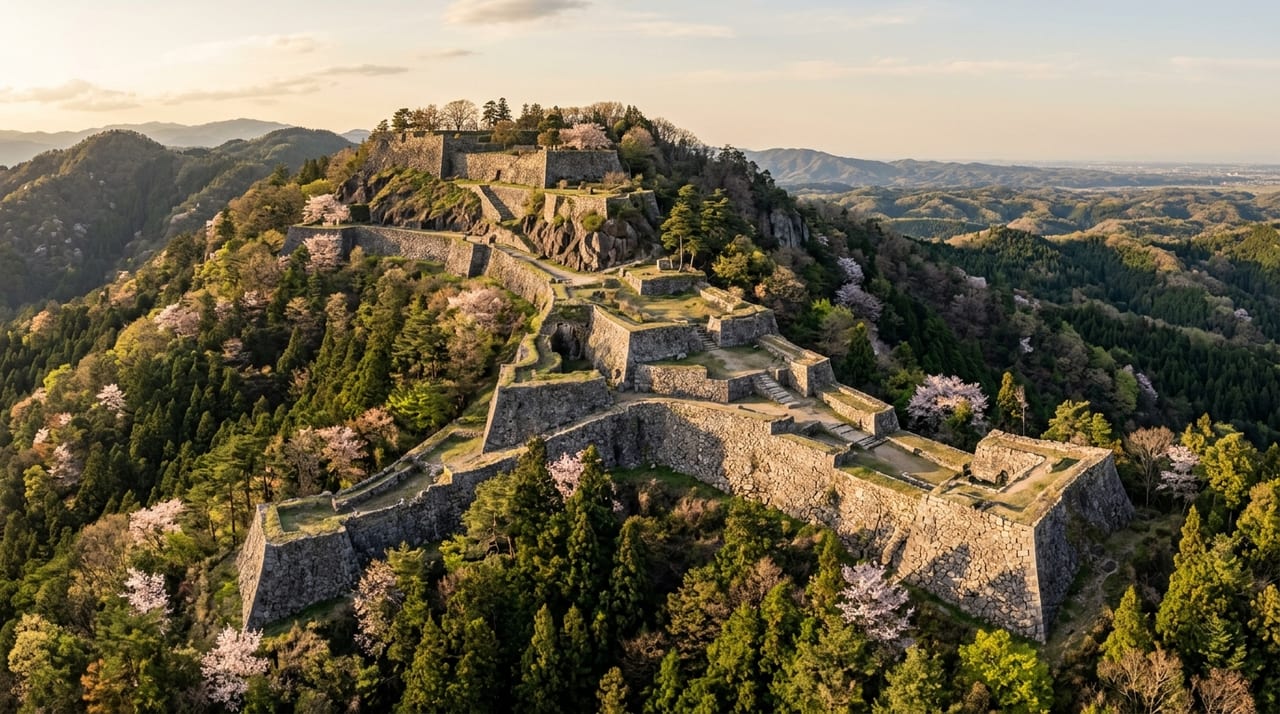
Karasawayama Castle is a mountain castle located in Sano, Tochigi Prefecture. It spreads across a vast castle domain from the summit to the mountainside of Mount Karasawa (Karasawayama), which stands at an elevation of 247 meters. It is counted among the "Seven Great Castles of the Kantō," and its vast layout is among the largest of the mountain castles in the Kantō region. The layout skillfully makes use of the castle's natural bedrock and steep cliffs, giving it excellent defensive capability, and during the Sengoku period it was repeatedly the object of contention between the Later Hōjō clan of Odawara and Uesugi Kenshin of Echigo.
The Sano Clan and Uesugi Kenshin's Military Conflict
The Sano clan, who made Karasawayama Castle their base, were influential local lords (kokujin) of Shimotsuke Province (Tochigi). From the Eiroku era (1558–70) onward, they were repeatedly attacked during Uesugi Kenshin's invasions of the Kantō. It is said that Kenshin attacked Karasawayama Castle a total of ten times, and these engagements have become an emblematic episode of Kenshin's military campaigns in the Kantō. Castellan Sano Masatsuna repeatedly surrendered and defected, yet repelled most of the attacks, greatly delaying Kenshin. The Sano clan skillfully sought to survive among the Later Hōjō, Uesugi, and Tokugawa clans, and their line continued intermittently into the Edo period.
The Castle's Structure and Stone Walls
The castle's greatest attraction is the magnificent group of stone walls integrated with the mountain's natural terrain. Baileys such as the Honmaru (main enclosure), Ninomaru (second enclosure), Sannomaru (third enclosure), and Minami-jō (the South Bailey) line the mountain's slopes. On the south side of the Honmaru, high stone walls over 8 meters tall remain, and similar stone walls can be seen at Minami-jō and elsewhere. These are stone walls from the Shokuhō period that introduced techniques from the Toyotomi side, and they are extremely rare in the Kantō region. The castle is currently designated a National Historic Site, and in spring it draws many visitors as a famous cherry blossom spot.
Karasawayama Shrine
On the castle ruins, Karasawayama Shrine was established in the Meiji era. It enshrines Fujiwara no Hidesato, the founder of the Sano clan, and it is bustling with worshippers.
Connection to Swords
The Sano Clan and the Hiraishi Armor
The Sano clan, who made Karasawayama Castle their base, were the core of the warrior bands of Shimotsuke Province (Tochigi). Karasawayama Shrine holds fittings from the armor known as the Hiraishi armor, which is said to have been given to Fujiwara no Hidesato by the dragon god when he subdued the giant centipede. These fittings are designated Important Cultural Properties.
Fujiwara no Hidesato and Karasawayama
Fujiwara no Hidesato (Tawara Tōda), the ancestor of the Sano clan enshrined at Karasawayama Shrine, was a Heian-period warrior who suppressed the Taira no Masakado Rebellion. His powerful bow and martial prowess became legendary, and he served as a spiritual pillar for the Kantō warrior bands.
Highlights
- Magnificent stone walls of one of the Seven Great Castles of the Kantō — rare high stone walls from the Shokuhō period, integrated with the mountain's terrain, a spectacular sight
- Historic site of the struggles with Uesugi Kenshin — a formidable castle that Kenshin is said to have attacked ten times
- Karasawayama Shrine — a shrine enshrining Fujiwara no Hidesato (Tawara Tōda), established on the site of the Honmaru in Meiji 16 (1883)
- Cherry blossom spot in spring — the splendid scenery of Karasawayama, where the stone walls and cherry blossoms create a beautiful combination
* Opening hours and admission fees are subject to change. Please check the official website before visiting.