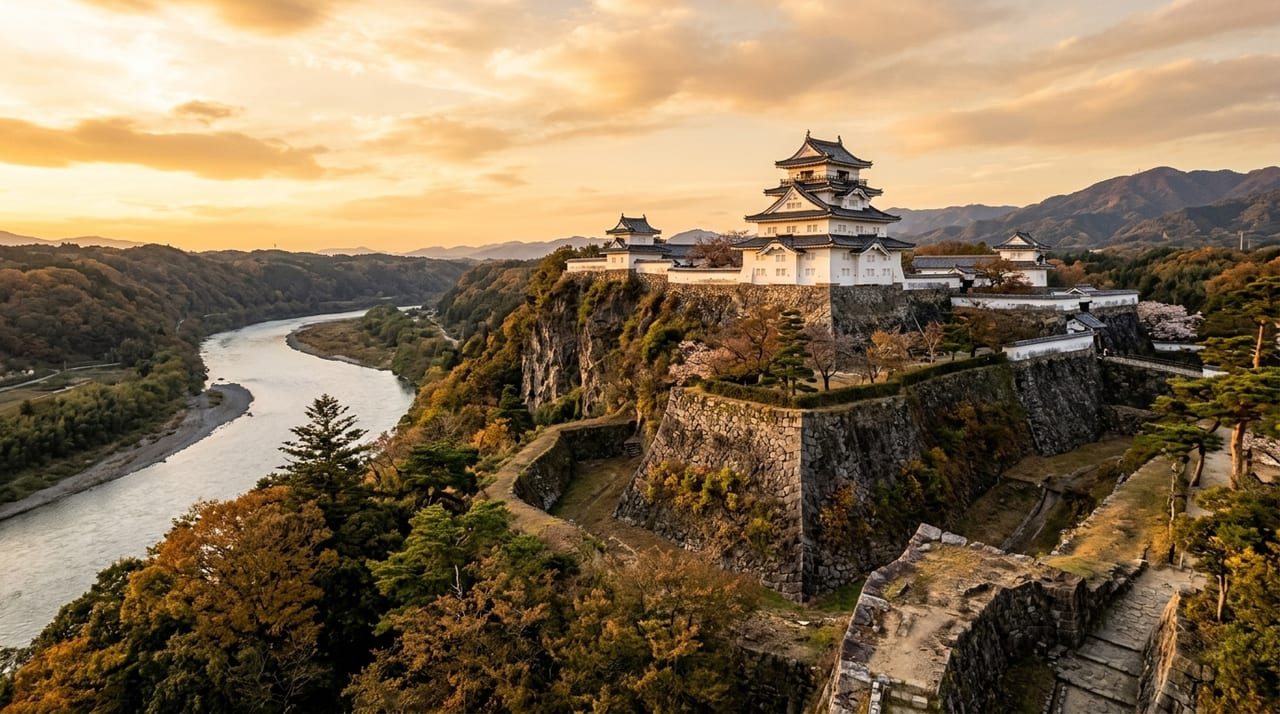
 * Image is for illustrative purposes only.
Hachigata Castle
鉢形城
Hachigata Castle is a historic castle in the Kantō region (Founded 1476 (Bunmei 8); surrendered to Toyotomi forces in 1590). Its lord was Nagao Kageharu / Hōjō Ujikuni.
Overview
Hachigata Castle is located in Yorii, Saitama Prefecture. It was built on a cliff where the Ara River bends sharply, and is one of the finest hill-plain castles in Kantō. The castle used the Ara River's natural defenses on three sides and protected only the south with large earthen ramparts and dry moats. Its layout functioned as the northernmost front-line fortress in the Later Hōjō's control of Kantō.
The castle is said to have been built by Nagao Kageharu in the 8th year of Bunmei (1476), but it became famous during the rule of Hōjō Ujikuni, son of Hōjō Ujiyasu. Ujikuni improved and expanded Hachigata Castle as the base for controlling northwestern Kantō, and developed the castle town. Earthen ramparts, dry moats, and other remains from the Later Hōjō period survive within the castle, and the site occupies an important place in the study of Sengoku-period castles in Kantō.
In the Odawara Campaign of the 18th year of Tenshō (1590), launched by Toyotomi Hideyoshi, Hachigata Castle withstood an approximately one-month siege by the combined forces of Maeda Toshiie and Uesugi Kagekatsu, estimated at 35,000 men. The garrison numbered about 3,000, and this defense is regarded as historical evidence of the strong defensive capability of the Hōjō side. In the end, Ujikuni surrendered the castle on condition that the garrison's lives be spared. After the war, he was placed in the custody of Maeda Toshiie and died in Kanazawa in Kaga Province in the 2nd year of Keichō (1597).
Today, the site is maintained as the Hachigata Castle History Museum and the Hachigata Castle Site Park, and its extensive grounds, designated as a nationally protected historic site, can be explored on foot. The Hachigata Castle ruins, where the majestic natural scenery along the Ara River coexists with Sengoku-period remains, are a popular historic destination among castle enthusiasts in Kantō.
Connection to Swords
Few historical records directly show a connection between Hachigata Castle and swords, but street names such as Tonohara Kōji and Kaji Kōji have been passed down around the castle site, suggesting that a small castle town developed there.
Sōshū-mono, which are important in Kantō's sword culture, originated in Sagami Province (present-day Kanagawa Prefecture), the same province as Odawara, the home base of the Later Hōjō.
The Hachigata Castle History Museum today introduces the castle's history and structure through videos and dioramas. The view of the Kantō Plain from the castle site on the Ara River cliffs gives a tangible sense of the expanse of the domain that the warlords of that era strove to defend.
Highlights
- Hachigata Castle History Museum — an introductory facility presenting the castle's history and structure through videos and dioramas
- Great earthen ramparts and dry moats — massive remains that preserve the Later Hōjō-school layout to the present day
- Ara River cliff views — natural-fortress terrain and a magnificent panorama from the castle site
- Hachigata Castle Site Park — a nature-rich park where visitors can stroll through the vast historic site
* Opening hours and admission fees are subject to change. Please check the official website before visiting.