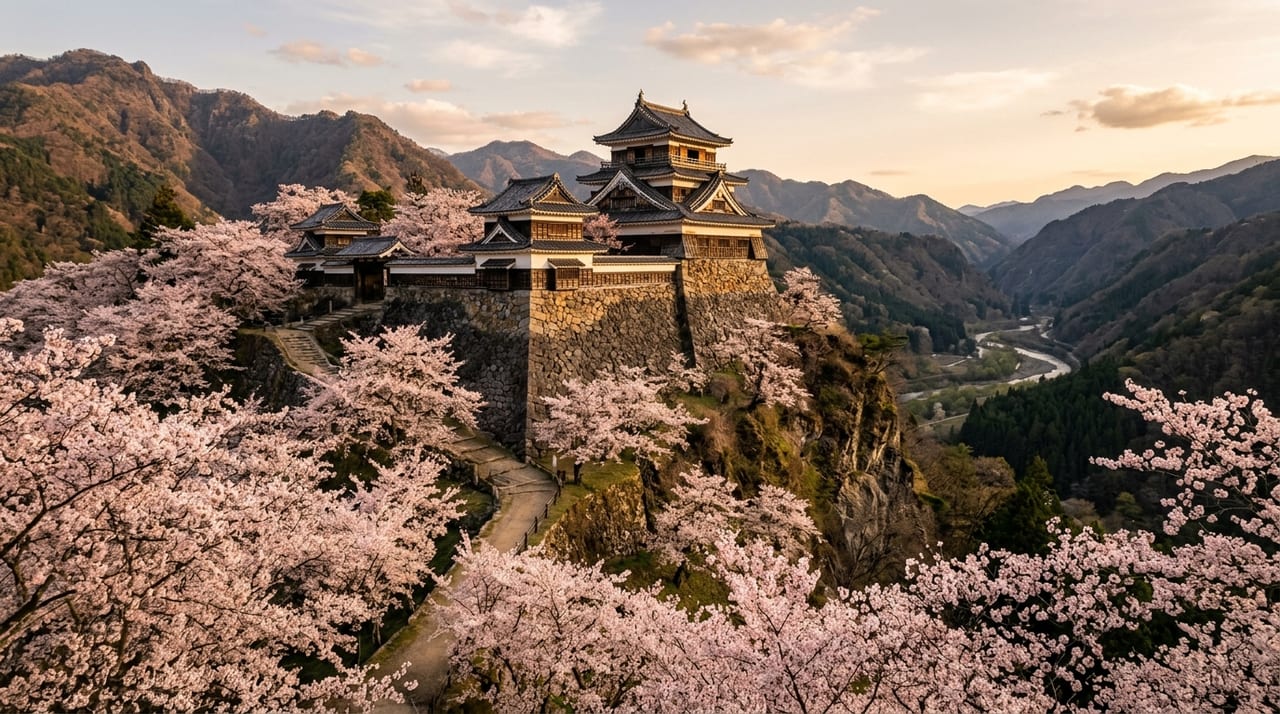
 * Image is for illustrative purposes only.
Tsuchiura Castle (Kame-jō)
土浦城(亀城)
Tsuchiura Castle (Kame-jō) is a historic castle in the Kantō region (Traditionally built during the Eikyō era (1429–1441) by Wakaizumi Saburō; abandoned in 1873 (Meiji 6) under the Meiji-era castle-abolition policy). Its lord was Wakaizumi Saburō; the Sugaya clan (Oda clan retainers, three generations); Yūki Hideyasu; the Matsudaira (Nobukazu, Nobuyoshi); the Nishio (Tadanaga, Tadateru); the Kutsuki (Tanetsuna, Tanemasa); the Tsuchiya clan (eleven generations from 1669).
Overview
Overview
Tsuchiura Castle, located in Chūō, Tsuchiura City, Ibaraki Prefecture, was a rinkaku-shiki (concentric-enclosure) flatland castle. Its many layers of encircling water moats gave it the appearance of a turtle floating on water, earning it the nickname "Kame-jō" (Turtle Castle). During the Edo period it served as the seat of Tsuchiura Domain until the Meiji Restoration.
History and Succession of Lords
Accounts of its founding vary, but it is traditionally said to have been built during the Eikyō era (1429–1441) of the Muromachi period by Wakaizumi Saburō, a local lord said to be descended from the Hitachi military governor Hatta Tomoie. During the Sengoku period, the Sugaya clan, retainers of the Oda clan, held the castle for three generations. In the Edo period, the castle passed through the hands of Yūki Hideyasu, the Matsudaira (Nobukazu and Nobuyoshi), the Nishio (Tadanaga and Tadateru), and the Kutsuki (Tanetsuna and Tanemasa) before the Tsuchiya clan took over from 1669, ruling Tsuchiura Domain for eleven generations over roughly 200 years. The castle was abandoned in 1873 (Meiji 6) under the Meiji government's castle-abolition policy.
Structure
The castle was defended by multiple concentric water moats fed by Lake Kasumigaura and its connecting rivers. Its surviving Taiko Yagura-mon (Drum Tower Gate) at the main enclosure was rebuilt in 1656 (Meireki 2) by the fifth lord, Kutsuki Tanetsuna, as a single-story, tile-roofed tower gate, taking its name from the drum kept on its second floor, which was struck to mark the time. It is said to be the only surviving example of a castle tower gate in the Kanto region. The Kasumi-mon gate (a Tsuchiura City Cultural Property) also survives, and the East and West turrets have been reconstructed in wood (in 1998 and 1990, respectively).
Cultural Property Status and the Continuation of 100 Fine Castles
On November 18, 1952, the site was designated Ibaraki Prefecture Historic Site No. 1 as "Tsuchiura Castle Ruins and Yagura-mon Gate." On April 6, 2017, it was selected as No. 113 in the Continuation of the 100 Fine Castles of Japan, chosen by the Japan Castle Foundation.
Present Condition
The area centered on the main enclosure has been developed as Kijō Park, a popular green space for local residents. The East turret now serves as an annex exhibition hall of the Tsuchiura City Museum. The site suffered partial damage in the 2011 Great East Japan Earthquake but was fully restored by June 2012. A 500-year-old zelkova tree known as "Kijō no Shii," an Ibaraki Prefecture Natural Monument, also survives on the grounds.
Connection to Swords
Highlights
- A concentric-enclosure flatland castle ringed by multiple water moats, likened to a turtle and nicknamed "Kame-jō"
- Traditionally built by Wakaizumi Saburō in the Eikyō era; ruled by the Tsuchiya clan for eleven generations over about 200 years in the Edo period
- The Taiko Yagura-mon (rebuilt 1656) is the only surviving castle tower-gate structure in the Kanto region
- Designated Ibaraki Prefecture Historic Site No. 1 in 1952
- Selected as No. 113 in the Continuation of the 100 Fine Castles of Japan in 2017
* Opening hours and admission fees are subject to change. Please check the official website before visiting.