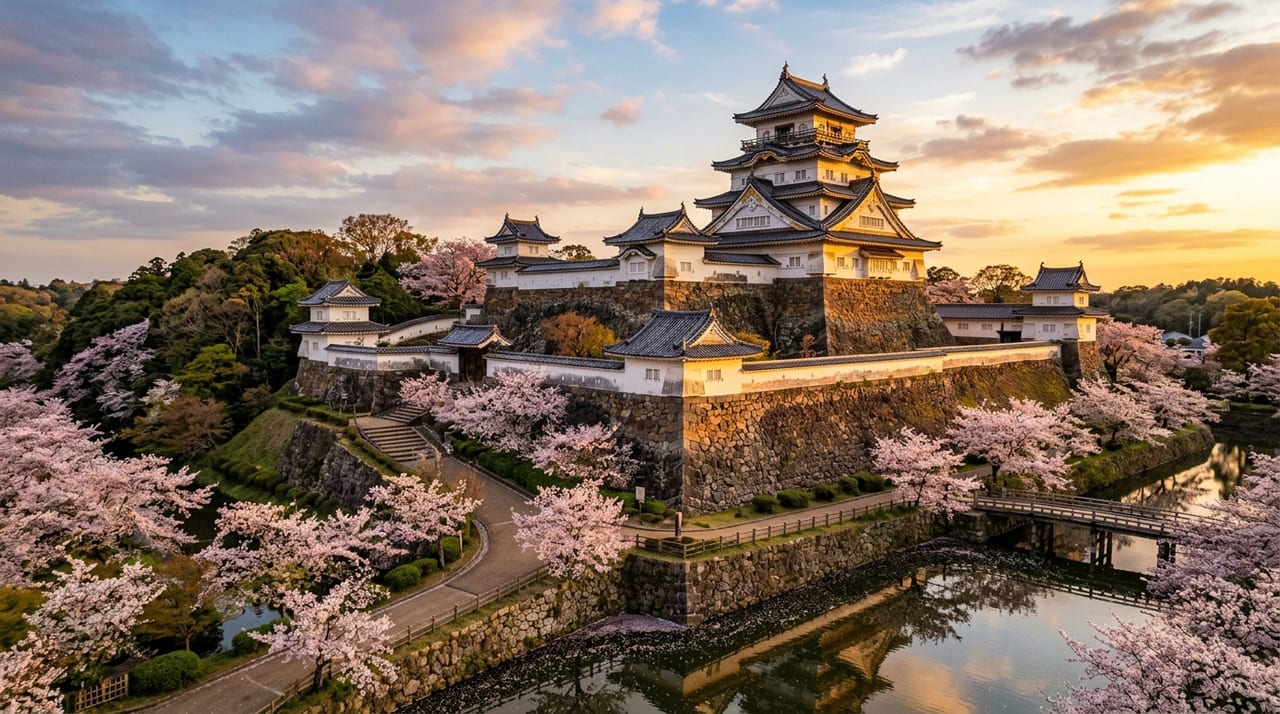
 * Image is for illustrative purposes only.
Sakura Castle
佐倉城
Sakura Castle is a historic castle in the Kantō region (Construction began in Keichō 15 (1610), completed in Genna 3 (1617)). Its lord was Doi Toshikatsu / Hotta Masamori / Hotta Masayoshi.
Overview
About Sakura Castle
Sakura Castle is an Edo-period hirayama castle located in Sakura, Chiba Prefecture. Because prominent families that served as senior councilors (rōjū), the bakufu's top posts, held the lordship one after another, it is known as the "Castle of the Senior Councilors," a castle of high prestige. In 1610 (Keichō 15), Doi Toshikatsu, a senior retainer of the Tokugawa family who was enfeoffed at Sakura, began construction, and it was completed in 1617 (Genna 3). Thereafter the Doi, Matsudaira, and Hotta families, among others, were enfeoffed here. Sakura had a particularly deep connection with the Hotta family; in the late Edo period, Hotta Masayoshi, who as chief senior councilor (rōjū shuza) negotiated the Japan–US Treaty of Amity and Commerce, was the lord of this castle.
The Role of the Senior Councilors' Castle
Sakura Castle is located about 40 km east of Edo. It was built on the Kashimayama plateau near Lake Inba and functioned for the Tokugawa bakufu as an important outer defensive line for the defense of Edo. The castle's layout centers on three-tiered baileys, combining multiple moats, earthen ramparts, and horse sally ports in a skillful design that shows the high standard of castle construction of the time. Throughout the early modern period, Sakura prospered as a post town on the Sakura Kaidō highway, and in the castle town, samurai residences, temples, and merchant houses were arranged in an orderly way.
Sakura Domain in the Late Edo Period
In the late Edo period, Hotta Masayoshi was an enlightened statesman who worked hard to conclude the Japan–US Treaty of Amity and Commerce while resisting pressure from the jōi (expel-the-barbarians) faction, which wanted to maintain the seclusion policy. However, with the rise of Ii Naosuke, he lost his post as senior councilor, and his policy line was temporarily thwarted. Masayoshi's foresight and tragic political fate embody the inner conflict of samurai who sought modernization amid the upheaval of the late Edo period. Sakura Domain was also a major center of Dutch learning (rangaku: Dutch medicine and science). From the Dutch-learning academy Juntendō, founded in Sakura by Satō Taizen as the forerunner of today's Juntendō University, many outstanding physicians emerged, including Satō Takanaka.
The Castle Remains and Park
Today, the Sakura Castle ruins have been developed as "Sakura Jōshi Park," where remains such as the site of the honmaru, earthen ramparts, moats, and horse sally ports are preserved in good condition. Within the park is the National Museum of Japanese History (Rekihaku), which, as one of Japan's leading museums where Japanese history and folk culture can be studied comprehensively, attracts many visitors. In spring, the cherry trees in the castle ruins park come into full bloom.
Samurai Residences and the Castle Town
Near the castle ruins park, three Edo-period samurai residences are preserved and open to the public, carrying down to the present the way of life of Sakura Domain retainers of that time. Among the towns of Chiba, Sakura is one where Edo-period castle-town culture remains especially strong. It has a rich historical environment, including the samurai residences, the former Hotta residence, and the bamboo grove of Hiyodori-zaka, where one can experience Edo samurai culture simply by strolling.
Access and Tourism
Sakura enjoys good access, about 60 to 70 minutes from Tokyo on the JR Sōbu Main Line, making it an ideal destination for day-trip historical tourism from the Tokyo metropolitan area. Combining the rich exhibits of the National Museum of Japanese History, a stroll through the castle ruins park, and a visit to the samurai residences makes a full course for spending a day savoring Japanese history and culture at a leisurely pace.
Connection to Swords
Sakura Castle was the seat of fudai daimyō who produced many senior councilors throughout the Edo period, and eight of the Sakura domain lords became senior councilors. Samurai residences that convey the lives of Sakura Domain retainers remain in the castle town, and at the National Museum of Japanese History, built on the castle ruins, one can learn about Japanese history and samurai culture.
Highlights
- National Museum of Japanese History (Rekihaku) — A history museum of the highest level in Japan, where Japanese history and folk culture can be studied comprehensively
- Cherry blossoms at Sakura Jōshi Park — Spring scenery that adorns the castle ruins
- Former Hotta Residence — A Japanese-Western style residence built in the Meiji period for Hotta Masatomo, the last lord of Sakura Domain
- Samurai residences (three buildings remain) — Houses that convey the lives of Sakura Domain retainers in the Edo period
- Remains of earthen ramparts and horse sally ports — Preserve the layout of early Edo-period castle architecture to the present day
* Opening hours and admission fees are subject to change. Please check the official website before visiting.