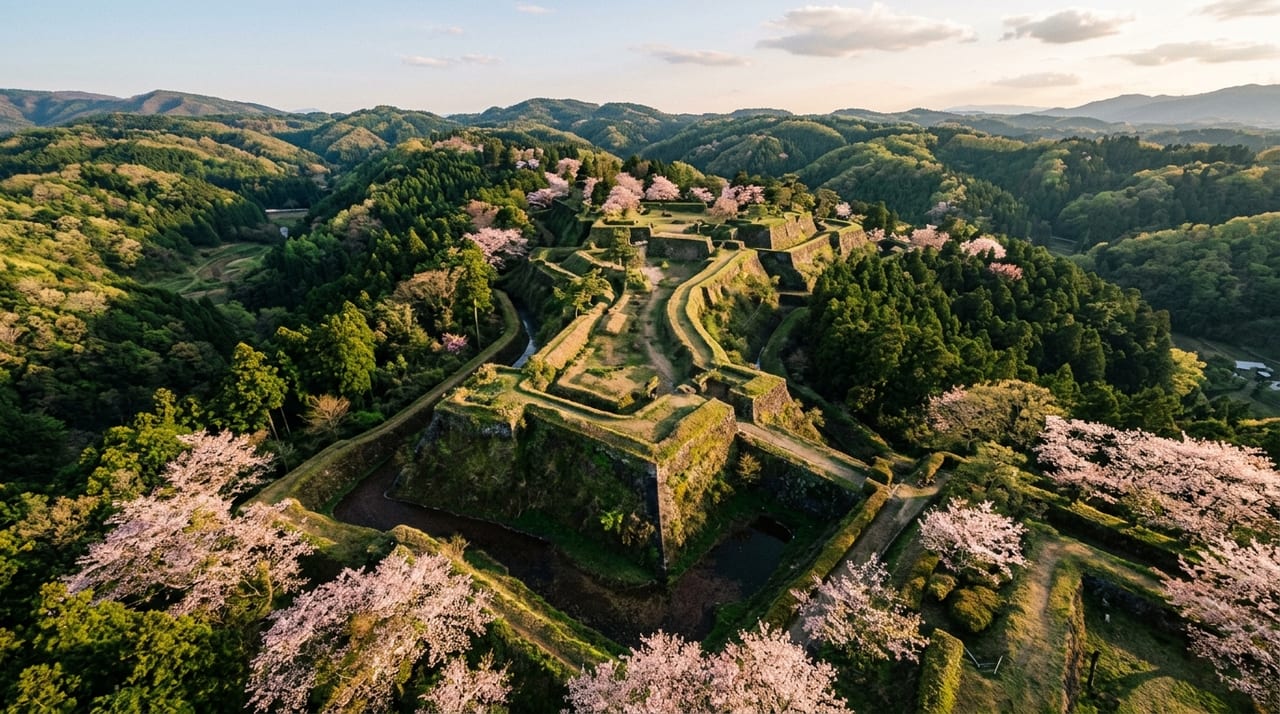
 * Image is for illustrative purposes only.
Takiyama Castle
滝山城
Takiyama Castle is a historic castle in the Kantō region (Said to have been built by the Ōishi clan in Daiei 1 (1521) (various theories exist). Around Tenshō 15 (1587), Hōjō Ujiteru moved to Hachiōji Castle). Its lord was Hōjō Ujiteru.
Overview
Takiyama Castle is a hirayama-jō (hilltop-and-plain castle) located in present-day Hachiōji City, Tōkyō. It was a key strategic point for western defense in the Later Hōjō clan's control of the Kantō region, taking advantage of the terraces and valley terrain of the Aki River, a tributary of the Tama River. It is known as a castle developed by Hōjō Ujiteru, the third son of Hōjō Ujiyasu, the third head of the Later Hōjō clan, and it is highly regarded by castle researchers as a famous castle with sophisticated civil engineering and an intricate nawabari (layout).
The castle's defining feature is its layout, which makes the most of the terraces and valley terrain formed by a tributary of the Tama River. The main castle centers on Naka-no-maru, and its large castle grounds, where numerous enclosure groups such as Komiya enclosure, Senjōjiki, and umadashi enclosure stretch in a series, display the finest of Later Hōjō-style layout techniques. Even today, most of it is preserved as hill forest.
Partly because weaknesses in its defenses were exposed by Takeda Shingen's attack in Eiroku 12 (1569) (various theories exist), Ujiteru built the new Hachiōji Castle and moved his base there around Tenshō 15 (1587), and Takiyama Castle's importance declined relatively. Then, during the Odawara campaign of Tenshō 18 (1590) led by Toyotomi Hideyoshi, many of the Hōjō side's castles surrendered or were abandoned, and Takiyama Castle likewise met the fate of abandonment.
The site is currently designated a national Historic Site as the 'Takiyama Castle Ruins'. It is a popular spot, especially in the cherry blossom season from March to April, when many hanami visitors come. Remains of the Later Hōjō clan's layout, including earthen ramparts (dorui), dry moats (karabori), and masugata, survive in good condition, and the site is beloved as a famous place for historical walks near Tōkyō.
Connection to Swords
Takiyama Castle's connection to swords is closely tied to the warrior culture of the Later Hōjō clan and the history of sword distribution in the Kantō region. Hōjō Ujiteru was a figure who combined military ability with cultural refinement, and he helped establish the sword culture of the Later Hōjō clan, which was based in Sōshū (Odawara), in the castle town of Takiyama as well.
Sōshū-mono is a sword tradition that began in the late Kamakura period with smiths such as Shintōgo Kunimitsu and Masamune, and by ruling Sagami Province, the Later Hōjō clan became heirs to this sword culture. Takiyama Castle was a base for the Later Hōjō clan's western defense.
In the Hachiōji area, from the Muromachi to the Edo period, sword smiths known as the Shimohara smiths (Shimohara-tō) were active.
The Takiyama Castle ruins and the Hachiōji Castle ruins can both be visited as historic sites associated with Hōjō Ujiteru.
Highlights
- Naka-no-maru's earthen ramparts and dry moats — major remains that embody the finest of Later Hōjō-style layout
- umadashi enclosure — the Later Hōjō clan's distinctive defensive facilities, well preserved
- Cherry blossom spot — among the finest cherry blossom views in Tama during the April hanami season
- Views of the Tama and Aki Rivers — vistas of the river terrain that formed part of the castle's defenses
- Expansive castle grounds — a historical hike through the forest, touring the remains
- Nearby Hachiōji Castle ruins — Ujiteru's final castle, to which he moved from Takiyama, is also close by
* Opening hours and admission fees are subject to change. Please check the official website before visiting.