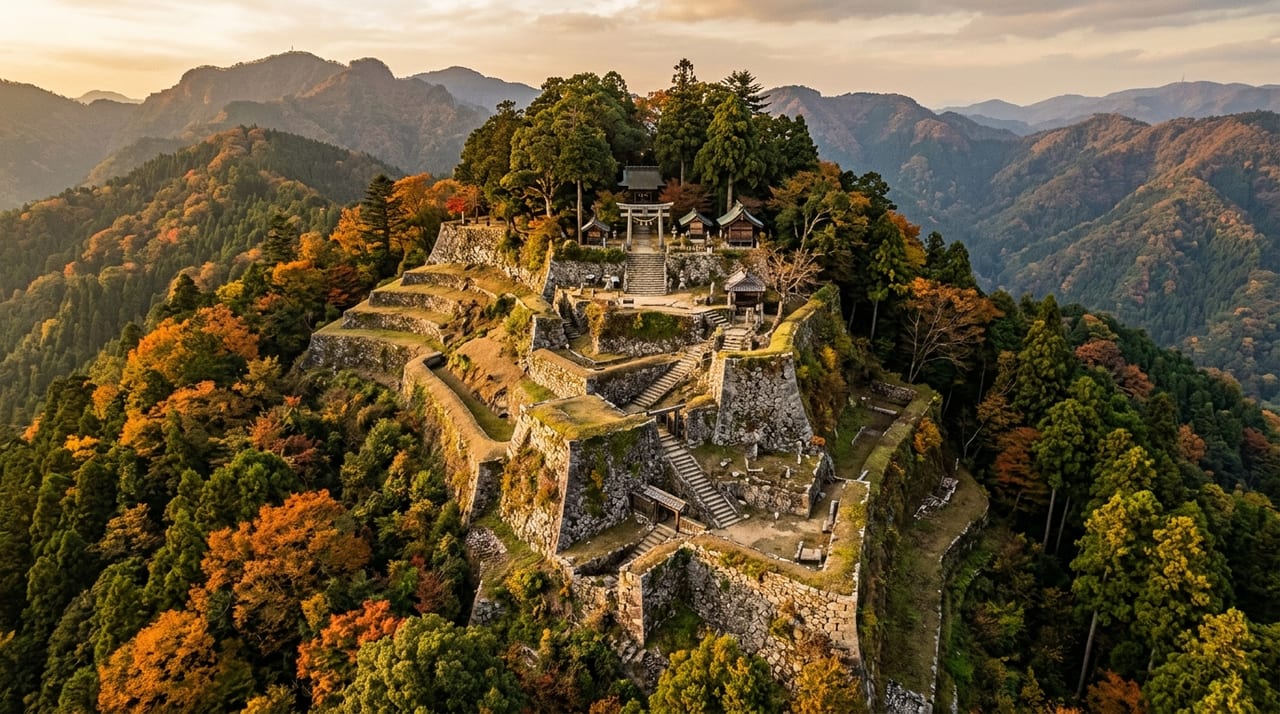
 * Image is for illustrative purposes only.
Oda Castle
小田城
- Lord
- The Oda clan of Hitachi (descendants of Hatta Tomoie)
- Era
- Said to have been built in 1185 (Bunji 1); abandoned in 1602 (Keichō 7)
- Designation
- National Historic Site (designated June 7, 1935)
- Location
- Oda, Tsukuba City, Ibaraki Prefecture
- Access
- Oda, Tsukuba City, Ibaraki Prefecture.
Oda Castle is a historic castle in the Kantō region (Said to have been built in 1185 (Bunji 1); abandoned in 1602 (Keichō 7)). Its lord was The Oda clan of Hitachi (descendants of Hatta Tomoie).
Overview
Overview
Oda Castle stood in Oda, Tsukuba City, Ibaraki Prefecture. It was the seat of the Oda clan, who governed southern Hitachi from the Kamakura period to the Sengoku period. It served as a stronghold of the Southern Court during the Nanboku-chō period and is known as the castle that Kitabatake Chikafusa entered. The castle site is a National Historic Site.
Founding and the Oda Clan
It is said that in 1185, Hatta Tomoie, a retainer of Minamoto no Yoritomo, was appointed shugo of Hitachi Province, established a residence at Oda, and built the castle. His descendants afterward took the name Oda and made this castle their base for generations.
The Nanboku-chō Period and Kitabatake Chikafusa
Oda Haruhisa, the head of the clan at that time, belonged to the Southern Court faction. Kitabatake Chikafusa, a central figure of the Southern Court, landed by sea at Shida no Shō, entered Oda Castle, and sought to restore Southern Court power in the eastern provinces. It is well known that Chikafusa wrote the Jinnō Shōtōki while at Oda Castle, and a stone monument inscribed "Place Where the Jinnō Shōtōki Was Begun" stands at the site.
Conflicts in the Sengoku Period
Oda Ujiharu, the head of the clan in the Sengoku period, fought against the Satake, Taga, Makabe, Uesugi Kenshin, the Later Hōjō, and others, and the castle was repeatedly captured and recovered. In 1569, after the Oda were defeated at the Battle of Tebaizaka, the castle passed into the hands of the Satake, and the Oda never regained it. In 1602, when the Satake were transferred to Akita, the castle was abandoned.
Structure
It is thought that the castle originally began as a single-enclosure residence centered on the main enclosure (honmaru), surrounded by moats and earthen ramparts, and was expanded during the Sengoku period. The main enclosure is a rectangle measuring about 120 meters east to west and about 140 meters north to south, surrounded by earthen ramparts and moats, with turret platforms at the corners. The gates had umadashi and masugata, and shōji-bori (shōji moats) were found at the bottom of the water moats. Excavations confirmed triple moats and enclosures of various sizes, and remains of a garden containing two ponds were found within the main enclosure.
Present Condition
The castle site was designated a National Historic Site in 1935. Excavations began in 1997, and on April 29, 2016, it opened as the Oda Castle Site History Plaza. The enclosure remains on the south side are well preserved, and features such as the umadashi have been restored.
Connection to Swords
No source tying the castle to a specific sword has been confirmed. It was the seat of a warrior house that fought repeated contests in southern Hitachi.
Highlights
- Said to have been built by Hatta Tomoie in 1185
- Where Kitabatake Chikafusa entered and wrote the Jinnō Shōtōki
- A Sengoku castle repeatedly lost and retaken by Oda Ujiharu
- Excavations confirmed triple moats and garden remains
- National Historic Site since 1935; opened as a history plaza in 2016
* Opening hours and admission fees are subject to change. Please check the official website before visiting.