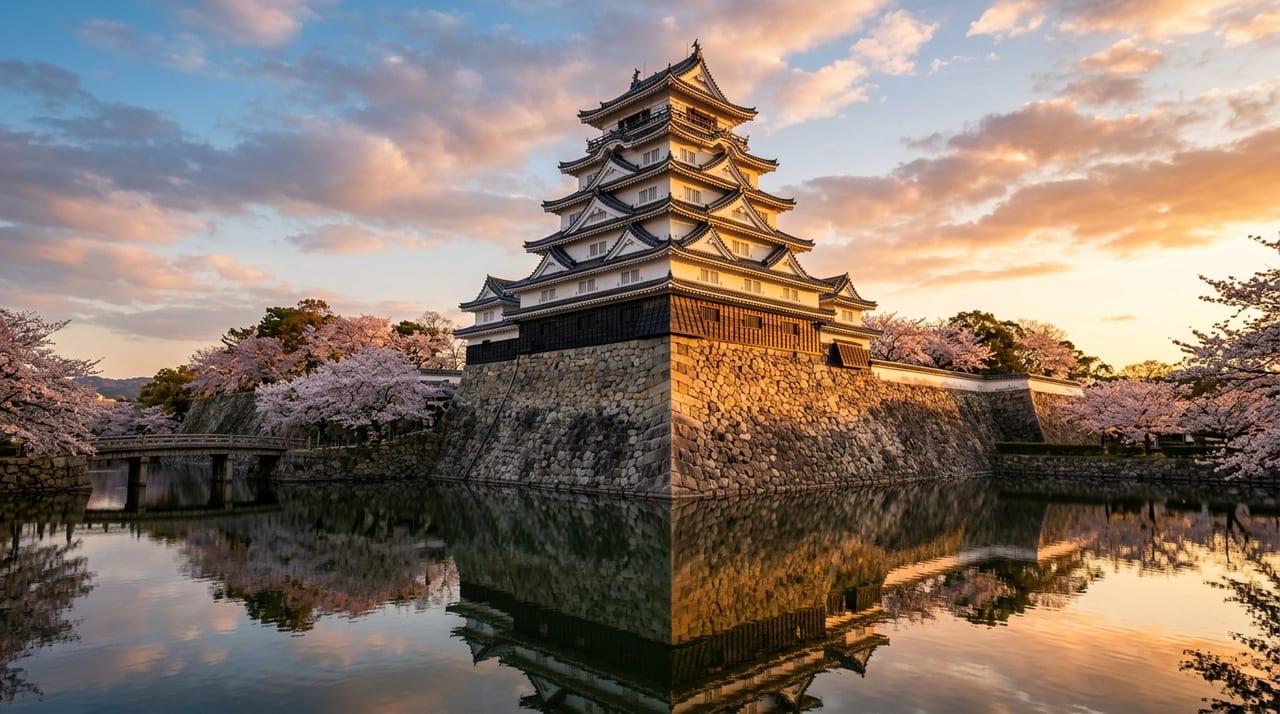
 * Image is for illustrative purposes only.
Kisai Castle
騎西城
- Lord
- Matsudaira Yasushige and Okubo Tadatsune and Tadamoto (lords in the Edo period)
- Era
- Attacked by Ashikaga Shigeuji in 1455 (Kosho 1); abolished in 1632 (Kan'ei 9)
- Designation
- Kazo City Historic Site "Kisai Castle Earthwork Remains" (designated 16 March 1992)
- Location
- Kisai, Kazo, Saitama Prefecture
Kisai Castle is a historic castle in the Kantō region (Attacked by Ashikaga Shigeuji in 1455 (Kosho 1); abolished in 1632 (Kan'ei 9)). Its lord was Matsudaira Yasushige and Okubo Tadatsune and Tadamoto (lords in the Edo period).
Overview
Overview
Kisai Castle stood at Kisai in Kazo, Saitama Prefecture. In 1455 (Kosho 1), Ashikaga Shigeuji, the Koga kubo, attacked the Uesugi-side forces gathered at Kisai.
From the Sengoku period to the Edo period
In 1563 (Eiroku 6) it was attacked by Uesugi Kenshin, and the castle is said to have been burned. In the Edo period it was held first by Matsudaira Yasushige (20,000 koku) and then by Okubo Tadatsune and Tadamoto. The castle was abolished in 1632 (Kan'ei 9), when Tadamoto was transferred to Kano in Mino.
Remains and cultural properties
Earthworks of the castle survive and are designated as the "Kisai Castle Earthwork Remains", a Kazo City Historic Site (located in Kazo, designated 16 March 1992). The earthwork is the only surviving remnant of the castle. The "Memorial Tablet of Okubo Tadatsune", held by Myoko-ji temple in Kazo, was designated a City Tangible Cultural Property on the same day.
Highlights
- Earthwork remains — preserved as a Kazo City Historic Site
- 1455 — Ashikaga Shigeuji, the Koga kubo, attacked the Uesugi-side forces gathered at Kisai
- Memorial Tablet of Okubo Tadatsune — a City Tangible Cultural Property held by Myoko-ji
* Opening hours and admission fees are subject to change. Please check the official website before visiting.