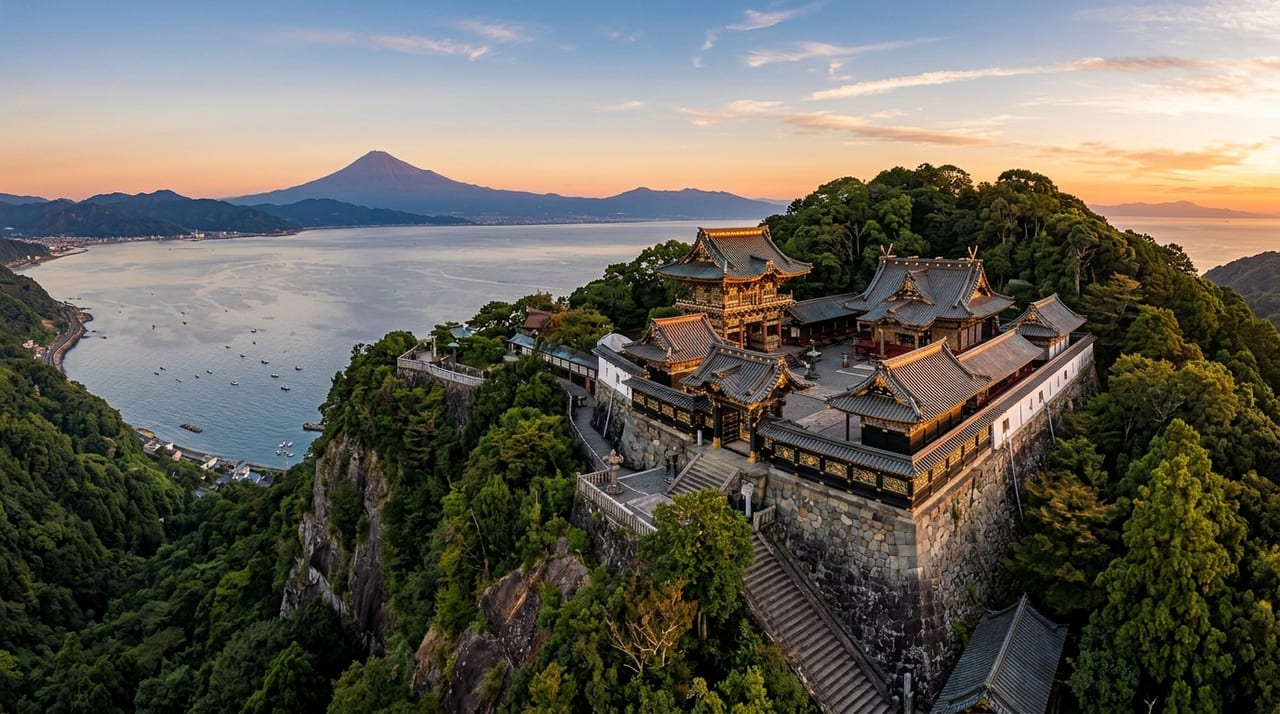
 * Image is for illustrative purposes only.
Sekiyado Castle
関宿城
Sekiyado Castle is a historic castle in the Kantō region (Built in 1457 (Chōroku 1)). Its lord was Koga Kubō (Yanada clan) / Hōjō clan / Hisamatsu-Matsudaira clan.
Overview
Key Position on the Kantō Plain
Sekiyado Castle is a water castle located at the point where the Tone and Edo Rivers diverge. It is said to have been built in Chōroku 1 (1457) by Yanada Shigesuke, who served Koga kubō Ashikaga Shigeuji. Because the Tone and Edo Rivers split at this location, it was a key hub of water transport in Kantō and was the scene of fierce contests throughout the Sengoku period. Its geopolitical value was immense; Hōjō Ujiyasu is said to have remarked that seizing this place was equivalent to acquiring an entire province.
Sengoku-Era Struggles
Sekiyado Castle became the stage for a contest between the Hōjō clan and the Yanada family, which was supported by Uesugi Kenshin and Satake Yoshishige. Kenshin campaigned into Kantō repeatedly from Eiroku 3 (1560) onward and was deeply involved in the struggle over Sekiyado Castle. Because the Yanada family turned to Kenshin to oppose the Hōjō clan, Sekiyado Castle became the front line of the Hōjō versus Kenshin coalition. In the First Battle of Sekiyado in Eiroku 8 (1565), Kenshin and Satake Yoshishige sent troops to relieve Yanada Harusuke, and the Hōjō forces withdrew. In Tenshō 2 (1574), Hōjō Ujiteru and Hōjō Ujimasa captured Sekiyado Castle, and thereafter it functioned as the eastern base of Hōjō control over Kantō.
Sekiyado in the Tokugawa Era
After the fall of the Odawara Hōjō clan in Tenshō 18 (1590), Sekiyado came under Tokugawa control, and the Hisamatsu Matsudaira family (Matsudaira Yasumoto) was enfeoffed there as domain lords. Developed as the Sekiyado Domain, the castle played an important role for the Edo shogunate as a base for managing flood control on the Tone River and the transport of goods to Edo. Water transport on the rivers flourished in the castle town, and products from across Kantō were carried through Sekiyado to Edo. In the late Edo period, the Kuze family, lords of the Sekiyado Domain, produced rōjū, giving the domain considerable influence over shogunal politics.
Sekiyado Castle Today
The castle was abandoned after the Meiji Restoration, and much of its remains were subsequently lost to river improvement works on the Tone River and to floods. On the embankment at the fork where the Tone and Edo Rivers divide, the Chiba Prefectural Sekiyado Castle Museum opened in Heisei 7 (1995). The museum has a three-story exterior modeled on a tenshu (keep) and displays the river culture of the Tone and Edo Rivers and the history of Sekiyado. From the rooftop observation deck, visitors can see the grand flow of the Tone River and Mount Tsukuba, experiencing the geographic character of the castle's former role as a water castle. About 500 meters south of the museum, a monument stands at the site of the Honmaru (main enclosure).
Connection to Swords
The connection between Sekiyado Castle and sword culture is found in the practical arms culture of the Sengoku period, when the warrior bands of Kantō clashed. At Sekiyado Castle, where the Yanada, Hōjō, and Uesugi forces fought, many swords used in combat by Kantō warriors were employed. The Hōjō clan patronized swordsmiths of Sagami. Uesugi Kenshin was also known as a connoisseur of famous swords, and his surviving possessions include masterpieces from Bizen and Sōshū. Among the swords Kenshin is said to have brought from Echigo on his Kantō campaigns were some masterpieces that have been handed down to later generations. During the Sengoku period, when Sekiyado Castle was in use, swordsmiths of Kantō were also active, and smiths of Sōshū and Bushū met the practical demand of eastern warriors.
Highlights
- Chiba Prefectural Sekiyado Castle Museum — three-story replica keep; exhibits on river culture and Sekiyado history
- Rooftop observation deck — panoramic view of the Tone River and Mount Tsukuba
- Sekiyado Castle Honmaru site — castle ruin about 500 meters south of the museum, marked by a monument
- Fork of the Tone and Edo Rivers — a water transport hub from the Sengoku period to the present
- Riverside cycling routes — cycling along the Tone River and visits to historic sites
* Opening hours and admission fees are subject to change. Please check the official website before visiting.