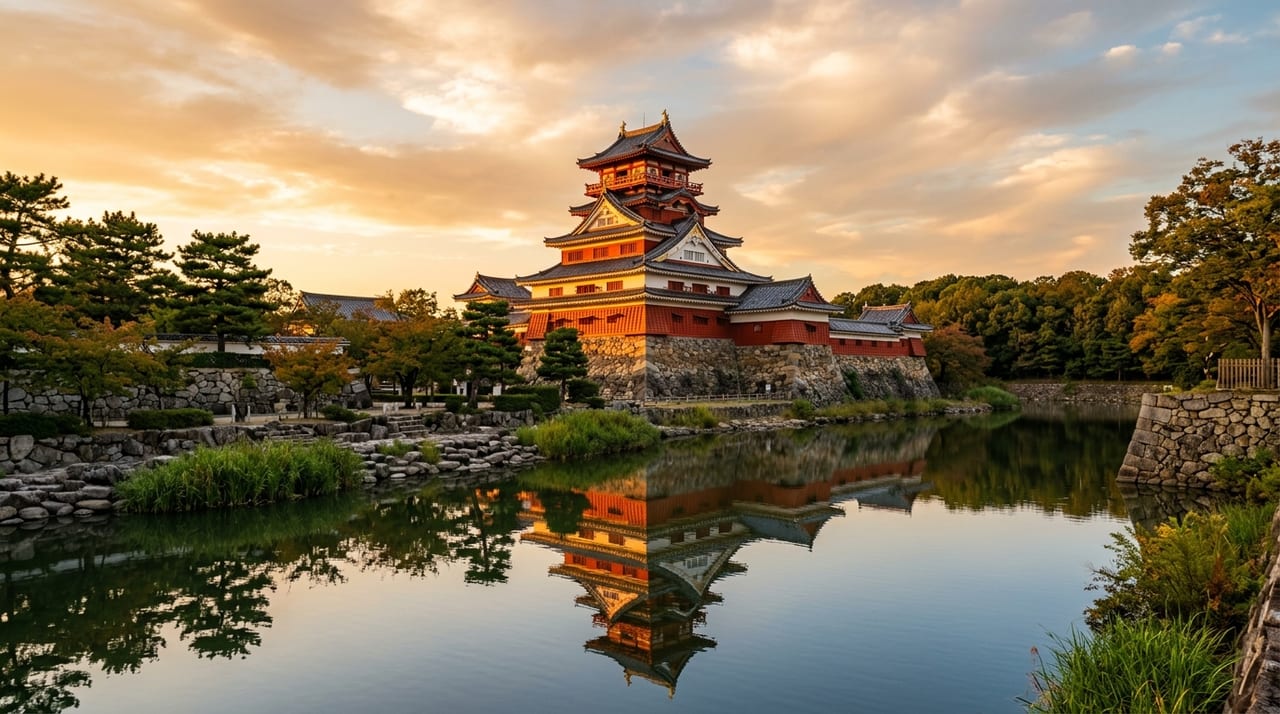
 * Image is for illustrative purposes only.
Karasuyama Castle
烏山城
- Lord
- The Nasu clan (Shimo-Nasu line), later the Narita, Itakura, Ōkubo and others
- Era
- Built in 1418 (Ōei 25); abandoned in 1869 (Meiji 2)
- Designation
- National Historic Site (designated March 20, 2023)
- Location
- Nasukarasuyama City, Tochigi Prefecture
- Access
- Nasukarasuyama City, Tochigi Prefecture.
Karasuyama Castle is a historic castle in the Kantō region (Built in 1418 (Ōei 25); abandoned in 1869 (Meiji 2)). Its lord was The Nasu clan (Shimo-Nasu line), later the Narita, Itakura, Ōkubo and others.
Overview
Overview
Karasuyama Castle was a mountain castle in Nasukarasuyama City, Tochigi Prefecture, first the seat of the Nasu clan and later the castle of the Edo-period Karasuyama Domain. It was built on Mount Hachikō at an elevation of about 206 meters and had no tenshu keep. It was designated a National Historic Site in 2023.
Founding and the Nasu Clan
It is said to have been built in 1418 (Ōei 25) by Nasu Sukeshige of the Shimo-Nasu line. Sukeshige was the younger brother of Nasu Sukeyuki and was also known as Sawamura Gorō. It subsequently became the seat of the Nasu clan. In 1590 (Tenshō 18), the Nasu failed to join Toyotomi Hideyoshi's Odawara campaign and were dispossessed.
Later Lords
After Oda Nobukatsu had stayed for about two months, Narita Ujinaga entered the castle in 1591 (Tenshō 19). The Narita were reduced in holdings after a dispute over the succession, and in 1622 (Genna 8) they were dispossessed following the sudden death of their head and the lack of an heir. Thereafter the lords of the castle changed: Matsushita Shigetsuna, Hori Chikayoshi and Chikamasa, Itakura Shigenori and Shigetane, Nasu Sukemitsu, Nagai Naohiro, and Inagaki Shigetomi and Akikata. From 1725 (Kyōhō 10), the Ōkubo clan held the castle until the Meiji Restoration.
Structure
The honmaru and ninomaru were placed on the summit, and enclosures known as the "Five Castles and Three Baileys" (gojō sankaku) were arranged around them. In 1659 (Manji 2), Hori Chikamasa added a third enclosure at the eastern foot of the mountain, and built a residence and a tamon yagura (multi-story turret-wall).
Present Condition
In 1869 (Meiji 2), with the return of the domains to the emperor, the castle was abandoned. It is now developed as a prefectural natural park, and its stone walls and earthworks remain in good condition. The Jinchōmon, formerly the rear gate (karamete-mon), was relocated and survives.
Highlights
- Said to have been built in 1418 by Nasu Sukeshige of the Shimo-Nasu line
- A mountain castle on Mount Hachikō with no tenshu
- Held by lords from the Narita to the Ōkubo after the Nasu were dispossessed
- Enclosures known as the "Five Castles and Three Baileys"
- National Historic Site since 2023
* Opening hours and admission fees are subject to change. Please check the official website before visiting.