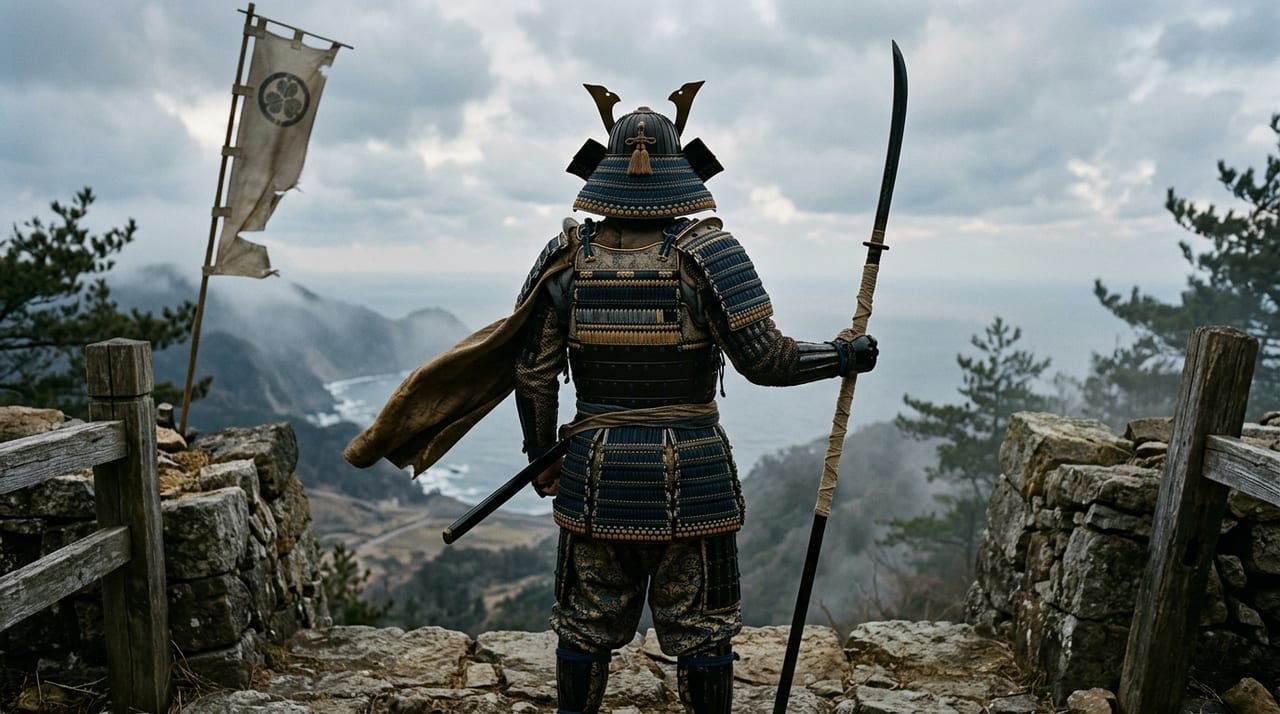
 * Image is for illustrative purposes only.
Hojo Ujiteru
北条氏照
Commander of the Late Hojo, Lord of Hachioji Castle
Description
Life and Origins
Hōjō Ujiteru was born in Tenbun 11 (1542) as the third son of Hōjō Ujiyasu, the second head of the Late Hōjō (Odawara Hōjō) clan. The Late Hōjō (Odawara Hōjō) clan traced its line back to Sōun and was a representative sengoku daimyō house of the Kantō region. Around Eiroku 2 (1559), Ujiteru was adopted by Ōishi Sadahisa, a local lord of Musashi Province, and inherited the headship and domains of the Ōishi clan, which was based in Musashi Province.
From Takiyama Castle to Hachiōji Castle
As head of the Ōishi clan, Ujiteru sought to expand his influence into northern Kantō, with Takiyama Castle in Tama District, Musashi Province, as his main base. In Eiroku 12 (1569), when Takeda Shingen attacked Odawara, a large army led by Shingen approached Takiyama Castle, and Ujiteru held it off. Having felt the limits of Takiyama Castle's defenses through this experience, Ujiteru resolved to build a stronger castle and moved his base to nearby Hachiōji Castle (present-day Hachiōji City, Tokyo) by around Tenshō 15 (1587). Hachiōji Castle was a mountain castle that made the fullest use of the natural strength of its terrain.
Administration of Northern Kantō and Diplomatic Activities
Ujiteru was not merely a military commander; he also played an important role in the diplomacy of the Late Hōjō (Odawara Hōjō) clan. He carried out a wide range of diplomatic activities, including negotiations with powerful rivals such as Takeda Shingen and Uesugi Kenshin, and talks with the Satake clan of Hitachi Province and the Utsunomiya clan of Shimotsuke Province. In Tenshō 2 (1574), he also became deeply involved in governing northern Kantō as the supporting guardian of Koga kubō Ashikaga Yoshiuji. He was known for his warm character, and a well-known anecdote tells that when Matsuhime (Shinshōni), a daughter of Takeda Shingen, fled to Hachiōji after the fall of the Takeda clan, he gave her generous protection.
The Odawara Campaign and Final Days
In Tenshō 18 (1590), when Toyotomi Hideyoshi began the Odawara Campaign, Ujiteru held out in Odawara Castle together with his elder brother Hōjō Ujimasa. During this time, Hachiōji Castle was attacked by an allied force of 15,000 led by Maeda Toshiie, Uesugi Kagekatsu and Sanada Masayuki, and it fell in just one day. The 'Fall of Hachiōji Castle', in which the defending commanders and many women took their own lives, is remembered as one of the greatest tragedies in Kantō. Odawara Castle was also forced to surrender on the 5th day of the 7th month of that year, and on the 11th day of the same month Ujiteru was ordered to commit seppuku together with his elder brother Ujimasa. He died at the age of 49.
Later Assessment
As a loyal warrior who shared the fate of the Late Hōjō (Odawara Hōjō) clan when it fell, Hōjō Ujiteru left a firm mark on the history of Kantō. The site of Hachiōji Castle is still maintained as a National Historic Site and conveys the history of the Hōjō clan, including that of Ujiteru.