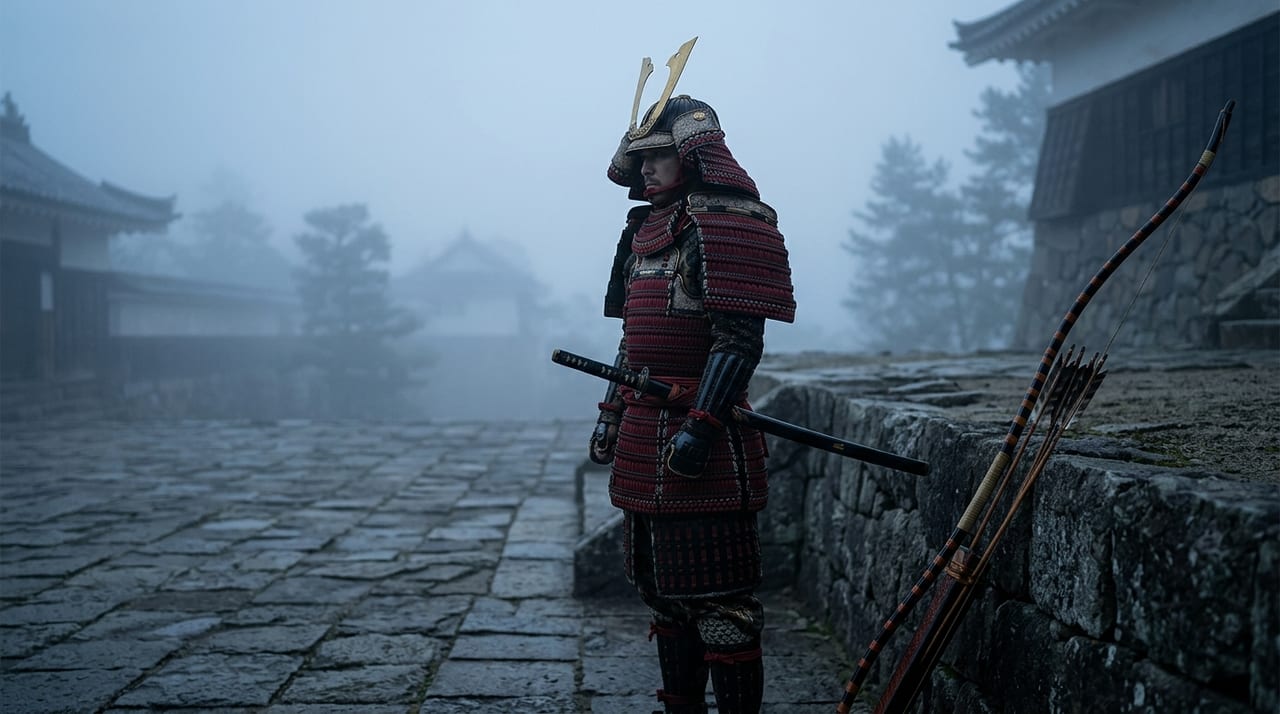
 * Image is for illustrative purposes only.
Oichi no Kata
お市の方
Younger Sister of Oda Nobunaga, Renowned as the Greatest Beauty of the Sengoku Era, Who Experienced the Fall of Two Castles
Description
Nobunaga's Sister, Celebrated as the Most Beautiful Woman of the Warring States
Oichi no Kata (1547–1583) was born in Owari as the younger sister of Oda Nobunaga (according to one account, his younger female cousin). Her common name was Ichi, and in later times she was celebrated as “the most beautiful woman of the Sengoku period.” Although the traditions about her appearance are not based on reliable portraits from her own time, her eventful and ill-fated life, which saw two castles fall during the turbulent Sengoku era, left a deep impression on people in later generations.
Marriage to Asai Nagamasa
Around Eiroku 10 (1567), Nobunaga made an alliance with Asai Nagamasa, a Sengoku daimyō of northern Ōmi, and married Ichi to Nagamasa. Although it was a political marriage, Ichi and Nagamasa were close, and they had three daughters (Chacha, Hatsu, and Gō). However, when Nobunaga and Nagamasa broke with each other in Genki 1 (1570), Ichi was caught in the middle, placed in a position linking the two lords. When Odani Castle fell in Tenshō 1 (1573), Nagamasa took his own life, and Ichi was rescued along with her three daughters and taken back into the Oda family.
Remarriage to Shibata Katsuie and the Fall of Kitanoshō Castle
After Nobunaga fell in the Honnōji Incident in Tenshō 10 (1582), Ichi remarried Shibata Katsuie, a senior retainer of the Oda family. But in the following year, Tenshō 11 (1583), Katsuie fought Hashiba Hideyoshi at the Battle of Shizugatake and was defeated, and he shut himself up in Kitanoshō Castle in Echizen. As Hideyoshi's army surrounded the castle, Ichi sent her daughters out of the castle, while she herself chose to remain with Katsuie. On the 24th day of the fourth month, she took her own life together with her husband. She is said to have been aged 37 by East Asian reckoning.
A Lineage Carried On by Her Three Daughters
Ichi's three daughters each lived lives that symbolized the turbulent age. The eldest, Chacha, became the concubine of Toyotomi Hideyoshi, known as Yodo-dono, and bore Toyotomi Hideyori. The second, Hatsu, became the principal wife of Kyōgoku Takatsugu. The third, Gō, became the principal wife of Tokugawa Hidetada and bore the third shogun Iemitsu. The fact that Ichi's blood flowed into both the Toyotomi and the Tokugawa, the two great powers, symbolizes the transition of the age from the Sengoku period to the Edo period.
Connection with Swords
Reliable historical records that identify the swords personally worn by Oichi no Kata are scarce. However, women of samurai families in the Sengoku period had a custom of carrying a kaiken (short dagger) for self-protection when they married, and it was regarded as a symbol of their resolve to protect their own chastity and their family's honor in times of need. Ichi's life, which saw two castle falls and ended with her choosing to take her own life alongside her husband, conveys to the present day that the kaiken for samurai women was a spiritual pillar that went beyond a mere weapon.
Notable Swords
- Kaiken (short blade) of a warrior-class woman—a protective sword carried by women of warrior families upon marriage in the Sengoku period. Although reliable records identifying a sword personally carried by Oichi are scarce, her life—experiencing the fall of two castles and ultimately choosing to die by her own hand—illustrates that for warrior-class women the kaiken was a symbol of chastity and resolve