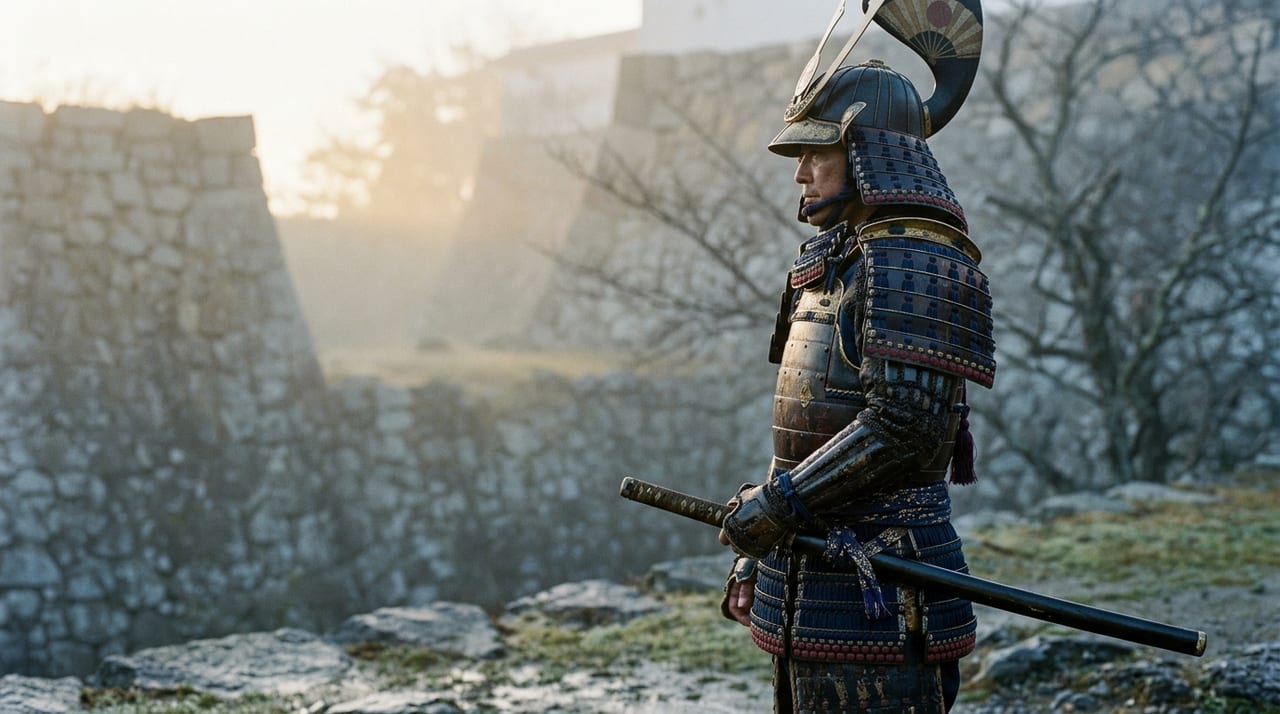
 * Image is for illustrative purposes only.
Tokugawa Ieyasu
徳川家康
Tosho Daigongen — The Divine Lord Who Unified the Realm Through Patience and Deep Deliberation, and Perfected the Sword as an Instrument of Politics
Description
Endurance and Rule
Born on Tenbun 11/12/26 (31 January 1543) at Okazaki Castle in Mikawa Province, Tokugawa Ieyasu endured years of submission that began with his life as a hostage in childhood. He went on to found the Edo shogunate, which built more than 260 years of peace. From the Battle of Okehazama onward, he survived more than half a century of warfare: first as an ally of Nobunaga, then as a vassal of Hideyoshi, and finally as ruler of the realm. His life was truly an embodiment of the patience expressed in the proverb 'Naku made matō hototogisu' ('Wait until the cuckoo sings').
Connection to Swords
Ieyasu's relationship with swords was highly practical, grounded in real combat experience. His judgment of swords was formed not in books but in blood and sweat, through the many fierce battles he fought with a blade in his own hand, including the defeat at Mikatagahara, the Battle of Anegawa, the Battle of Nagashino, and the Battle of Komaki-Nagakute.
The Legend of Muramasa
The most famous of the legends about Ieyasu and swords is the tale that he shunned Muramasa blades. His grandfather Matsudaira Kiyoyasu was slain by his retainer Abe Masatoyo in the Moriyama Incident of Tenbun 4 (1535), and the sword used is said to have been a Muramasa. His father Matsudaira Hirotada is also said to have been cut down by a retainer with a Muramasa blade and wounded. In addition, Ieyasu himself is said to have cut his hand on a Muramasa tanto in childhood. These misfortunes piled up and gave rise to the legend that 'Muramasa is a cursed blade that brings ruin to the Tokugawa.' The legend spread throughout the Edo period, and at the end of the Bakumatsu, anti-shogunate activists deliberately carried Muramasa blades to show their opposition to the shogunate. However, the story that Ieyasu shunned Muramasa is considered a later fabrication created after his death. Ieyasu himself possessed a Muramasa katana and wakizashi, and that katana is still preserved today at the Tokugawa Art Museum.
The Beloved Blade Sohaya no Tsurugi
The foremost of Ieyasu's beloved swords was the 'Sohaya no Tsurugi.' This katana, inscribed 'Sohaya no Tsurugi Utsusu Nari,' is said to be a copy of the sacred sword 'Sohaya no Tsurugi' that appears in the legend of Sakanoue no Tamuramaro, and is traditionally attributed to Miike Mitsuyo. Ieyasu treasured this blade above all as a guardian sword, and by his last will it was enshrined at Kunōzan Tōshōgū. It was placed facing west, which is said to have carried the meaning of a warning to the tozama daimyō of the western provinces.
Nikkō Sukezane and Monoyoshi Sadamune
'Nikkō Sukezane' is a masterpiece by Sukezane, a master smith of the Fukuoka Ichimonji school, and was dedicated to Nikkō Tōshōgū after Ieyasu's death. Sukezane was a smith of Bizen Fukuoka Ichimonji, and is known as one of those who later went down to Kamakura and laid the foundations of Sōshū smithing. The hamon of Nikkō Sukezane is a splendid chōji-midare mixed with nie, clearly showing Sukezane's superb skill. 'Monoyoshi Sadamune' is a work by Sadamune (Sōshū Sadamune). It was given the name 'Monoyoshi' because whenever it was worn into battle, victory followed. For Ieyasu, this blade was a protective sword for lasting martial fortune.
Legacy of the Sword Culture
After the shogunate was established, Ieyasu valued Hon'ami Kōtoku as the supreme authority on sword appraisal and fully developed a system for ranking famous blades. Ieyasu used the bestowal and confiscation of famous swords as political tools for controlling the daimyō. Swords granted as rewards functioned as the price of loyalty, and confiscation functioned as a symbol of punishment. This political use of swords created a new value for them in an age of peace and laid the foundations of the sword culture of the Edo period.
Ieyasu's legacy is not limited to swords. The Gosanke of the Tokugawa (Owari, Kii, and Mito) each inherited vast sword collections. In particular, the sword collection of the Owari Tokugawa house is among the finest in Japan in both quality and quantity, and it is still preserved today at the Tokugawa Art Museum. The system of sword culture that Ieyasu built became a major turning point that, over 260 years of peace, elevated the Japanese sword from a 'weapon' to an 'art object.'
Notable Swords
- Sohaya no Tsurugi (said to be by Miike Mitsuyo. A guardian sword said to be a copy of the sacred sword 'Sohaya no Tsurugi' from the legend of Sakanoue no Tamuramaro. By Ieyasu's last will, it was enshrined at Kunōzan Tōshōgū facing west)
- Nikkō Sukezane (a masterpiece by Sukezane of the Fukuoka Ichimonji school. A splendid chōji-midare hamon mixed with nie. Dedicated to Nikkō Tōshōgū)
- Monoyoshi Sadamune (by Sadamune (Sōshū Sadamune). A protective blade for martial fortune, named 'Monoyoshi' because it was victorious whenever it was worn into battle)