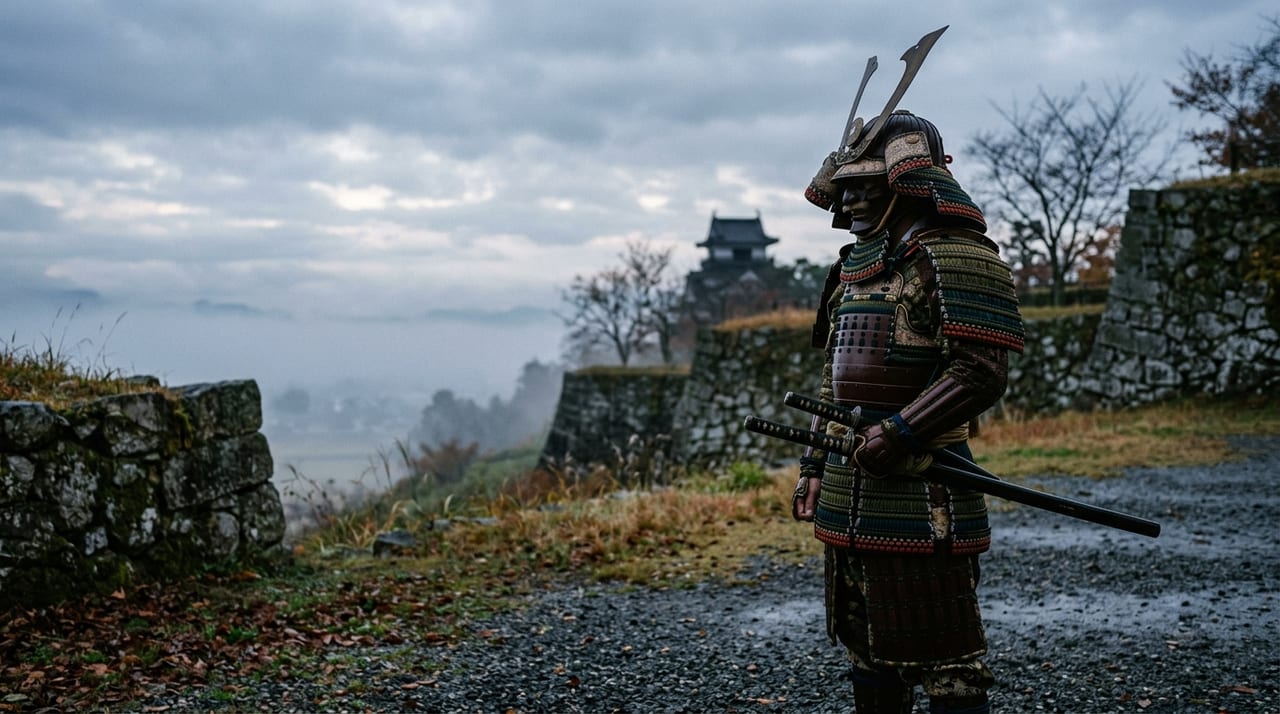
 * Image is for illustrative purposes only.
Nabeshima Naoshige
鍋島直茂
Founder of the Saga Domain and Inspiration of Hagakure
Description
From Retainer of the Ryūzōji Clan to Lord of the Domain
Nabeshima Naoshige, born in Tenbun 7 (1538) in Hizen Province (present-day Saga Prefecture), served as a senior retainer of the Ryūzōji clan. Through his outstanding abilities he acquired a power that surpassed that of his lord, and he ultimately became the de facto founder of the Saga Domain. The Ryūzōji clan was a powerful daimyō that laid claim to supremacy in northern Kyushu during the Sengoku period, and Naoshige, as one of its retainers, distinguished himself through military merit in numerous battles. However, when Ryūzōji Takanobu was killed in action at the Battle of Okitanawate in Tenshō 12 (1584), Naoshige effectively took the lead in the Ryūzōji clan. He skillfully navigated the complex political situation that followed, opening the way to becoming the independent ruler of the Saga Domain.
The Battle of Okitanawate and the Display of Righteousness
The Battle of Okitanawate was a battle in which the Ryūzōji forces were decisively defeated by the combined army of Shimazu Iehisa and Arima Harunobu, and it also posed a mortal danger to Naoshige. On receiving news of the defeat, Naoshige attempted to take his own life but was stopped by his retainers and withdrew to Hizen, where he assisted Ryūzōji Masaie and strove to recover the clan's strength. When the Shimazu and Arima side offered to return Takanobu's head, Naoshige firmly refused to accept it, showing a strong hostile stance. In the peace negotiations that followed, the Ryūzōji side is said to have obtained more favorable terms despite its crushing defeat.
Spiritual Background of the Hagakure
Yamamoto Tsunetomo, a retainer of Naoshige's great-grandson Nabeshima Mitsushige (the second lord of the Saga Domain), is the person who later dictated the Hagakure. The Hagakure is a book that expounds the essence of bushidō, known for the phrase 'The Way of the samurai is found in death,' and it strongly reflects the samurai spirit of the Saga (Nabeshima) Domain. The qualities that Naoshige displayed as the founder of the domain, namely 'absolute loyalty to one's lord,' 'bold action unafraid of death,' and 'a spirit that does not begrudge one's life for the sake of righteousness,' formed the ideological foundation of the Hagakure. It can also be said that the spirit of the Hagakure has as its source Naoshige's very way of life.
Activities in the Korean Campaigns
During the Bunroku–Keichō campaigns (1592–1598), Naoshige led the Ryūzōji retainer corps and, as a commander in the Second Division under Katō Kiyomasa, was deployed to the Korean Peninsula. Fighting in Korea was a continuous succession of hardships beyond imagination, yet Naoshige continued to lead his troops in battle throughout. The Korean campaigns further gave Naoshige combat experience as a battlefield commander, and also resulted in the forced removal to Japan of many Korean artisans and technicians. The taking of Korean potters, who laid the foundation for the porcelain industry of Hizen (the Hizen porcelain that gave rise to Arita ware), also occurred in this period.
Swords and Saga Swordsmiths
In the period when Naoshige was putting the foundations of the Saga Domain in order, a distinctive sword culture was developing in Hizen Province. Hizen swords greatly flourished in the Edo period through the lineage of Tadayoshi (the first generation, who later received the title Musashi no Daijō and changed his name to Tadahiro), but their beginnings lie in Naoshige's era. In Keichō 1 (1596), the first-generation Tadayoshi, on the orders of the Nabeshima house, became a pupil of Umetada Myōju in Kyōto, and the swords of this lineage later came to be called 'Hizen swords.'
Foundation of the Saga Domain and Its Later Influence
The foundations of the Saga Domain that Naoshige put in order in his later years were maintained until the abolition of the domains and establishment of prefectures in the Meiji era. The loyalty to his lord, calm judgment, and samurai spirit of fearlessness toward death that Naoshige embodied became classical norms of bushidō through the Hagakure, and became the spiritual wellspring of a book read not only in Japan but throughout the world. Naoshige's life was a model example of the ideal military commander, endowed with martial power, strategic wisdom, and a chivalrous sense of righteousness.