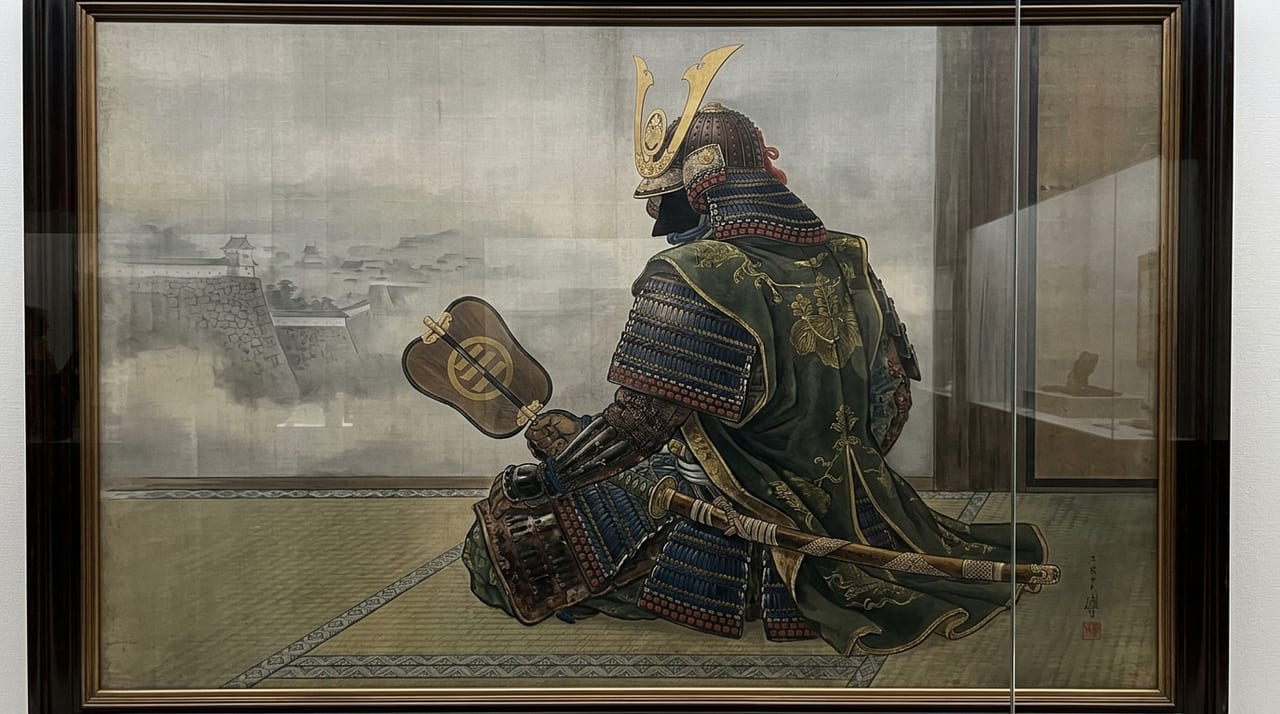
 * Image is for illustrative purposes only.
Maeda Matsu (Hoshun-in)
まつ(芳春院)
Principal Wife of Maeda Toshiie, the Wise and Resolute Lady Who Became a Hostage Herself to Preserve the Million-Koku Domain of Kaga
Description
The Wise Wife Who Supported Toshiie
Matsu (Hōshun-in, Tenbun 16 (1547) – Genna 3 (1617)) was born in Owari and is said to have been a cousin of her husband, Maeda Toshiie. She married Toshiie at around the age of twelve, and it is said that she bore him two sons and nine daughters. She supported Toshiie, who was in straitened circumstances in his youth, both materially and spiritually. As his fortunes rose, she became one of the driving forces that pushed the Maeda house up to a great daimyō spanning Kaga, Noto and Etchū. Her intelligence and fortitude were known even within the household. As Toshiie rose to prominence while serving Oda Nobunaga and Toyotomi Hideyoshi, she carried great weight as the linchpin who managed the household's affairs.
A Mother Under the Toyotomi Regime
Matsu was on close terms with Hideyoshi's principal wife, Kita-no-Mandokoro (One), and stood at the center of the women's network of the Toyotomi regime. Toshiie enjoyed Hideyoshi's deep trust and rose to such a position that, as one of the Five Elders, he was entrusted with serving as tutor to Toyotomi Hideyori. However, he died of illness in Keichō 4 (1599). Toshiie's death cost the Maeda house a major source of support, and amid the rise of Tokugawa Ieyasu, the Maeda found themselves in a difficult position.
The Decision to Protect the Million-koku Domain of Kaga
After Toshiie's death, Matsu shaved her head and took the name "Hōshun-in." In Keichō 5 (1600), when Ieyasu cast suspicion of treason on the Maeda house, her eldest son and heir, Toshinaga, showed a readiness even to fight the Tokugawa. In response, Hōshun-in decided to go down to Edo as a hostage herself, in order to avoid a clash with the Tokugawa house. Through this decision, the Maeda house preserved the million-koku domain of Kaga and avoided a full-scale confrontation with the Tokugawa. Her life as a hostage in Edo lasted fourteen to fifteen years, and it is said to have been a forerunner of the later sankin-kōtai system, under which the wives and children of daimyō were kept in Edo.
Matsu and Swords
Although there is little reliable record that Matsu carried any particular famous sword, as a woman of the samurai class she is thought to have followed the custom of carrying a kaiken when she married. In samurai society, the kaiken was a symbol of self-protection and resolve, and for the principal wife of a great daimyō house such as the Maeda, it was also an object that embodied the rank and prestige of the house. The Maeda house had famous swords handed down as family treasures since Toshiie's time, and Hōshun-in was a woman who lived within that culture of family-transmitted swords.
Assessment by Later Generations
After her years as a hostage, Hōshun-in returned to Kanazawa in her later years and died within Kanazawa Castle in Genna 3 (1617). She was seventy-one years old. Her life, in which she protected the house at the risk of her own person, has been passed down to later generations as a "model of the good wife and wise mother," and she is highly regarded as the woman who laid the foundation for three centuries of the Kaga Maeda house.